There was a time before I knew what words were for, a time when sound lived only outside me. All I could do was observe it. In the earliest years of my childhood, I did not speak. For years my mouth remained a closed door, the world waiting on the other side.
My mother’s voice came to me as something that moved through air but never touched the ground, a rhythm I could feel in my bones but could not hold onto. I remember her bracelets, their faint shimmer as she reached toward me, but not her voice. That part has vanished from my memory, as though it was too unmoored to survive the journey here.
I remember the smell of her hands after washing rice, the way her breath disturbed the curtains as she adjusted them before bed. But I don’t remember her sound, a current that brushed against me like heat, something known to the body but not to the ear, something I knew existed but could not follow.
And so her voice became the blank spot in the map of my childhood, the place where memory fails to return. Instead of her voice, I recall the times, the spaces where she omitted it.
I remember her silences, absences that shaped me, heavy, thick with mourning and with everything she had left behind. They were the silences of a woman who crossed borders, holding hope and grief in the same breath, who left her family so that I could have a future she would never fully enter. The kind of silence that carried its own gravity, the kind that fills a room when no one speaks. Her silence taught me to listen for what was missing, to feel for meaning in the quiet between sounds.
I think silence is the first language every child learns. But my mother’s silence built its own kind of home inside me. I learned it too well. I couldn’t let it go.
Years later, once I grew older and words returned to me, I sat at a table surrounded by family, the air steeped with tea and the sweetness of oranges. It was late in the day; someone had left the radio on, and through the small, cracked speaker came a melody that seemed to turn in on itself: arabesque, mournful, beautiful in its refusal to end. It was music that knew how to ache. The notes folded over one another like waves that had forgotten how to break.
On the shelf beside us were the old cassettes my aunts had brought from Prizren, their plastic cases cloudy with age, their handwritten labels fading but still legible. When pressed play, a voice would rise from the hiss, carrying a language that trembled at the edges, as if it, too, were afraid of being forgotten. The songs were full of dust and distance, the sound warping each time the tape spun. Yet beneath the distortion, I could sense something holy. A pulse. A memory trying to find its way home.
At times like these, my father sometimes grew perfectly still as the music began. His eyes drifted somewhere far beyond the room, as though he could see the streets of Prizren unrolling behind his eyelids. The bridge, the stones, the light falling on old walls. In those moments, I felt that silence was not void but matter: the gravity of everything that could no longer be said.
That evening, I learned where our silence came from. My mother spoke quietly. Her childhood home had been taken: not just vandalized or broken into, but claimed by others as their own. The walls were covered with words meant to wound, the kind of words that remain long after the people who wrote them have gone.
Inside the closet where my grandmother kept her clothes, someone had carved hatred into the wood, to make it last. And so it did, even after the intruders had left and my mother’s family had returned. Every morning, my grandmother opened the door and dressed herself in silence, reaching past those words.
I could see her, a vision I have borne within me ever since: her small body framed by the bedroom doorway, her hands moving gently among the clothes, her back turned to the carved insults. She did not shout, she did not weep, she did not give them the sound of her breaking. She answered violence with composure, answered erasure with endurance. Her silence was not submission; it was resistance refined into ritual.
I used to believe silence was the sound of peace. I know better now. Silence is the sound of survival, of breath held tight so the world does not hear you grieve. It is the space between wound and scream, the stillness after prayer.
My grandmother’s silence coiled within my mother’s laughter: bright, defiant, too loud for comfort. That laughter heaped into my hesitation, my need to measure every word before it leaves my mouth. Silence travels; we inherit it as much as it inherits us.
We are told memory moves like a story, but I have learned it moves like smoke, like my mother’s voice, my grandmother’s silence, the songs of my aunts. It curls, disperses and returns when you least expect it, carrying the scent of everything you thought you had outlived. It has no loyalty to sense, no loyalty to time. Like the muteness of my childhood, it does not ask permission to enter. It fills you with what you have lost, then leaves without apology.
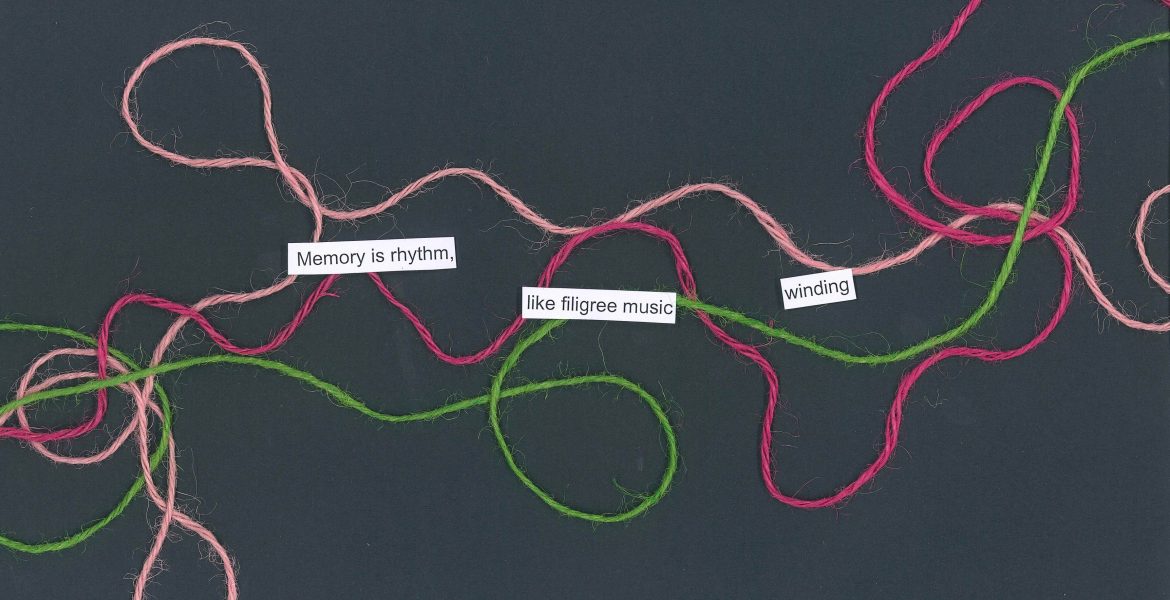
I could say memory is rhythm, like filigree music winding, graceful, relentless. I could say it loops through the body, searching for the right place to rest. But the truth is harder: my memory — my awry inheritance — is silence. It does not sing; it hums. It holds everything words cannot bear.
My memory does not sing. My memory is the shadow beneath the song.
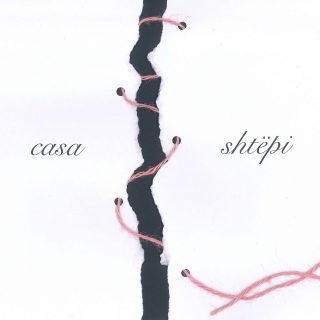
Illustration: Luca Tesei Li Bassi / Pro Peace
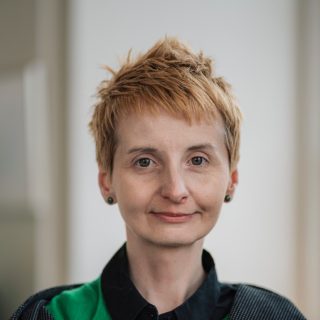
Zehra Shijaku is a multidisciplinary researcher and writer from the Albanian diaspora, currently studying at Goethe University Frankfurt. Her work bridges legal studies, decolonial studies and peace and conflict research, exploring how structures of power shape post-conflict societies and displaced communities. She is a former intern with Pro Peace – Kosovo.
This blog is part of the Bridges of Memory series. Discover more stories here.