What remains unfinished in your story? Write to us.
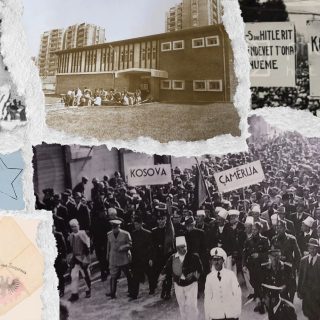
War, oppression, and displacement break apart lives and communities. Sometimes they don’t destroy them completely, they interrupt them. Urgency, fear and survival leave things unfinished, left halfway. These may be material things — a house, a handmade dress, a toy collection — or intangible ones: a childhood, a love story, a brotherhood.
Violence or the limited choices of the past may have forced you or your family to leave something undone. With peace, or with adulthood, you may have tried to return to it, sometimes without success. Or perhaps you chose to let it remain unresolved, turning that choice into a ritual, perhaps even a form of desire.
Unfinishedness can be regret. It can be memory and strength. It can be a beginning, or an ending. It can be a window into the past, or what carries you into the future.
We want to hear your stories of unfinishedness and, most importantly, what it means to you. Whether you are in Kosovo or in the diaspora, whether you write professionally, for passion, or not at all, whatever your age or perspective, we are curious about your stories.
We want to give them space amid the noise of everyday life. And we want to learn from you: your community, your interpretations, your acts of remembering. We want to hear from people who carry stories of migration, who confront silence about war, and who broaden our understanding of conflict — beyond war itself, toward its many forms and dimensions.
We want to hear from anyone whose unfinishedness has not received the attention — or perhaps the understanding — it deserves. Write a blog of 900–1,200 words about the unfinishedness you are remembering, carrying, or tending to, in either English or Albanian.
A blog post is not an academic article. It is a personal piece of writing where you share your own perspective, story or experience. For this call, your blog can be reflective, emotional or creative; it doesn’t need to follow strict rules.
As inspiration, you may consider these questions:
- What things — whether material or immaterial, from your own past or from the stories you grew up with — still remain unfinished?
- What feelings come up when you think about them? How do you understand or give meaning to them?
- When you face unfinishedness, how do you deal with it — do you try to complete it, leave it as it is, or transform it? Why?
- How does unfinishedness affect the life you live today and the future you imagine?
- What do you wish others could learn or understand from your experience of unfinishedness?
The selected texts will be published on the Dealing with the Past platform, a space dedicated to memory work in Kosovo and beyond. Through this platform, your words will stand alongside others, creating connections across experiences, perspectives, and generations.
Send us your blog by email: luca.teseilibassi@propeace.de by March 15, 2026.
If you have any questions or need clarification, don’t hesitate to reach out to us at the same email address. Authors whose stories are selected for publication will receive compensation and editorial support.
For further inspiration, explore the blogs we have published under our previous series, Bridges of Memory.
We look forward to your stories!
About Pro Peace
Pro Peace was founded in 1996 by German peace and human rights groups responding to the Balkan Wars, originally under the name Forum Civil Peace Service (forumZFD). Today, the organization works in 13 countries across Europe, the Middle East and Southeast Asia. Its mission is to strengthen civil society actors committed to peace and non-violence in the midst of conflicts. Pro Peace advises, supports and collaborates with local initiatives, and advocates for sustainable peace policies at the international level.
Kosovo Program
In Kosovo, Pro Peace focuses on fostering dialogue, dealing with the past and building non-violent approaches to conflict transformation. Through platforms such as the Dealing with the Past initiative, the program amplifies voices and stories that might otherwise remain unheard. By doing so, it helps connect generations and communities, and creates spaces for reflection, healing and common ground.
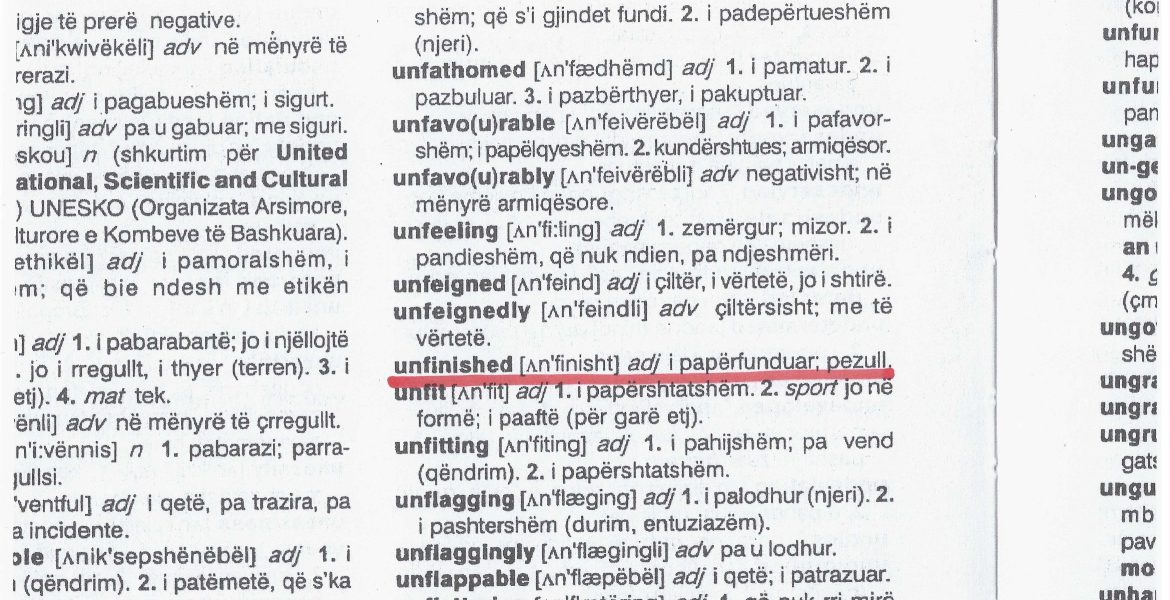
Feature image: detail from English–Albanian Dictionary / Ramazan Hysa, EDFA, 2000
Lexoni këtë thirrje të hapur në shqip: https://dwp-balkan.org/sq/thirrje-per-blogje-histori-te-paperfunduara/