I was born after the war, so I never experienced it, at least not in the way people usually talk about it. In school, we learned about it briefly, in history lessons that felt distant and incomplete. Other kids would sometimes mention things they’d heard from their families, stories about hiding, running, or losing someone. I never knew what to say. I always felt left out of those conversations, like there was a chapter of my country’s story that I had somehow missed.
During the war, my parents were immigrants in London. They didn’t live through the bombings or the fear that others described. When I was little, I thought that was a good thing — that they had been safe. It took me years to realize that safety also meant distance, and that distance sometimes breeds silence.
As I grew older, I started asking questions. I learned that my father’s house had been burned down, and that his parents had to leave Mitrovica to seek refuge in Gjakova, where he and my mother joined them after the war.
Sometimes I wonder what it would have been like if my family had stayed in Mitrovica. Would I have grown up differently? Would people have seen me differently? In Gjakova, I always felt like I came from somewhere else. At school, others saw that difference as an excuse to bully me. Even peace can carry traces of war.
Luckily, I wasn’t alone. My grandmother was always a feminist, long before I understood what that word really meant. She carried herself with a quiet strength: the kind of woman who doesn’t ask for space, but makes her own. After the war, when many women were left without jobs or homes, she helped them find work. She never talked about it as activism; to her, it was simply what needed to be done.
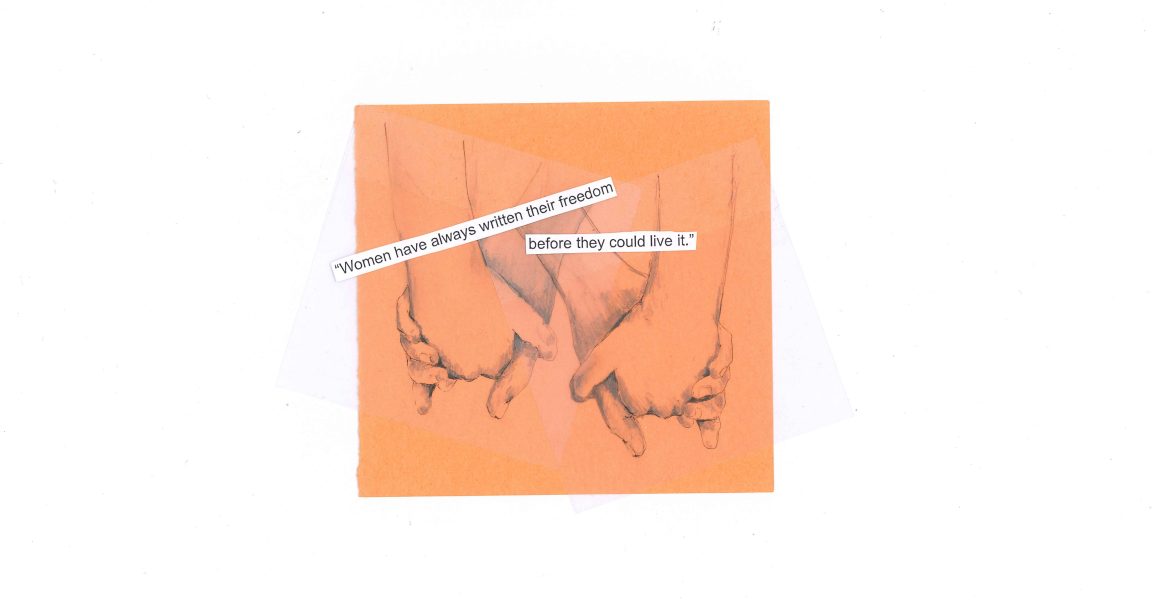
My mother, too, carried that strength in her own way. Ten years after the war, she returned to university to continue her studies in English Literature. I remember her reading late at night, surrounded by books that bore witness to women’s voices. She would sometimes tell me, “Women have always written their freedom before they could live it.” At the time, I didn’t fully understand what she meant, but the sentence stayed with me.
Years later, when I began studying Painting and Visual Arts, it felt natural to return to them — both my mother and grandmother — as sources of inspiration. My bachelor’s project turned into a cycle of fifteen paintings exploring women across different cultures, their strength, rituals and silences. With each brushstroke, I felt as if I was tracing parts of their stories, and perhaps my own: the unseen threads that connect women across wars, migrations and generations.
Through art, I started to understand that memory isn’t only about what we inherit from tragedy; it is also about what we continue to create — during, afterwards. I believe I make art because I had to create a world in which I could live.
I couldn’t exist in any of the worlds offered to me: the world of war, the world of politics, the world of sexual assaults, the world of violence. I wanted no part of them. Spare me from them!
So I began to create a world of my own: like a climate, a land, an atmosphere where I could breathe. Through painting, I built a place where I could rebuild myself each time life tried to break me. Through this act of creation, I discovered that tending to this space is the reason I too came into the world.
My art is my resistance: my refusal to accept silence or acquiescence as my inheritance. I don’t want to reproduce the world I was handed; I want to reimagine it.
After finishing my studies, I had time, time to listen, to travel, to meet new people from Kosovo and beyond. I met people from Macedonia, Serbia and Bosnia and Herzegovina: all of us children of the same region, shaped by different sides of the same wound.
Not everyone around me understood why I wanted to meet people from other countries. Some judged me for it, sometimes quietly, sometimes openly. To them, it felt like a betrayal, as though I were forgetting where I came from. For me, it was the opposite.
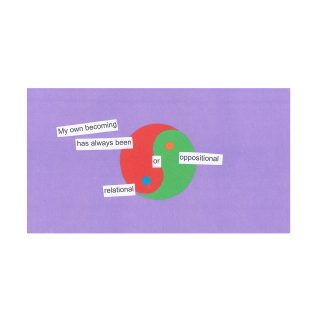
I wanted to understand my past better by looking at the bigger picture. I didn’t seek out new people to compare pain or to erase what happened. I approached them to understand how memory travels: how it is shaped by borders, by silence, by what we are taught to believe.
Some nights, I felt overwhelmed, crushed by the sense that every story carried both truth and contradiction. But slowly, I began to realize that seeking understanding doesn’t weaken memory; it strengthens it, because remembering is not only about loyalty to the past. It is also about responsibility to the present.
We often speak of memory as something sacred, but I’ve learned how it can also be controlled, edited, used. People choose what to remember and what to forget, who deserves to be mourned and who deserves to be blamed. Sometimes I think the real violence lies not only in what happened, but also in what we decide we shouldn’t talk about ever again.
That’s why I paint: not to decorate the silence, but to confront it. My work is not nostalgic; it is a conversation that refuses to end.
The war didn’t leave just ruins; it also left us with questions that no one wants to ask out loud. Art, for me, is the space where those questions can live. It is where memory and discomfort meet. And maybe that’s where truth begins: not in agreement, but in the courage to see, to feel, and to make space for new ways of remembering.
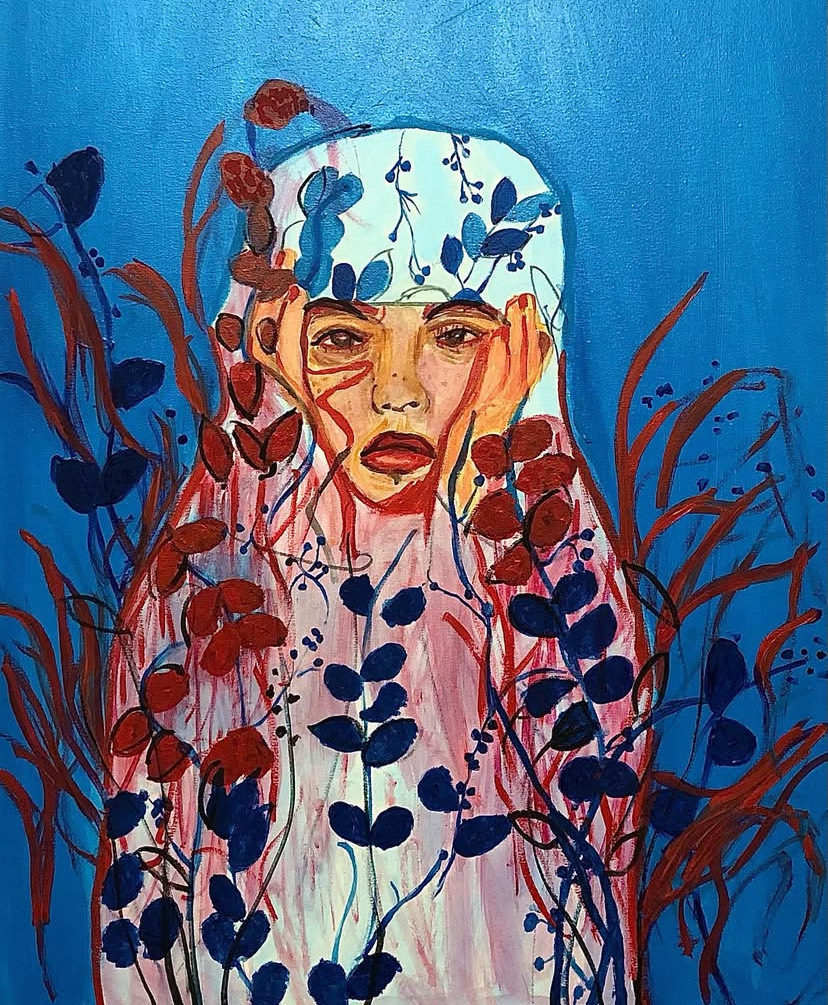
Feature image: Emilia de Haën / Pro Peace
Alsea Ymeri completed her primary and secondary education in her hometown, Gjakova, before earning a bachelor’s degree in Painting and Visual Arts in Prishtina. In recent years, she has focused on directing short and documentary films and has participated in projects featured at regional film festivals, including PriFest and DokuFest.
This blog is part of the Bridges of Memory series. Discover more stories here.