
The secretary of the museum welcomed me at the door and shook my hand. She wore a blue uniform and a blue cap over her dark hair. “Welcome. It’s nice to finally meet in person,” she said with a smile. “Nice to meet you,” I replied.
She led me into the facility with a practiced stride, while I walked behind her, my eyes wide as I stared at the interior. The smooth white walls reminded me of a hospital, yet for once I did not feel the usual anxiety that came with being surrounded by them.
The entire building was filled with a sanitized scent, as though a cleaner secretly trailed each visitor, erasing step by step every trace they left upon the spotless tiles. The place was undeniably beautiful, yet my nerves twisted into a restlessness that subtly unsettled me.
For the past two months, I had been holding online meetings with the workers of this place, most often with the secretary who now guided me. The scans, the conversations, the therapy to stir the mind: the process had been both exhausting and exhilarating, and it was done at last. Now I would finally witness the product of this long ordeal: my memories laid out before me on a screen, my whole life in vivid display.
When my mother asked me why I had signed up for this, I could not offer any meaningful answer. Not because none existed, I suppose, but because I was too hesitant to admit that lately I had been ruing both the present and the future. The past seemed a kinder presence.
The secretary stopped in front of a door. The elevator had taken us to at least the fourth floor, though I hadn’t really been paying attention. “Here it is. Are you ready?” “I think so,” I said with a nervous laugh.
She swiped a card over the flat doorknob, and the doors opened with a mechanical hiss. I could feel my heart in my throat. The past two months had drained me in every way imaginable. To have all my memories, even those buried beneath the daily trivialities, bubble up to the surface was no easy thing. Half the time I couldn’t decide whether it felt more like drowning or dying of thirst.
“Go on, this is your world.” The secretary smiled again. I nodded and stepped inside, my eyes chained to the floor for the first several steps. I didn’t want to spoil the sight that awaited by catching only fragments at a time. I wanted to see it all at once, my whole life in picture.
Only one glance away lay the revolutionary invention of the 23rd century: a technology capable of replicating human memory and casting it onto a screen. By joining the program, agents would capture every moment stored in a person’s mind and build a room, a “Museum of Memories,” as they named it, where their entire life could be watched, live.
I took a deep breath and finally looked up. The room was even more spacious than I had anticipated. At once, different scenes began flashing before my eyes; it was so overwhelming that I couldn’t even tell what they were showing, let alone recognize them as moments from my own life.
I decided to focus on a flat TV screen mounted against the wall directly in front of me. It showed my very first day of high school, when I had forgotten my backpack on the school bus. That embarrassing moment set the tone for the rest of my high school years. On the screen, I watched myself walking to the principal’s office so they could contact the bus driver. It was humiliating.
As I looked around, I noticed that different memories appeared in different forms of display. Some, like the high school one, were showcased on TV screens, while others were placed inside glass cases, the kind used to hold necklaces and jewelry in a traditional museum.
Some memories appeared as snapshots, set in vintage picture frames along the walls. Others flickered into view as realistic 3D holograms. One such holographic memory replayed the nights I spent at the hospital, sleeping on the cold floor again and again, only to wake more tired come morning. Since then, my aversion.
Some memories had no visuals, only sound. In one corner of the room, an old record player spun, playing a familiar verse: “The morning will come again / No darkness, no season / Can last forever.” Oh, the times I had to explain my love for 21st-century South Korean songs… The lyrics floated gently, accompanied by laughter.
I didn’t need a visual to recognize this memory. My first year of college: my friend and I sitting in class, waiting for the professor to show up, and playing favorites on my phone. It was early spring, and the winter that preceded it had been toilsome beyond words.
That simple memory has always lingered in my mind, despite, or perhaps because of, its very simplicity: a warm morning after many cold days that had seemed eternal. “This must be why I signed up for this,” I thought. I had been lacking such warmth lately.
As I went further in, I realized that some of the scenes I had already watched were being showcased again. Only this time, something about them had shifted. I saw my first day of high school again, the one where my classmates laughed behind my back. In this version, they paid me no mind, lost in their own affairs.
In one memory, my first kiss was awkward beyond telling; in another, it was thoughtful and sweet.
Then I saw my friend. The day she told me our friendship had run its course. I have replayed that scene so many times in my mind. I remember it so well: the indifference on her face. Each time I have summoned this memory, I wasn’t remembering so much as reliving.
But the scene, now playing out inside a picture frame, was showing me something entirely different. Hesitation, second‑guessing, doubt, every line of her face seemed to want to say more.
Shaken, I called the secretary to let me out. “Memory can be as generous as it is cruel,” I realized. It had shown me what it wanted, the scene it thought most fitting for my mental picture frame. I had clung to the past as a sanctuary, only for it to betray me. My memory, a fickle guide; a will-o’-the-wisp leading me through the winding corridors of my life.
As I walked out of the room, the song followed me out: “The morning will come again / No darkness, no season / Can last forever.” Even the peaceful spring morning had lied.
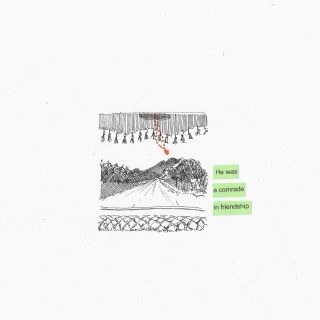
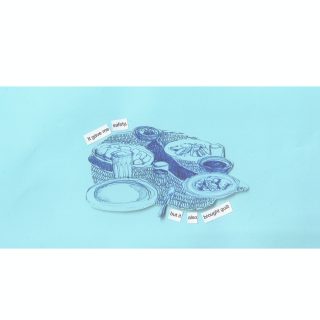
Illustration: Emilia de Haën / Pro Peace
Irmel Mislimi is a writer from a village near Prizren with a lifelong passion for fantasy and science fiction. He holds a master’s degree in English literature from the University of Prishtina. Much of his inspiration comes from exploring imaginative worlds, whether in books, video games or tabletop RPGs. Beyond writing, he is deeply interested in history, mythology, music and video editing, all of which shape the stories he tells.
This blog is part of the Bridges of Memory series. Discover more stories here.