
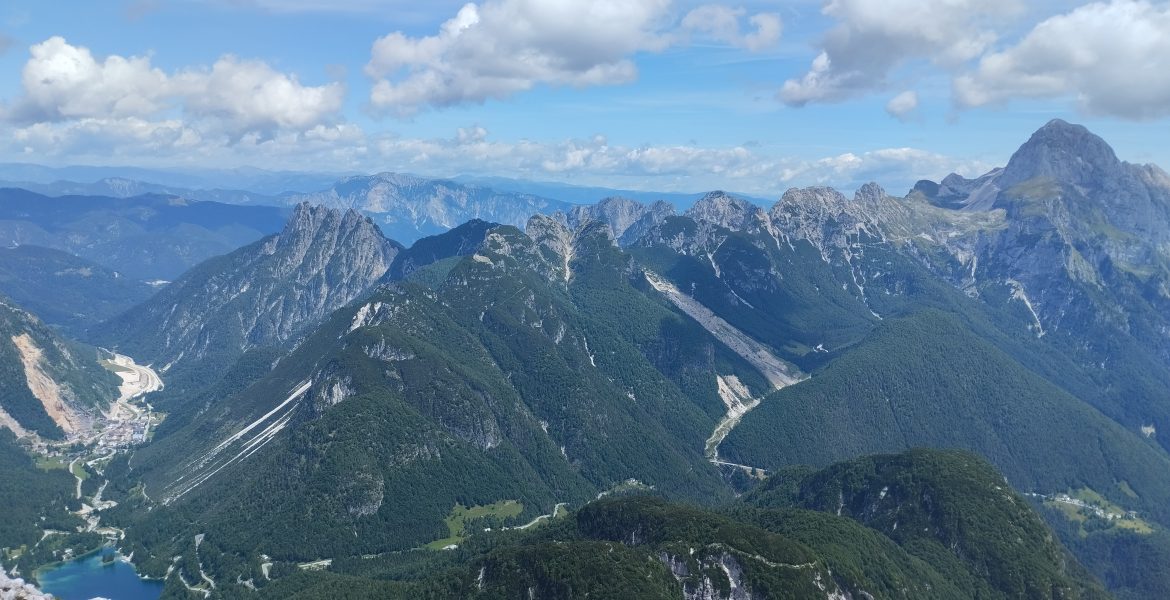
Rediscovering cross-border cooperation between Italian and Yugoslav mountaineers during the Cold War.
Memory studies — that is, the academic field that investigates the relationship between societies and their past — teach us that our view of what has been is always selective. Both individual and collective memories are the result of a process — partly conscious and partly unconscious — that determines what to remember and what to forget. This process is strongly influenced by the political, social, and cultural present: it is no coincidence that, both in the literature and beyond, we speak of the politics of memory.
In many border regions of Europe — especially those marked by conflict-ridden and traumatic historical events — oppositions and hostilities are often the aspects that are most strongly recalled. At times, however, historiography offers a complementary approach, seeking to reconstruct dynamics that run in the opposite direction.
This is not done to present a “positive” image of the past — which would inevitably be misleading — nor to abandon the fundamental work of acknowledging victims and identifying crimes and perpetrators. Rather, it is an attempt to preserve the complexity of the overall picture, avoiding the essentialization of communities and of the relationships between them. It means recognizing the presence of multiple forces within past societies and the variability of the circumstances that shape historical processes. This way of approaching the past may also prove useful when looking at the present and the future.
Perspectives
Mountain regions constitute a natural space with physical characteristics clearly visible to anyone. Throughout history, the imposing physicality of mountain ranges has been an obstacle to human mobility and exchange. However, the fact that modern states have elevated mountains to “natural” borders — superimposing political boundaries upon them — has shaped the way they are perceived. In the most extreme cases, this superimposition has led to their being represented exclusively as a “defensive barriers” of the nation-state.
Yet historiography and the social sciences have sought to identify other dynamics as well, looking, for example, at the Alps as an integrated system in which natural and cultural commonalities can be found between different mountainsides, along with forms of permeability and collaboration moving in various directions.
If we travel to the easternmost tip of the Alpine range — where it curves toward the Adriatic Sea, straddling the borders of Austria, Slovenia and Italy — we find dynamics of this kind. In this border region, sometimes emphatically described as a point of contact and friction between the Latin, Germanic and Slavic worlds, the traumas of 20th-century history run deep. A complex and necessary effort has been launched and continues to be pursued to acknowledge the victims and the crimes committed, particularly during and following the world wars. Yet here too, the work of historians helps broaden the picture by incorporating a plurality of perspectives and experiences. Among these is the study of the contacts and forms of cooperation that developed in the area during the Cold War, as proposed, for example, by a recent project funded by the European Research Council (ERC).
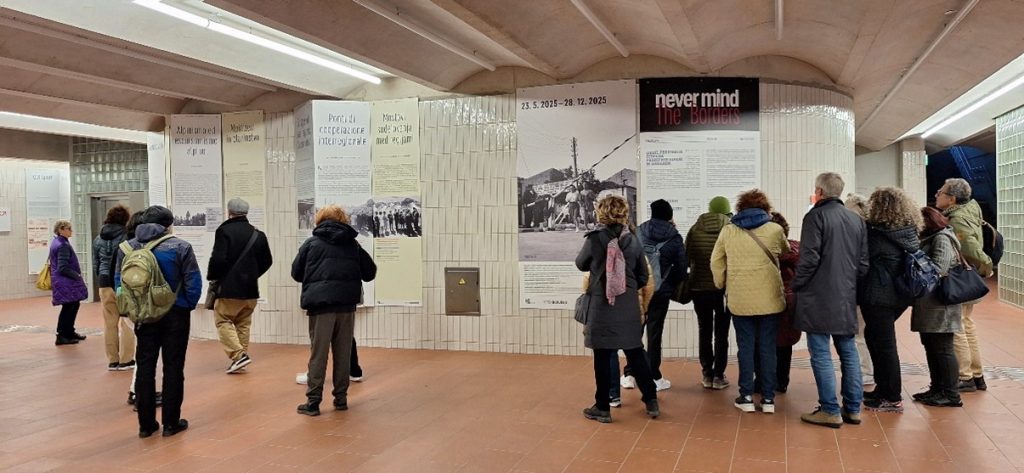
The international research team behind the project organized an exhibition that opened in the Slovenian town of Nova Gorica during the year in which it served as European Capital of Culture, alongside the neighboring Italian city of Gorizia. Open to the public through the end of 2026, the exhibition recounts stories that, according to project coordinator Borut Klabjan, reveal “the role of ordinary people in fostering the gradual integration of the border region.”
Particularly from the 1960s onwards, Klabjan adds, the border system between Italy, Austria and Yugoslavia remained “certainly present and perceived in many ways, but rather than constituting an insurmountable obstacle, it was a disruptive element that still allowed multiple forms of cross-border practices to develop: from grocery shopping to buying household appliances, from Sunday lunches to summer vacations.” Among the many experiences featured in the exhibition are, perhaps somewhat unexpectedly, the mountains and the activities they host, such as mountaineering and alpine hiking.
Mountains
The desire to plant national flags on ridges and summits has a long history, stretching in Europe from the late nineteenth century at least until World War II. After the war, mountaineering competition between countries shifted mainly to peaks outside Europe. Italy, for example, celebrated with great emphasis the success of the expedition that reached the previously unclimbed summit of K2 in 1954, while Yugoslavia began investing in Himalayan expeditions that would culminate in the first Yugoslav ascent of Everest in 1979.
The mountains in the Alpine-Adriatic border region, and the Julian Alps in particular, continued to play a role in this imagery. The highest peak among them, Triglav, remained a Slovenian national symbol — even appearing on the republic’s coat of arms during the socialist era — while its summit tower, known in Slovenian as Aljažev stolp, was adorned with the star and the red color typical of the new regime’s symbolism. On the Italian side, the mountains of this border region were associated above all with the memory and epic narrative of the battles of World War I.
Along the southernmost section of what Winston Churchill called the “Iron Curtain,” even borders stretching across mountains were militarized and strictly guarded. Moreover, sovereignty over some minor border peaks remained disputed until the signing of the Treaty of Osimo between Italy and Yugoslavia in 1975. From 1956 onward, however, things gradually began to change. An agreement reached between Italy and Yugoslavia in Udine the previous year granted citizens their first travel permits, and in the second half of the 1960s, the requirement for visas between the two countries was also lifted, significantly increasing cross-border mobility.
Although less so than the Adriatic coast, the Yugoslav mountains also attracted Italian tourists, from the summit of Triglav — which, until World War II, had been crossed by the Italian-Yugoslav border — to the cliffs of Paklenica on the Dalmatian coast, which became increasingly popular with the rise of free climbing in the 1980s. At the same time, Yugoslavs were increasingly drawn not only to the Western Alps and the Dolomites — which had historically been popular destinations for mountaineering — but also to the Julian Alps on Italian soil. Nevertheless, even as the border was gradually becoming more permeable, mountaineers and hikers continued to face severe restrictions imposed by military control over the mountains straddling the border itself, particularly on the Yugoslav side.
During this period, some sectors of the organized mountaineering community sought to cultivate cross-border ties. The first such efforts emerged as early as the second half of the 1950s between organizations in the geographically close towns of Cividale in Italy and Kobarid in Yugoslavia. Others were prompted by the operational needs of mountain rescue. At high altitudes, where natural boundaries often diverge from political ones, the desire to improve the effectiveness of rescue operations encouraged the first attempts at coordination.
The increasing frequency of encounters across the mountains gave rise to mixed feelings, by no means excluding mistrust, resentment and hostility. Nonetheless, in some cases, greater mobility made it possible to rekindle personal relationships dating back to the prewar decades, or to forge new bonds mediated by a shared passion for the mountains.
At the European level, mountaineering associations had already made some attempts to transcend the boundaries of the Cold War through collaborations within the International Union of Alpine Associations (UIAA). In the Alpine-Adriatic region, too, cooperation eventually took on more stable and institutional forms. In autumn 1965, the Carinthian section of the Österreichische Alpenverein [Austrian Alpine Association – OAV] invited colleagues from the Planinska Zveza Slovenije [Alpine association of Slovenia – PZS] and the Friuli-Venezia Giulia branches of the Club Alpino Italiano [Italian Alpine Club – CAI] to a meeting in Villach. This marked the beginning of the “Convegni Alpi Giulie/Srečanje treh dežel” [Julian Alps Conferences/Meeting of the Three Regions], annual gatherings devoted to cross-border cooperation that involved — and continue to involve to this day — the mountaineering organizations of the area.
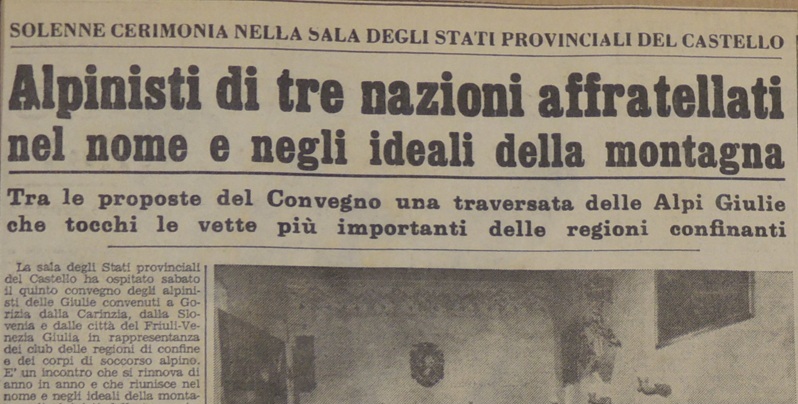
There were multiple reasons behind these developments. Idealistic elements were certainly present, including references to a tradition of “mountaineering friendship” that spanned borders and had, in some way, coexisted with the original national — and at times nationalist — vocation of many European mountaineering clubs. On the other hand, there were clear political-diplomatic interests emerging from the broader détente between Italy and Yugoslavia and the economic cooperation developing between their neighboring regions. For Socialist Yugoslavia in particular, Western tourism represented an increasingly important resource and a source of hard currency that facilitated the opening of its borders.
Mountaineering organizations operated within this context, albeit from very different positions in relation to political power. The Planinska Zveza Slovenije, in particular, was under the control of the Socialist Alliance of Working People, the main mass organization associated with the Communist Party/League of Communists of Yugoslavia. From the early 1960s onward, however — partly as a result of processes of decentralisation within the Federation — the PZS also worked within the regime to obtain a partial easing of strict military controls over the border mountains.
Progress was gradual, not without difficulties and occasional disagreements. Particularly significant was the fact that cooperation was not limited to technical matters but was also intended to facilitate and promote cross-border mountain activities. Several initiatives were launched to encourage mountaineers and hikers to explore the mountains beyond national borders. The first step in this direction — only partly successful — was a collaboration aimed at establishing reciprocity agreements at mountain huts, that is, mutual preferential treatment for club members at facilities in neighboring countries.
The flagship initiative of this phase was the “Cime dell’amicizia/Pot prijateljstva/Wege der Freundschaft” [Peaks of friendship/Trail(s) of friendship]. Officially launched in 1972 with the aim of promoting climbs to the 30 most important peaks in Friuli-Venezia Giulia, Slovenia and Carinthia, it was a remarkable success. By 1990, more than 10,000 trilingual brochures detailing the routes had been sold across the three regions, testifying to the interest among the hiking community in this type of cross-border experience. Within the framework of these cooperation initiatives, the mountains increasingly came to be portrayed as places of encounter and exchange, in contrast to the longstanding emphasis on their separating and enclosing functions.
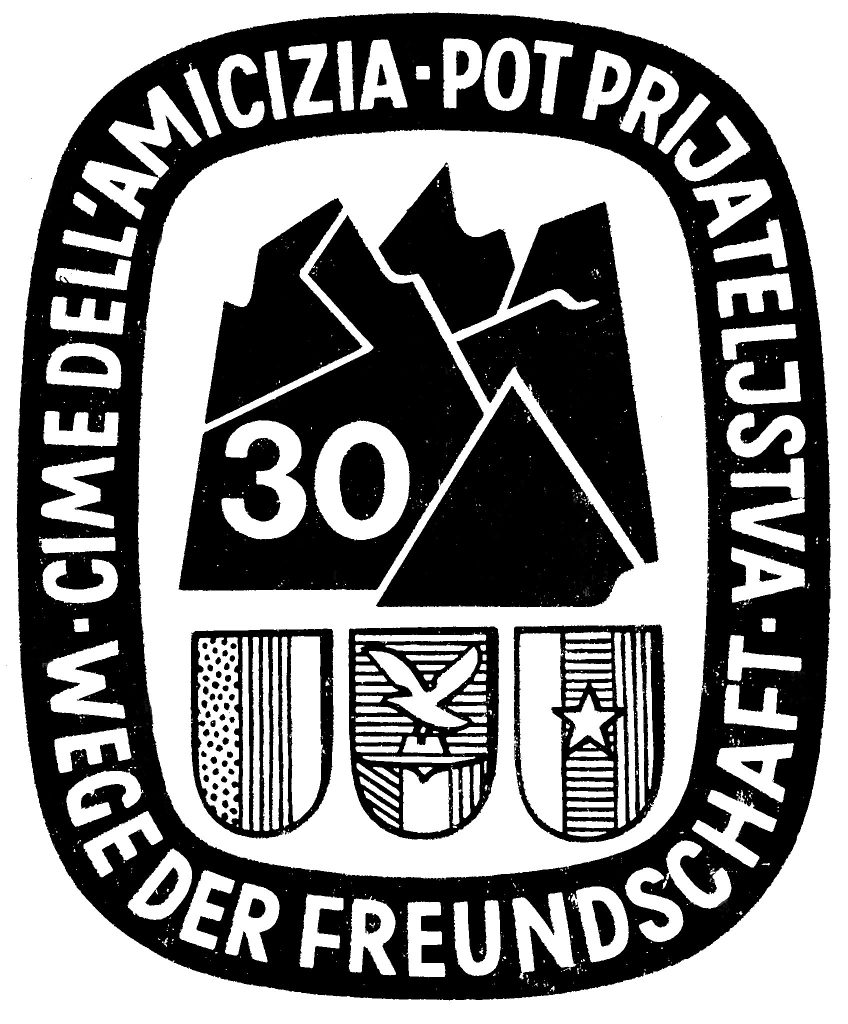
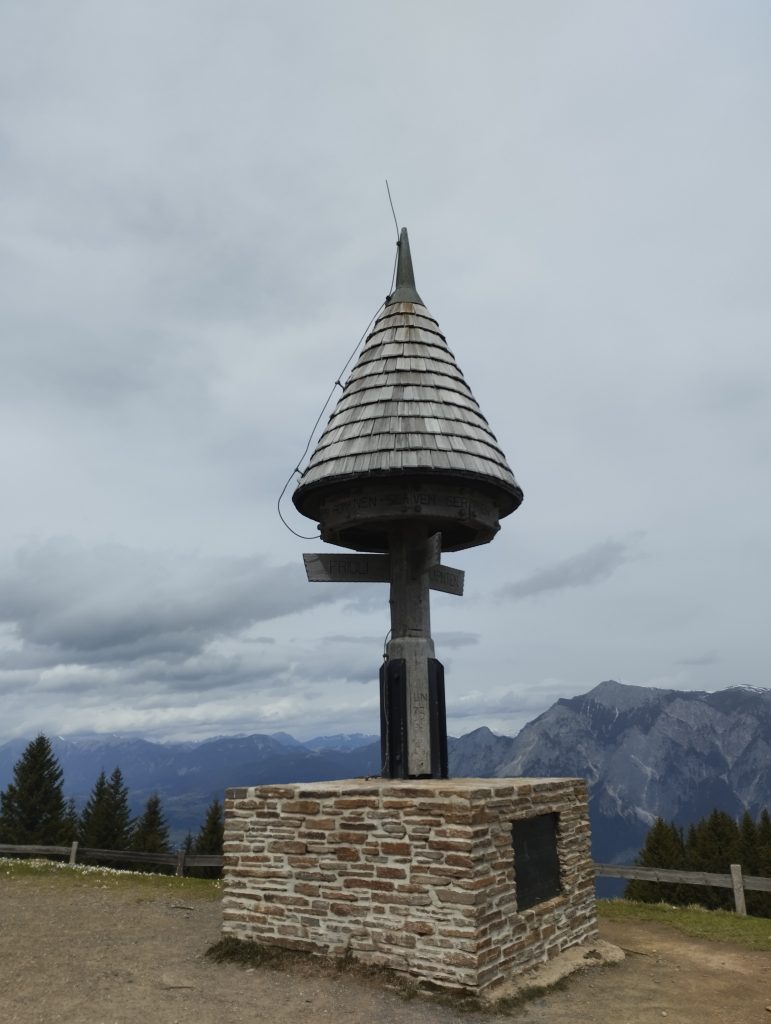
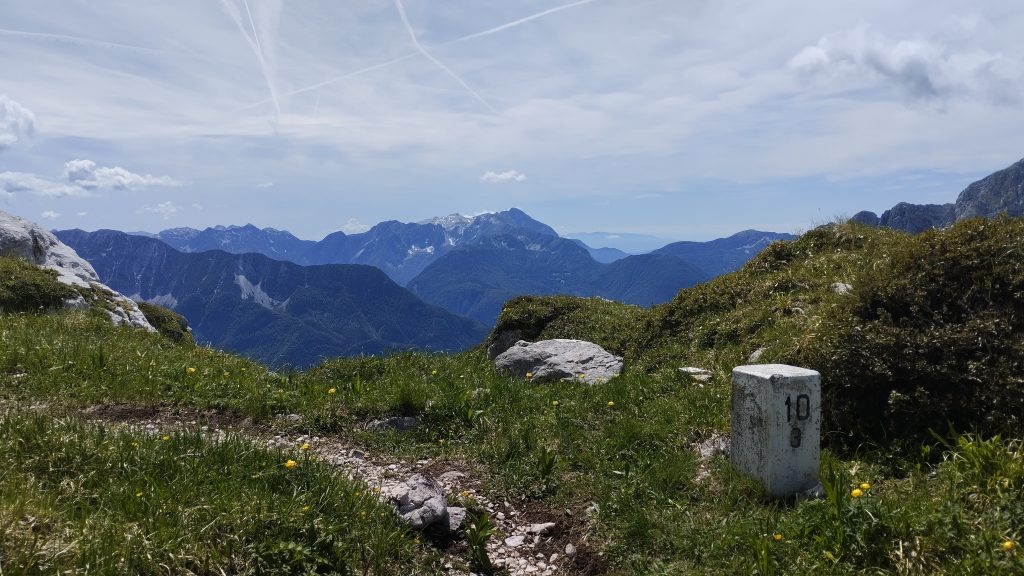
Right: View of the summit of Monte Forno/Peč/Ofen. Photo from the author’s archive.
The 1980s ushered in a normalization of relations. By then, local authorities across the region had further institutionalized cross-border cooperation with the establishment of the Alps-Adriatic Working Community in 1978. On the one hand, there seemed to be less impetus for new mountaineering initiatives, especially as more ambitious goals proved difficult to achieve. These included establishing dedicated crossing routes through the border mountains that were of particular interest to mountaineers and hikers. Such proposals raised questions of sovereignty and depended on diplomacy between the states over a border that still remained, in many respects, politically sensitive.
On the other hand, new actors emerged and new forms of exchange took shape. For example, a small organization such as the CAI section in Tricesimo, near Udine, formed a twinning partnership with the Kamenjak Mountaineering Club in Rijeka. Between the Resia Valley and the Soča Valley, cooperation among mountaineering groups also led to the creation of a new hiking trail along the Italian-Yugoslav border ridge.
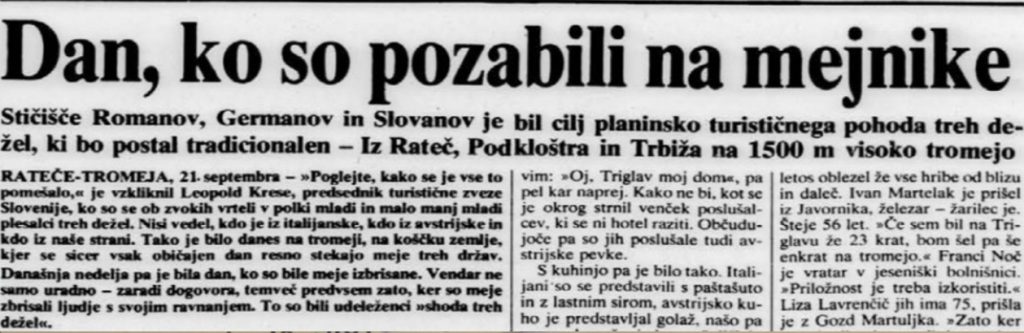
In the vibrant world of free climbing, greater opportunities arose for organizing climbing parties made up of different nationalities. Finally, the idea that the border mountains could bring people together was, in a way, cemented by the annual festival on Monte Forno/Peč/Ofen — at the tripoint where Italy, Yugoslavia and Austria meet — where hikers were allowed to move freely across the border for the duration of the event.
Past and future
From the very beginning, cross-border cooperation among mountaineering organizations was rooted in a particular relationship with the past, one based primarily on an effort to avoid sensitive issues; Italians, Yugoslavs and Austrians potentially had much to disagree — and even to fight — about. For this reason, some sections of the Italian CAI refrained from official participation in this type of exchange for many years. In Slovenia, the management of cross-border relations was centralized by the PZS, but this did not mean that support was unanimous or cohesive. As one Italian participant in one of the first Julian Alps Conferences/Meeting of the Three Regions in 1969 put it: “God help us if we were to bring back to light the many wrongs committed by all sides over the last sixty years.”
In essence, apart from a shared admiration for the mountaineer Julius Kugy as the “discoverer” of the Julian Alps, these forms of cross-border cooperation were focused on the future. As the Planinski Vestnik — the PZS’s magazine — emphatically stated in 1970, these efforts were intended to foster an international mountaineering friendship “unconcerned with nationality or state borders.”
Political and identity-related issues, however, never disappeared entirely. In joint initiatives, one occasional source of friction remained toponymy — that is, the names of places and their use in different languages. In general, the mountains continued to be understood within national territorial frameworks.
Indeed, beyond proposals for greater openness at the border, cooperation between neighboring organizations at this stage still depended on mutual recognition of territorial sovereignty. It is no coincidence that the process of reinforcing a post-Yugoslav identity in Slovenia would also take shape around the idea of a nation clearly defined by its Alpine character.
Borders remain dynamic and selective structures in which permeability and closure can coexist. Rediscovering the contacts and forms of cooperation that developed across the Julian Alps during this period helps us understand the role played by cross-border experiments that were introduced gradually, within specific areas of interest and with the involvement of the communities concerned.
Initially driven by just a few individuals, cooperation in mountaineering and hiking gradually came to involve growing numbers of people on both sides of the border. Over time, the consolidation of networks such as these across a multiplicity of social and cultural spheres has made a significant contribution to the development of the positive relations between the countries and peoples of the region that we see today.
For this reason as well, border regions are often described as “laboratories of Europe.” Certainly, we should avoid a teleological interpretation of these dynamics: the forms of cooperation that emerged across the Italian-Yugoslav border — and, more broadly, across the Italian-Yugoslav-Austrian border — were part of a process of integration whose horizon was above all local. At the same time, these forms of cooperation set in motion processes that, with all their achievements and shortcomings, were among the factors that prepared the ground on which the EU’s discourse on (internal) open borders could take root. The emergence of new European programmes for cross-border cooperation then built on these earlier developments.
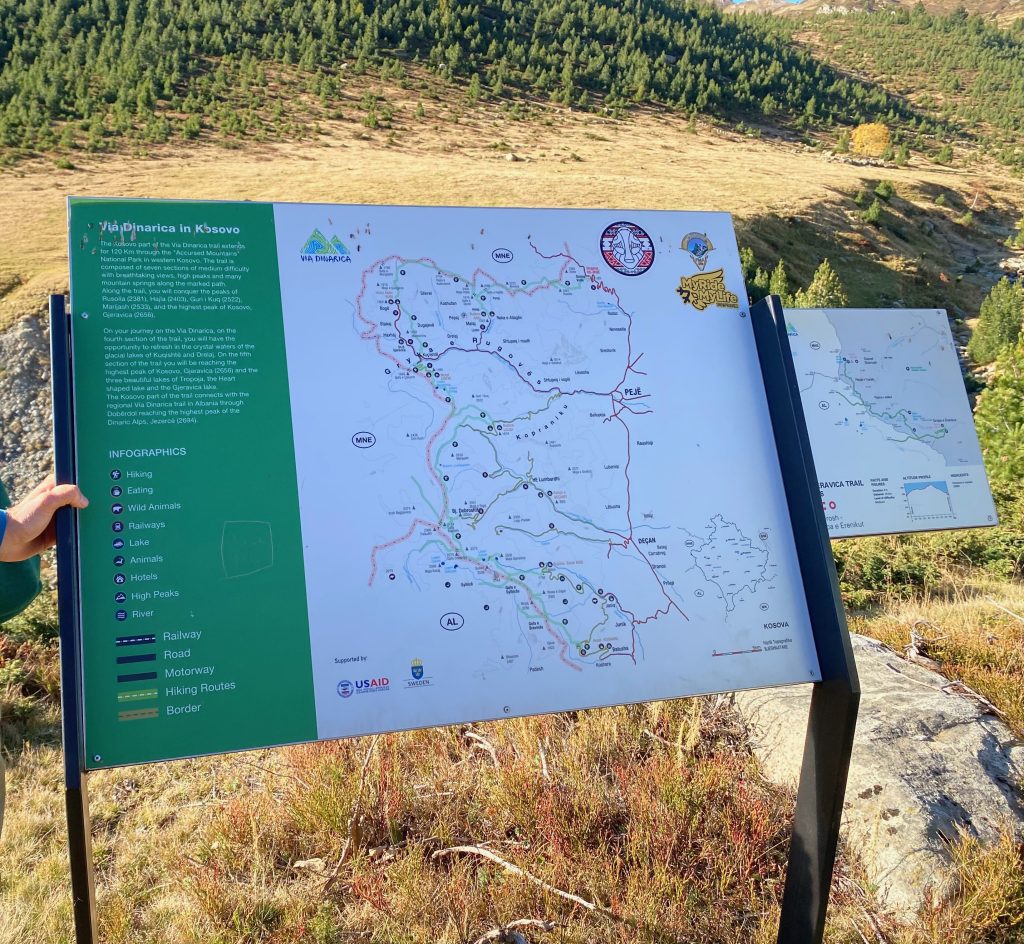
Interestingly, if we venture a little further east, across the borders of the Balkans and the European Union, we can see that mountains continue to represent not only national symbols but also spaces for experimentation. The “Via Dinarica” project, for instance, offers a network of hiking trails winding through the mountains of Slovenia, Croatia, Bosnia and Herzegovina, Montenegro, Serbia, Kosovo and Albania. There, the Italian Alpine Club and the Italian National Alpine and Speleological Rescue Corps are involved in the development of the Kosovar sections of the trail, helping to reconnect the threads of cooperation from the Balkan Peninsula all the way to the Alps.
Feature image: View of the Julian Alps. Photo from the author’s archive.
Marco Abram is a historian and has worked as a researcher at several universities and at the Osservatorio Balcani Caucaso Transeuropa. He is currently a postdoctoral research fellow on the ERC project “Cold War Europe Beyond Borders” at the Science and Research Centre Koper.
This article was originally written in Italian. The English translation was produced with the assistance of AI and subsequently reviewed and edited by the author.