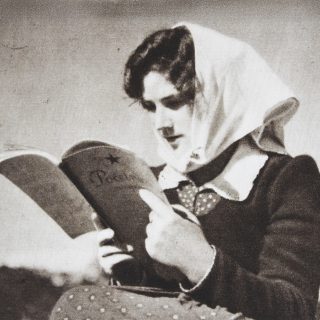

Bosnia and Herzegovina has different regional identities – persons from Krajina, Herzegovina, Sarajevo, etc., and people from Podrinje region. Every of these identities implies its own dialect, accent, customs and other characteristics. Women from Eastern Bosnia are characterised by their firm stance, emotional strength and an exceptional ability to view the world from a deep and emphatic perspective.
Ever since I was a young child, whenever I would hear the Mothers of Srebrenica speak, I would concentrate and try to place every word in the context of the world I was part of at that moment. Lately, the words that have resonated with me the most are those when they say that the new generations will continue their mission in their own way. They know that their values and commitment cannot disappear when a new generation of young people from all over Bosnia and Herzegovina will continue to advocate the truth about Srebrenica and a better life in their own communities. Their words did not stay in arenas and on screens; I personally have seen persons acting upon them.
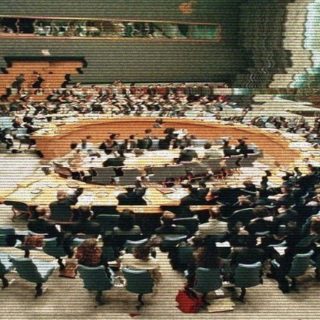
While I was standing on a podium at the United Nations on the occasion of the 30th anniversary of the Srebrenica genocide, I felt that my voice belonged not only to me, but also all those who will never have one again. I spoke of my brothers killed in the genocide, whom I never had a chance to meet; about Srebrenica that fell before I was even born. I spoke on behalf of the people I have coffee with every day, whom I greet on the street, who come to my home and whom I visit during Eid, with whom I have laughed and cried a hundred times. They all have someone of their own buried at the Potočari cemetery. And yet, that story, which ended before I was born, defines me every day. I said:
”We are not asking for pity. We are asking to be heard.”
This has never been just a diplomatic phrase. It is the essence of what the survivors are actually asking for: to be heard, sincerely, without any hidden intentions. Not to be spared, not to be commiserated, but to be understood. Because we are not something to be put on the margin, in a footnote, we are not a metaphor. And we are not here just to remember, but to also to remind others of the past.
My generation grew up with our parents’ silence, their impossible struggle between the pain they felt and the need to protect us. In our homes, there have always been too many unspoken words. The survivors shared with us the truth, their wounds, and, unintentionally, they gave us a foundation. Sometimes I think that this is the hardest gift to pass on.
For a long time, I failed to understand that the foundation was not meant to be a monument, but rather something much more practical: a support. For the new generations, so we can start from something once the moment arrives to take on some of the burden.
In April 2024, a group of young people from YIHR in Serbia sent a letter to the President of the UN General Assembly. They are young people who want a different Serbia – not a country that denies, but rather takes responsibility. In the letter, they stated that the president of their country did not speak on behalf of all of them and that they supported the Srebrenica Genocide Resolution.
As I read this, I thought that for the first time, we might have a generation in Serbia that, in spite of everything, wishes to break free from the vicious circle of denial. A generation that does need long explanations about what happened in Bosnia and Herzegovina in the 1990s, because they themselves ask what really happened, loudly, clearly, and without fear.
In my speech, I also pointed out that ”We were not here only to remember – but also to remind others of the past” – another call for youth to take on the role of those reminding others of it one day, maybe even very soon.
That is the moment in which survivors take a huge step to allow youth to reinterpret their stories in their own language and way, to accept that new generations might not remember every detail the way they experienced it, but will remember the essence: the truth about the genocide, the respect for the victims, and the fight against denial and glorification of criminals.
Youth, on the other hand, have to accept that responsibility does not simply mean to ”be modern” and ”move on”, but rather also face the society.
In this respect, my speech and the letter of YIHR to the UN are two sides of the same message in which we say that we are not asking for pity, but to be heard. And young people from Serbia say: We have heard you, and now we speak on our own behalf – against denial, for the resolution, for a different future.
That is a culture of remembrance that lives on when survivors lay the foundations and trust that young people can build their life on it, and when they do not only pass on the memories, but also the microphone.
Mirela Osmanović is a lawyer. Following her graduation, she started her professional career at the Srebrenica Memorial Center, where she gained experience while focusing on strengthening remembrance. During her work in the framework of different projects, she focused on the fight against oblivion. After the time spent working at the Memorial Center, she continued her professional development at the International University of Sarajevo, where she started studying international relations. At the moment, she is an external collaborator of the Srebrenica Memorial Center and works as a project manager. In this role, she is actively supporting the Memorial Center in engaging with international partners, and, as a result of this, she is further promoting the culture of remembrance and building of a permanent peace, which is her life calling.