How a gender-bending custom can free women — or not.
The ’90s are remembered as a decade that triggered exceptional sociopolitical transformation in Kosovo. As Besa Luci writes, “the ’90s began with the years of protests, and they ended with the years of war.” But even then, beyond such visible and painful ruptures, Luci notes that “the decade offers a whole other spectrum of experiences, understandings and meanings — stories that are all too often forgotten, unspoken, disregarded or merely marginalized.”
The sidelining of certain stories from the ’90s has meant a misunderstanding of, or at least a disinterest in, the changes that unfolded in the years that followed as a result of the decade’s far-reaching transformations. Women’s stories are among those most often left unspoken and forgotten: stories of how women experienced and contributed to the changes of the ’90s, as well as of how they experienced the new social and political world ushered in by the liberation of Kosovo — an achievement that did not always translate into more emancipatory social arrangements for Kosovar women.
Returning to these histories — to the ruptures heralded by the ’90s and the recompositions of the 2000s — means returning to a field rich in potential for understanding Kosovo, the status of Kosovar women, and the non-univocal interplay between change, “progress,” and tradition. Indeed, as society became increasingly re-traditionalized in the early 2000s, and as restrictive political definitions of masculinity and femininity took hold, some women widowed by the war turned to customary law — particularly the status of burrneshë. In the absence of effective enforcement of statutory gender-equality laws by international bodies and newly established state institutions, they reinterpreted this status in ways that allowed them to access rights otherwise denied to them.
Examining how widowed women, and later artists and feminists, reappropriated, reinterpreted, and rejected the figure of burrneshë reveals how tradition can become a site of negotiation over women’s rights, authority, and social position. These different appropriations of burrneshë demonstrate that social change in a post-conflict society can simultaneously reproduce and contest gendered hierarchies. By attending to the complexity of the processes through which communities reframe their customary heritage in response to profound social and political change, we can develop a more nuanced understanding of the evolution of gender relations in post-war Kosovo and of how societies remake themselves after war.
Between individual emancipation and patriarchal order
In Albanian culture, the term burrneshë has multiple meanings, though it has traditionally been understood in two main ways. First, it refers to women recognized for embodying moral qualities culturally associated with conventional understandings of masculinity. Within this framework, masculinity is conceived primarily as a moral and social ideal, encompassing traits such as courage, nobility, and social reliability. Along these lines, the Dictionary of the Modern Albanian Language defines a burrneshë as “a courageous, dignified and steadfast girl or woman who faces every danger and every difficulty with bravery.”
On the same semantic continuum, though with a distinct meaning, the term can also refer to a specific social and legal status under Albanian customary norms, or what in both Albanian and foreign scholarship — and less so among the communities where the practice originated — are known as “virgins” or “sworn virgins.” In this context, the status of burrneshë constitutes a specific customary legal institution that, in exceptional circumstances, allows certain women to become “social men” on the condition that they take an oath-bound vow of lifelong celibacy.
Women assumed this status for two principal reasons: either after refusing an arranged marriage or when their family lacked a male heir or head. Some became burrneshë in childhood, while others did so later in life, either temporarily or permanently, following events that disrupted the established social order, such as war, vendettas, or the death of the head of the household. Interestingly, the Albanian ethnologist Kadri Halimi noted in Trajtime dhe studime etnologjike, vepra 4 that, in mid-twentieth-century Kosovo, this change of status could also apply to widows.
In Albania: Family, Society and Culture in the 20th Century, researcher Antonia Young further notes that, following the collapse of communism, some women in rural northern Albania drew on the figure of burrneshë to renegotiate their place in society and gain freedoms generally denied to women. These included greater freedom of movement, the ability to assume positions of responsibility, and access to occupations traditionally reserved for men. By situating themselves within an established tradition, they could legitimize a more individualized way of life without directly challenging the existing gender hierarchy, in part by submitting to the requirement of celibacy.
Still, it is important to recognize that, although burrneshë gained access to certain male prerogatives, they were never considered the equals of men. Customary law did not grant them equal legal or social status: they could not vote in village assemblies and, in many respects, remained distinct from men proper. Although socially recognized as men, they could not marry or bequeath property, even though they could inherit it. The principle of patrilineal inheritance therefore remained unchallenged.
In the context of blood feuds, too, they were not treated as men’s equals: a burrneshë could avenge her family, for instance, without herself becoming the target of a vendetta, because she retained certain aspects of her social status as a woman. Some burrneshë also retained their female given names, while, depending on the context, the terms used to designate them could alternate between feminine and masculine forms. The retention of the feminine suffix -neshë/a in the Albanian term itself further underscores that their femininity is never entirely erased.
These ambiguities have led scholars to question how the gender identity of burrneshë should be understood: did they occupy an intermediate position in between genders, or did they constitute a third gender? Anthropologist and specialist on the transgender experience Laurence Hérault argued that being distinct from both conventional male and female roles is not, in itself, sufficient to constitute a “third gender.” Such a category would require recognition as an autonomous social group with its own status and rules. In Changing Sex and Bending Gender, Antonia Young and Roland Littlewood, similarly rejected this interpretation, defining burrneshë instead as women who have adopted a masculine social status.
Reflecting the diversity not only of gender expressions but also of the ways in which gender itself can be understood and experienced, René Grémaux argued that burrneshë occupy an intermediate position in-between femininity and masculinity, describing them as women “who are no longer women and are almost men.” Drawing on the concept of liminality, Hérault characterizes the status of burrneshë as an “emancipatory gender:” it allows women to acquire social status and access male prerogatives without challenging the binary and hierarchical organization of gender.
But emancipatory for whom? In truth, although the status of burrneshë may appear revolutionary, it neither challenges the binary organization of gender nor fundamentally destabilises the customary hierarchy between masculinity and femininity. From this perspective, the institution of burrneshë ultimately reproduces the dominant social order. By allowing certain women to acquire male prerogatives without challenging the broader hierarchy between men and women, customary law preserves the patriarchal order while offering — and at times imposing — only restricted room for manoeuvre to a small number of individuals.
Ultimately, my research shows that burrneshë should be understood primarily in terms of the social position women occupy and the possibilities for action and power available to them. Becoming a burrneshë does not necessarily constitute a “gender transition” in the contemporary sense. Rather, it reveals gender as a social structure through which power, rights, and possibilities for action are distributed unequally, determining who can speak, make decisions, inherit property, move freely, represent the family, and exercise authority. For this reason, although the customary institution of burrneshë is now functionally extinct as a lived practice, there is still much to learn from examining the circumstances under which this category was reactivated and reinterpreted in post-war Kosovo.
The burrneshë of Krushë
After the war, the adoption of new legal frameworks aimed at promoting gender equality did not automatically create the conditions necessary for the economic, social, and political emancipation of all women in Kosovo. Because the state was unable to enforce these laws effectively, and in response to the difficult economic situation, particularly in rural areas, some women turned to customary law as a means of negotiating and redefining their position within society.
In April 2018, I conducted my first fieldwork on this topic in the villages of Krushë e Vogël and Krushë e Madhe, in southern Kosovo. These villages had witnessed some of the most severe crimes against civilians during the war, resulting in the killing or disappearance of more than two hundred men. After the war ended, many women were left widowed, and some never remarried. My research explored how these women rebuilt their lives and navigated the challenges of widowhood in their communities.
Interestingly, the five widows I interviewed either described themselves as burrneshë or explained that they were defined as such by those around them. Rather than claiming the customary status of burrneshë in its traditional sense, they reinterpreted the category to legitimize their position as heads of household in a context where state law failed to guarantee effective equality.
Indeed, widows have traditionally occupied a specific social position in Albanian society — a distinct status that bears some resemblance to the customary institution of burrneshë. According to Albanian custom, a woman has two options following her husband’s death: she may return to her birth family if she is still young and wishes to remarry, though her children will remain with her husband’s family. Alternatively, she may remain in her husband’s household, provided that she does not remarry.
The women I interviewed in Krushë did not remarry, even though they were relatively young when their husbands disappeared. Their testimonies indicated that they had no intention of doing so. The community monitored their adherence to a commitment to lifelong celibacy and imposed a specific code of conduct on them. As researcher René Grémaux notes in Third Sex, Third Gender: “When they become widows, or when they are believed to have ceased intimate relations with men, a shift in status occurs. They move away from the status of ‘woman’ and revert to a more primal state akin to that of a man.” In this sense, they are considered closer to the masculine than to the feminine.
Along these lines, and beyond them, some widows in Krushë took on responsibilities traditionally associated with men. While women were generally expected to remain within the domestic sphere, the women I interviewed worked in the fields, handled administrative matters, made decisions on behalf of their families, and entered the labour market. By invoking tradition, they sought to legitimize their changing social position and mitigate some of the condemnation they might otherwise have faced for assuming these domestic, economic, and social responsibilities that extended those conventionally expected of widows. In this context, invoking the figure of burrneshë functioned as a partial shield or explanation for their actions, rather than an outright license to transgress established gender norms.
Two of the widows I interviewed, Fahrije Hoti and Shukrije Shehu, developed a strong desire for independence after the deaths of their husbands. Fahrije, for example, became a business owner after the war, founding a company that later brought her international recognition, including through the globally acclaimed film Hive, which was inspired by her story. Her decision to move beyond traditional expectations, however, was accompanied by social stigma.
Fahrije understood that her efforts to achieve economic self-sufficiency carried a broader significance. It was not simply a matter of securing her own independence, but also of creating opportunities for other widows in her village and involving them in her business. As she explained: “Widows in Kosovo were not treated as human beings. I am not speaking only about myself; I am speaking, in a way, on behalf of all the women who lost their husbands. A widow who went to work or provided for her family would immediately become the subject of gossip.” Through her work and testimony, Fahrije publicly challenged norms that confined widows to dependency. Driving, for instance, was traditionally considered a male prerogative. By obtaining her driver’s licence, she challenged the gender order of the society in which she lived.
For Fahrije, driving became a symbol of independence; for Shukrije, building her own house and living with her two daughters was equally empowering. It allowed her to leave the house without having to answer to members of her husband’s family. “That mentality still exists; things still work that way, especially in the villages. But I don’t pay much attention to it anymore,” she explained. Both women have taken responsibility for asserting their rights, challenging traditional gender norms and contributing to the reshaping of social relations.
Still, emancipation for these post-war pioneers took place through negotiation rather than a rupture with custom. Fahrije and Shukrije continue to live in the villages where they married and have not remarried. From an emic perspective, they remain guardians of their late husbands’ family honour and under the watchful eye of a community that still ensures their celibate status is maintained.
When forced to reposition themselves within a disrupted post-conflict society and reconfigured family structures, the hardships of everyday life challenged them to reassess their previous lives — as well as the mindset that had accompanied them — in order to move forward. This was a challenge they chose to take on, and in doing so, they gained a certain degree of emancipation. By adapting to, rather than wholly subverting, customary law, and notably the institution of burrneshë, they gained access to rights from which they had previously been excluded and that state law alone could not secure for them.
Their existence in a polyvalent relationship with tradition unfolded alongside a more radical transformation. As Fahrije explained, a paradigm shift is underway: “Back then, people would say, ‘That woman is like a man.’ Now, people speak of a strong woman, a noble woman.” As Fahrije points out, the term burrneshë is increasingly being replaced by the expression “strong woman.” This linguistic shift reflects a broader transformation in social perceptions: women’s recognition and authority no longer necessarily depends on an explicit association with masculinity. From this perspective, burrneshë can be reclaimed and reinterpreted as a cultural reference in ways that speak to women’s lives and aspirations today.
Reimagined and rejected
In February 2019, the exhibition “Perceptime: Burrneshat,” held at the National Gallery of Kosovo in Pristina, marked a turning point in the evolution of my research. The artists reclaimed the term burrneshë to denounce the lack of female representation in the art world and to question prevailing gender norms in Kosovar society. In this context, I interviewed two artists: Zake Prelvukaj about her work Ofshamë (2017) and Arbana Hajredinaj about her work 30% (2018). The former denounced violence against women, while the latter focused on the underrepresentation of women in politics — two issues deeply relevant to Kosovar society.
According to Hajredinaj, “The exhibition gives voice to the lived experiences of female artists. In pursuing their goals as women, they have faced and overcome many challenges, making them akin to burrneshë.” While Hajredinaj associated the term burrneshë with courage, war, and confrontation, Prelvukaj spoke instead of revolt and resistance: “The concept of burrneshë that Arta Agani [the curator] employs in this exhibition is subversive. I approve of it! Arta selected seven artists from Kosovo, who were joined by fourteen artists from the UK. As women working in the art world, we realized that we face many of the same issues as British artists. We chose themes that resist oppression and empower women.”
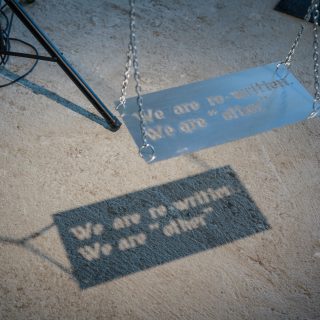
In this setting, burrneshë functioned as a political figure through which power imbalances could be denounced and gender norms questioned. It provided an umbrella concept for these forms of denunciation, evoking the toughness demanded of women who resist gender oppression. For both artists, the body — also a site of intervention for burrneshë — lies at the heart of their work. Writing about French feminist artists in 1970s France, whom she aptly described as “witches like any other,” Fabienne Dumont notes that this use of the body as a site of gendered confrontation and a means of political intervention reflects a desire to explore how communities function and how collective interactions respond to contemporary challenges. As Dumont explains, through their bodies, these artists “pit their proposals against the actual external model in order to disrupt it, set it in motion, and change it.”
Interestingly, the reappropriation of burrneshë as a tool of subversion and social critique is not unanimously supported by women’s rights advocates. Feminist activists I interviewed in 2021 expressed their opposition to the use of the term burrneshë, even — and perhaps especially — when it is invoked in the context of emancipatory struggles. Igo Rugova, director of the Kosovo Women’s Network, explained to me her opposition to the term: “I don’t like the term burrneshë, because this patriarchal society needs to understand that there are strong women — not that being strong means being labeled a man. In Kosovo, there are brave, courageous women, but no burrneshë. I hate burrneshë!”
Leonida Molliqaj, director of the NGO QIKA, shared a similar perspective: “In Kosovo, burrneshë is used when you want to compliment a woman. It isn’t an insult — even though we, as feminist activists, oppose it — but it reveals what society values: masculine attributes.” As our analysis suggests, while burrneshë may expand our understanding of gender expression and relations, it cannot wholly topple the patriarchal logic from which it emerged. For both activists, that legacy makes the term irredeemably uncomfortable, if not outright problematic.
Still, whether by disrupting the use of the term burrneshë or by refusing to use it altogether, the artists exhibited at the Kosovo National Gallery and the feminist activists working across the country challenge traditional ideas about women’s bodies and their place in society. They do so in different ways: by pressuring institutions to guarantee gender equality, denouncing social and legal injustices, and engaging with tradition to reinterpret it, challenge it, or leave it behind. Through their art and activism, they promote women’s active participation in public life and disrupt male-dominated institutions and power structures. In doing so, they — at long last — occupy spaces of power from which women have long been excluded, particularly women who, like them, have not had to relinquish part of their status as women in order to approximate the social status and condition of men.
As we have seen, the nature, history, and even contemporary reinterpretations of burrneshë are contested, resisting any single or univocal interpretation. To me, burrneshë speaks to the need, as Saba Mahmood argued in Politics of Piety, to understand agency not solely in terms of resistance to norms, but also through the ways in which people inhabit and negotiate them, drawing on the tools, opportunities, and meanings available to them.
The case of burrneshë invites us to reconsider emancipation not simply as a process of breaking with tradition, but also as a process of negotiating one’s position within it. Tradition can constrain women’s possibilities while simultaneously providing categories and spaces through which some women can create room for manoeuvre. This does not mean that the customary order is wholly transformed or that gender inequalities disappear. Rather, it shows that women’s agency can emerge within existing structures of power, creating possibilities for change from within them. Until, one day, it is the structure itself that gives way.
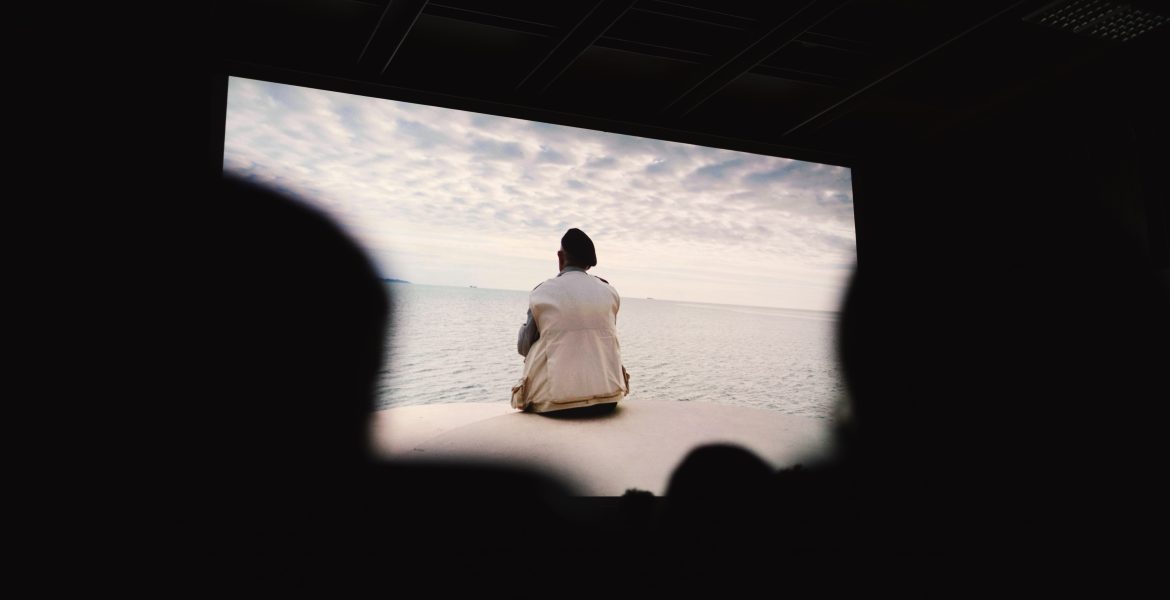
Feature image: Photo from the Prishtina screening of House with a Voice (2024), a film by Kristine Nrecaj and Birthe Templin about the lives of six burrneshë. The screening opened the third edition of the Prishtina Queer Festival, held September 5–7, 2025. Photo: Besfort Syla / courtesy of Dylberizm.
Vijona Shehu is an anthropologist. Her PhD research focused on the emancipation of Albanian women in Kosovo after the 1999 war through the status of burrneshë. Her main areas of research include gender, customary practices, citizenship, and women’s agency.