In Kosovo, preserving the history of exchange among communities is an act of anti-ethnonationalist resistance and hope.
As a child, searching for depictions of my homeland in the diaspora were always coloured by the persistent portrayal that Albanians and Serbs were forever at odds. Every headline seemed to reinforce the same narrative: our communities were destined for conflict and simply “could not get along.” Eager to find a different story about Kosovo, one not perpetually defined by division, I would often raise these frustrations with my parents.
Among the many stories they shared with me in response to calm my frustrations, and provide alternative depictions, one has remained with me. My mother often spoke about their Serb neighbours in Prishtina, with whom her family had lived side by side for generations. They called the elderly woman Tetka Mileva, while her husband, Duško Abej – “Abej” deriving from the Turkish abi, meaning “older brother” – shared a particularly close bond with my mother’s family.
Their relationship was marked by small but meaningful acts of cultural connection. At Orthodox Easter, they would bring us painted eggs; at Bajram, we would offer them our finest baklava. They saw our door as an extension of theirs and vice versa, often spending many summer nights speaking through blended tongues over freshly served çaj. Hearing about these relationships, foregrounded within the context of my own ethnically mixed family, pushed me to question the narrative I had been fed in broader cultural spaces: that what happened in Kosovo was the result of supposed “ancient hatreds” shared by its diverse communities.
While I was also exposed to the difficult realities of Kosovo’s history, marred with colonial violence, displacement and fragmentation, these memories were not solely shaped by conflict. The remnants of memories where Kosovo’s communities were brought together through shared cultural practices were recounted in my family home often. These conversations expanded my understanding of who we were able to connect with, particularly when we bonded over our relationships to nature, to cities, to shared mahallas (neighbourhood districts), to food, and even to traditional clothing.
Scholar Ger Duijzings argues that while Kosovo has experienced ongoing conflict, “we should not focus exclusively on conflict…because we might be ignoring signs of coexistence and symbiosis” and I agree with this perspective. Through my research into Kosovo’s history and its peoples, I have come to recognise the many connections that have linked those who have lived there for centuries. However, with the rise of nation-state ideologies in the nineteenth and twentieth centuries, deliberate efforts were made to fragment Kosovo’s diverse communities into singular national identities. In Kosovo’s case, the expansion of the Serbian state, together with systematic violence, massacres, settler colonialism, and other forms of state-sponsored oppression, profoundly shapes how Kosovo’s collective past is remembered today.
Yet my research also reveals grounds for hope. Many communities continue to maintain cultural practices, memories, and identities that cross ethnic boundaries and reflect Kosovo’s diverse social fabric. By broadening our practices of remembrance to include histories of coexistence, cultural overlap, and mutual exchange, we can challenge the persistence of exclusion that sustains most of our societies today.
Connections to Nature
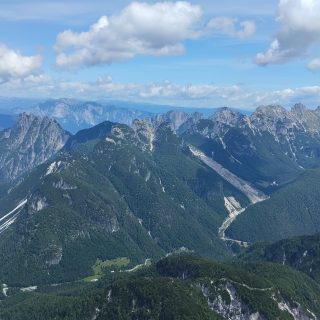
There is something especially magical about Kosovo’s landscape. The beauty of its hills, rugged mountains, isolated lakes, and fresh air has always captivated me. Encountering these natural spaces has always made me wonder, what if we can reframe our supposed differences through our shared connection to land?
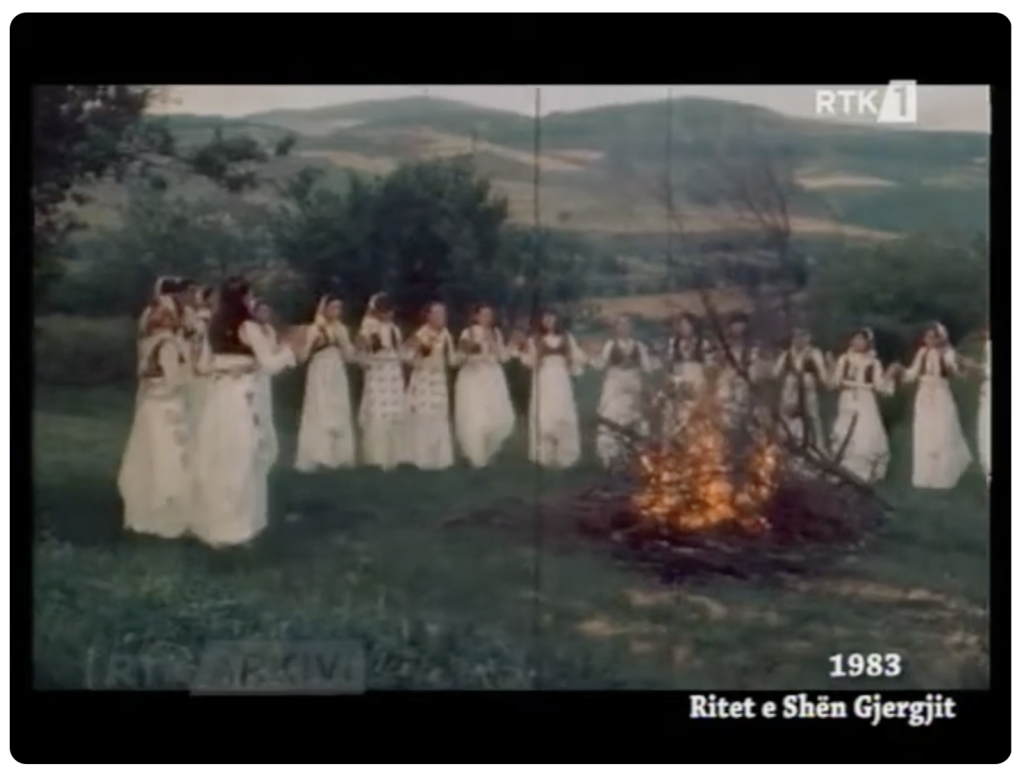
From familial stories and research, I know how deeply Kosovo’s people are connected to their land. A study exploring cross-cultural comparisons of folk plant uses among Albanians, Bosniaks, Gorani’s and Turks living in South Kosovo, supports how rooted communities are to their landscapes and how they influence one another in interacting with their natural contexts. The study states that “the intercultural mixing of various communities in the same area has resulted in a dynamic form of TEK (Traditional Ecological Knowledge), with the impact of one traditional culture on another illustrated in both the uses and names of useful plants found in the local flora.”
Another study represents how identities in the Gora region of southern Kosovo intersect with one another in a natural context. It highlights the weeping willow tree and the vital role it plays in both Albanian and Gorani traditions, noting that “both Gorani and Albanians use willow branches with leaves as protective amulets over their doors…” Here we have just two examples of how communities, shaped by shared geographic boundaries, maintain, exchange, influence and continue similar traditions related to their natural spaces, contrasting to the idea that Kosovo’s ethnicities have always existed in isolation.
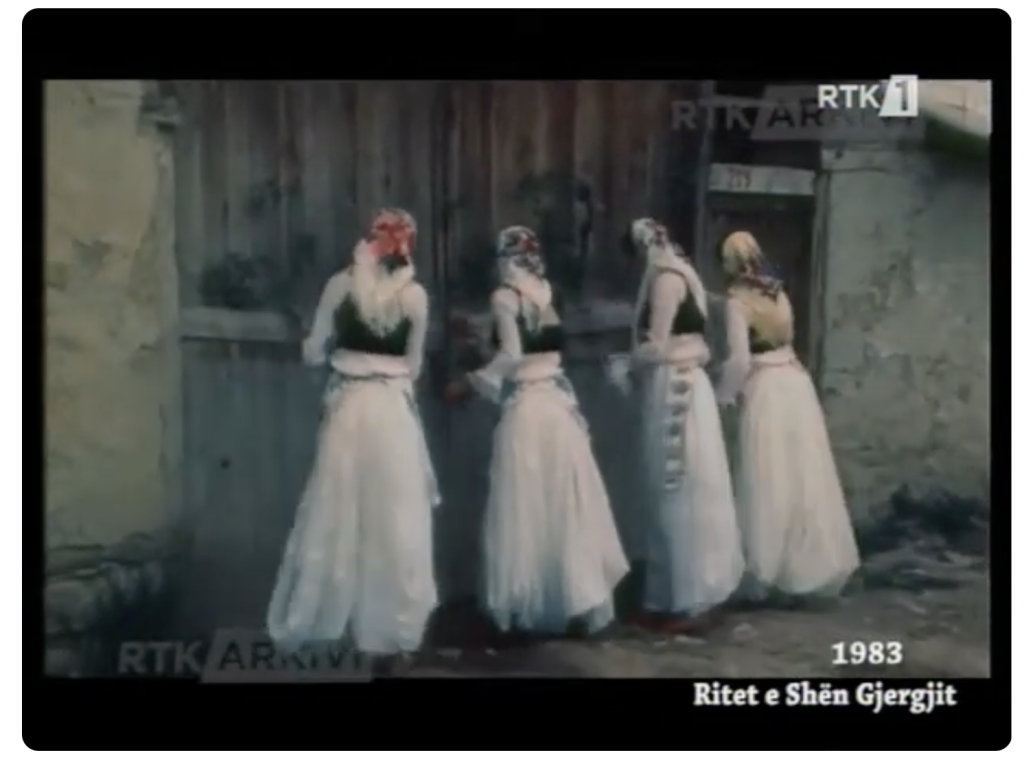
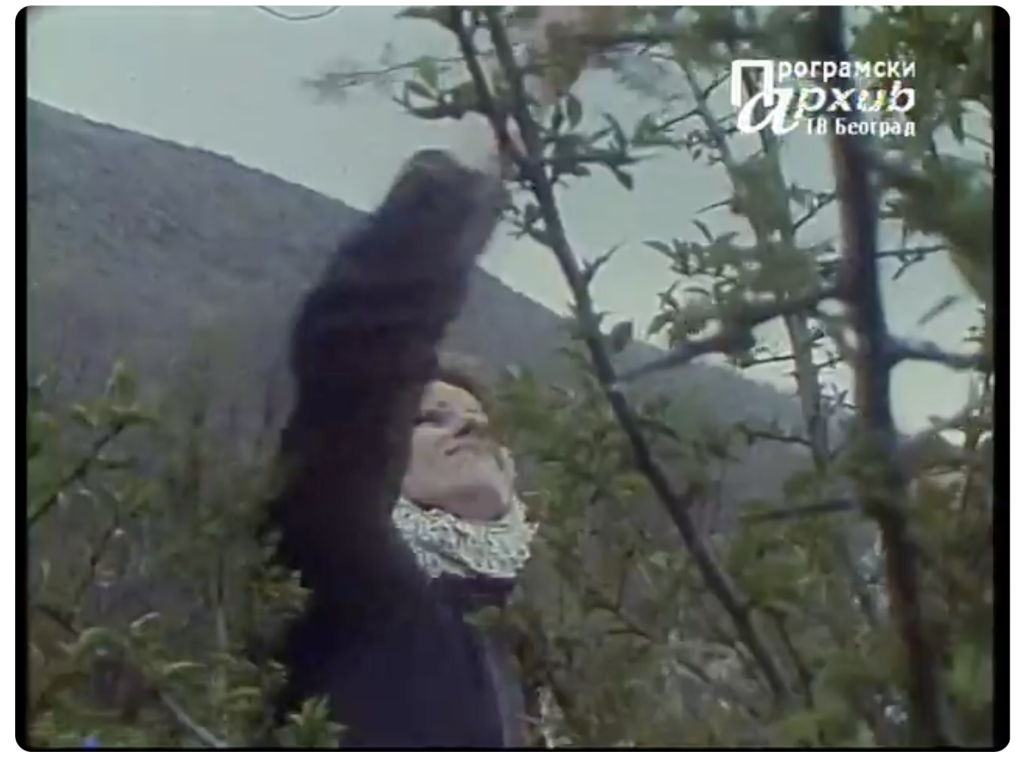
Reference to the willow tree reminded me of the stories my mother told me about how St. George’s Day (in Albanian: Dita e Shëngjergjit, Serbian: Đurđevdan, Romani: Ederlezi) was observed in her home. Celebrated annually on May 6th by many ethnic and religious communities in Kosovo, the day carried significance for my mother’s family. As children, they were woken with gentle splashes from willow branches dipped in water, a gesture intended to invite purity for the spring season. Afterwards, they would eat nettle burek, a tradition that, once again, was shared across Kosovo’s diverse communities.
Shared traditions we eat, wear and live
Reading transcripts of an oral history project on the Roma community in Kosovo, I encountered yet more intimate representations where Kosovo’s communities collectivised through celebration. One of the interviewees, Sebahata, reflects on her memories of celebrating “Vasilica” (Orthodox New Years), recalling that “we had a large table…with our dinner on it, and we had our friends, Albanians, Turks, Jews, Serbs, and Roma, come over to eat and drink on that day.” An image formed in my mind of Kosovo’s communities sharing bread around a large table, prompting me to turn to food as a way of exploring the possibilities of coexistence through what crumbs of research were available.
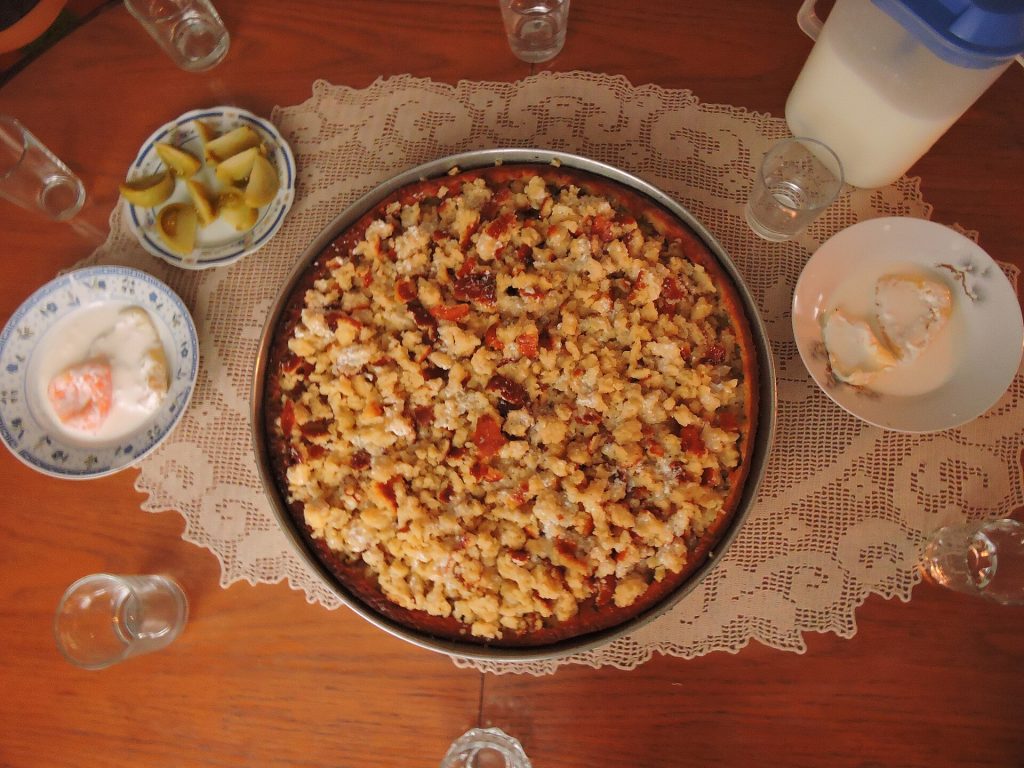
Throughout my life, I knew that many dishes a part of my traditional cuisine could be found across the Balkans. However there was one, krelan me duqa, a large sheet of fried dough with exposed dough balls, typically topped with cream and white cheese, I always believed was a quintessentially Kosovar Albanian dish. Encountering the same dish in Kosovo’s Serb and Turkish-speaking communities – known there as boranica (Serbian) and haşlama (Turkish) – offered a compelling disruption of the nationalised frameworks I had internalised. The presence of krelan and many other delicacies across these identities points to an intertwined cultural landscape.
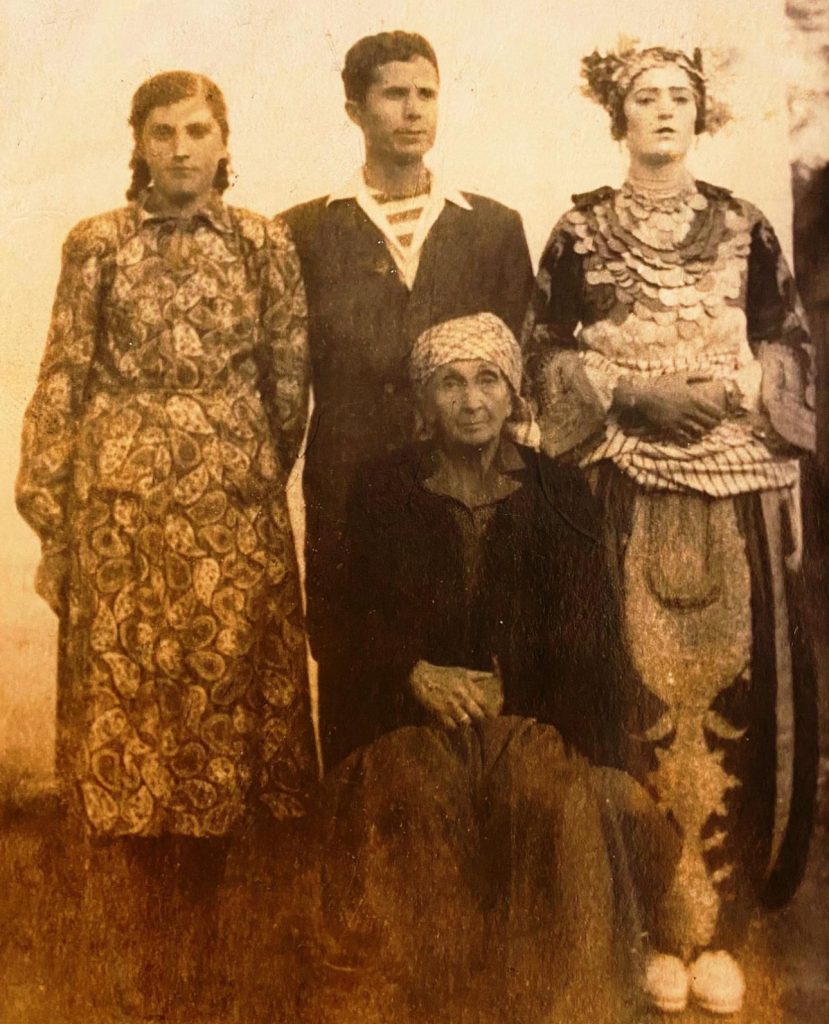
These boundaries were further questioned during a visit to the British museum nearly a decade ago. Walking through the Islamic galleries, my attention was drawn to a beautiful coat, identified as a “Džube: a velvet coat made for a Christian Orthodox bride in Prizren, Kosovo, in the Balkans”, this was most likely worn by a Kosovo Serb woman. Meeting an item worn by Christian communities from Kosovo in Islamic galleries further juxtaposed narratives of separation or inherent difference, expressing how religious and ethnic communities have often influenced one another historically. The coat naturally reminded me of the traditional clothing worn by women in my own family.
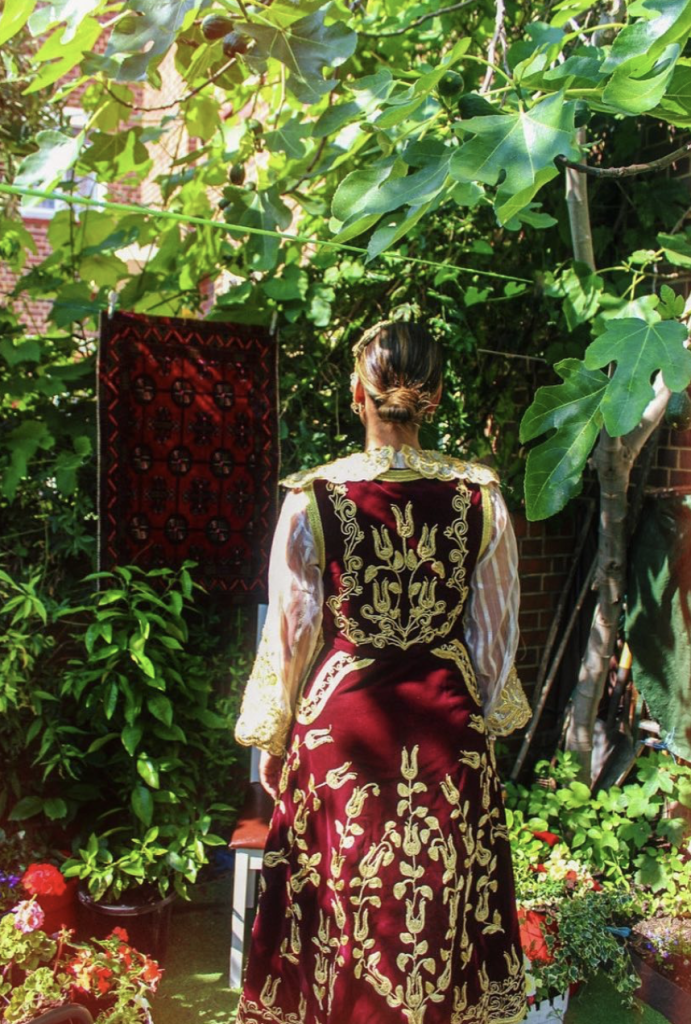
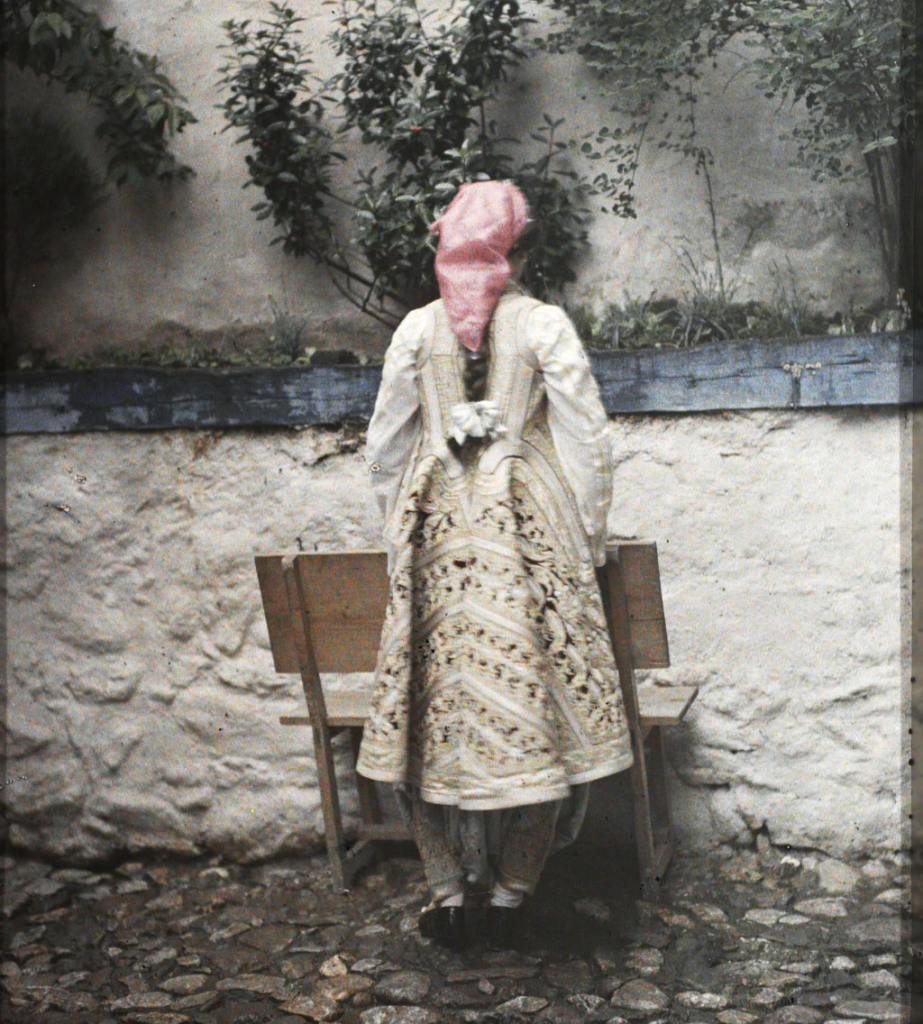
(Right) An image depicting a young Kosovo-Serb woman named Mademoiselle Ljubica, in a rich costume with a bright pink silk headscarf, seen from behind, wearing a gold-embroidered xhybe/džube, Prizren, 1913. Photo: Albert Kahn Collection
When conducting further research on these items and then eventually holding them in my hands at cultural institutions such as the V&A Museum, my mind continued to question these dominant narratives of difference. This very textured experience offered me an entry point into a different way of seeing, one that disrupted the clichés so often used to frame conversations about Kosovo’s ethnic communities, reducing our histories to sensationalised narratives of division.
Fluid identities and forgotten histories
In a space so often defined by ethnicity, I have wondered whether there were moments where these lines merged. One example resonated with me in my research. In “In the Debatable Lands,” English anthropologist Edith Durham explores an interesting case where identities were exchanged in Kosovo. She writes: “the Serbs have a converted Albanian as the head of their monastery, and conversely, one of the most patriotic Albanian priests in Gjakova was a Serb by birth.” This case does not erase the wider socio-political and economic contexts that may have influenced people to give and take on new identities — Durham’s work is very clear about the tensions that existed in Kosovo during this time. Nor am I presenting this case to deny that nationalist ideologies through history in the Balkans often implemented assimilatory pressure that forced communities to change how they identify. These are acts of violence that should be rightly critiqued.
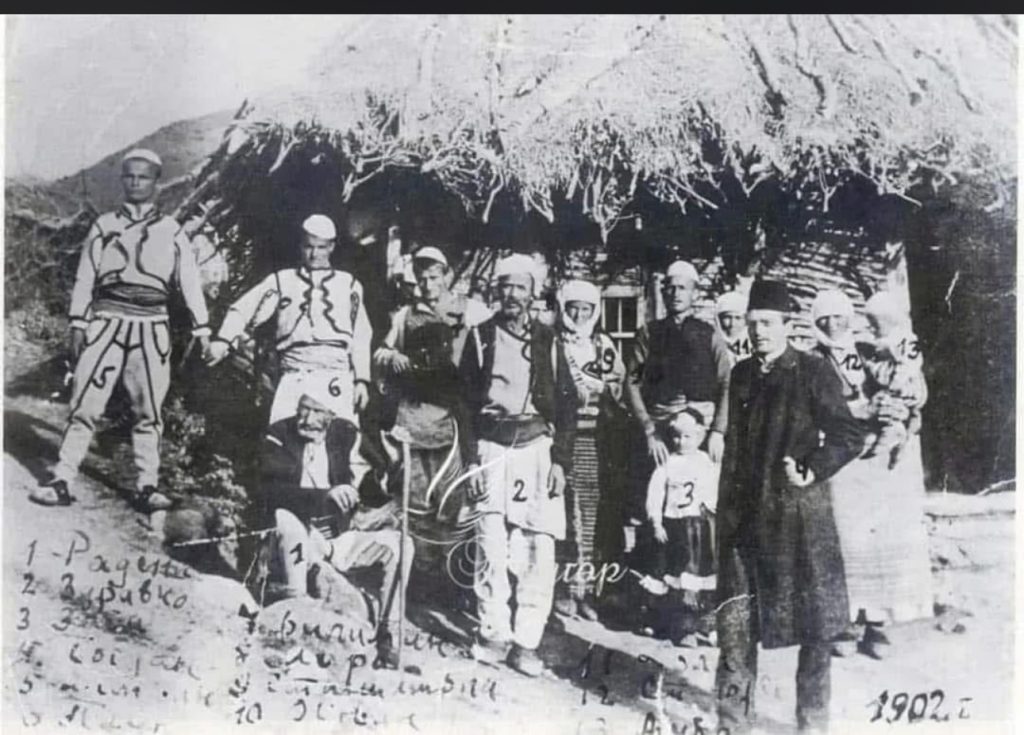
However, Kosovo’s history time and again points to many examples where communities exchanged identities and cultural markers for a plethora of reasons. Assimilatory pressure was definitely one of them, but there are many other examples where identities merged due to inter-ethnic marriage, cultural sharing, a means of protection, and the gradual symbosis that occurs when communities live side by side for hundreds of years. The imposition of settler colonialism by the Serbian state in Kosovo and the spread of nationalised frameworks have obscured these historical examples, however echoes of this historic fluidity can still be felt today.
One such example is the “pidgin” dialect found in the Rahovec region known as “Rahovecionshe” or “Raveqki.” This dialect blends Albanian, Serbian and Bulgarian and its precise origins remain debated. Hajrullah Bajra describes it as “a mixture of Serbian, Albanian and Bulgarian, and the [unique] structure of the sentences and words mean that only people of Rahovec can understand it.” One theory suggests that it emerged as a common language between Serbs and Albanians to facilitate the trade of grapes. Both communities continued to use it as an indication of their localised Rahovec identity until the 1990s, when the Kosovo War displaced populations and gave rise to a stronger trend of linguistic purism.
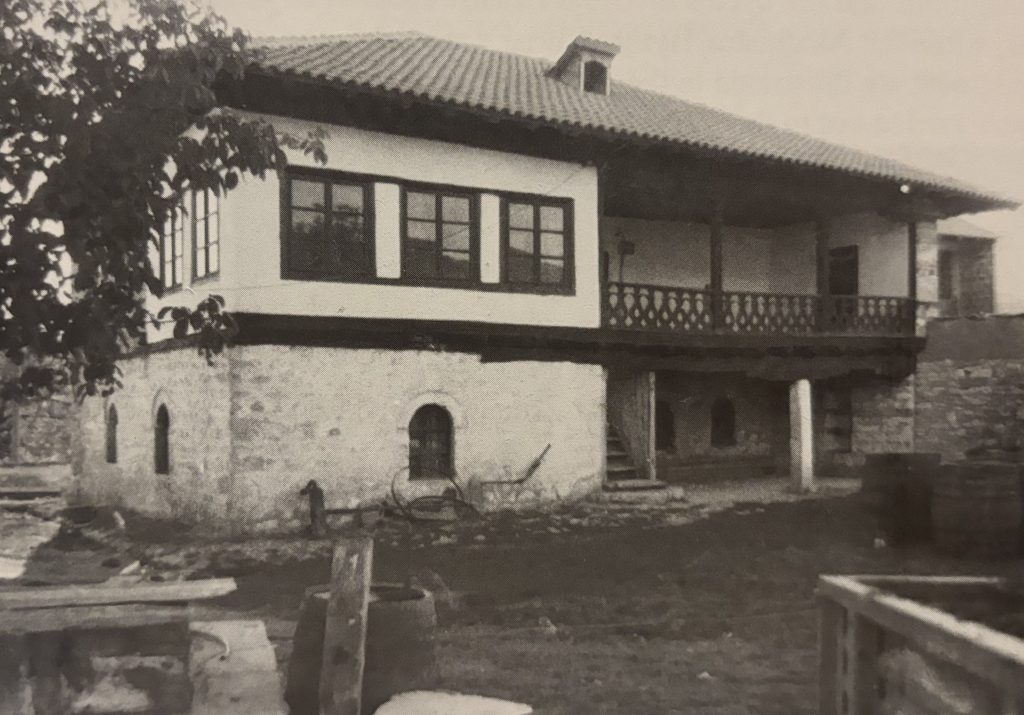
While reading more on this, I recalled diverse linguistic expressions in my own family. While my maternal family historically spoke Turkish, their neighbours spoke Serbian, Albanian and Romanes, with communication often unfolding through an improvised blending of all these languages. Kosovo’s history is marked by a rich tapestry of languages: Albanian, Serbian, Turkish, Romanes, as well as Circassian, Aromanian and Ladino (Judeo-Spanish). Yet there has been a growing tendency to overlook these multilingual pasts. While it is essential to critique, and challenge the ways in which language has been instrumentalised to facilitate oppression, it is equally reductive to assume that all forms of linguistic blending emerged from violence. Many developed through everyday interaction, trade, and coexistence, reflecting an entangled social history.
Erasure and violence nationalised
In Rogers Brubaker’s “Nationalism Reframed,” he identifies the role violence has played in disrupting communities, acknowledging how this violence is at the very centre in helping to facilitate the “exchange” or displacement of so-called unwanted populations, a process he terms “ethnic unmixing.” The Balkans experienced this most recently during the disintegration of the former Yugoslavia in the 1990s, when acts of genocide, ethnic cleansing, and mass displacement were carried out across the region. These forms of violence were often driven by efforts to create ethnically homogeneous societies. In the process, they also embedded more subtle and enduring forms of violence, shaping not only populations and territories, but also influencing what histories are remembered and how they are narrated.
By entrenching this structure, one rooted in the traumatic experiences that have shaped Kosovo throughout the twentieth century, this covert violence sought to ethnically unmix our memories and the people in them, divide shared cultural practices along national and regional lines, and erase or distort evidence of collective coexistence.
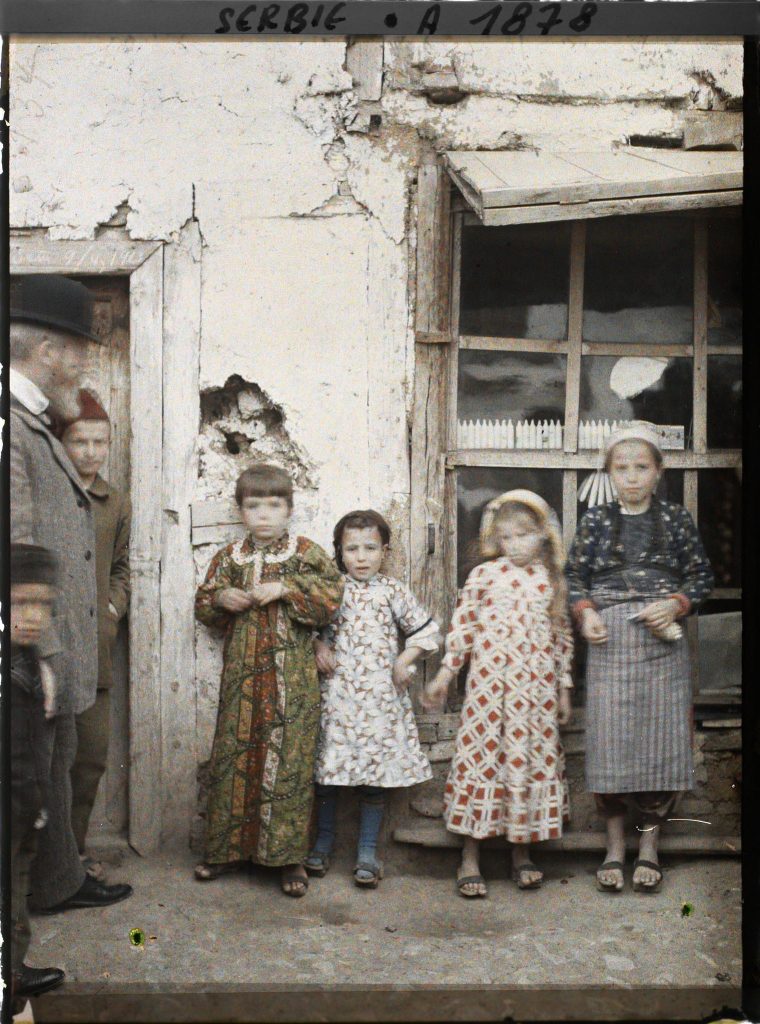
Through encountering the ethnographic collections of French geographer Jean Brunhes and photographer Auguste Léon, depicting Kosovo in the early 20th century, I found examples that illustrate this experience of “ethnic unmixing.” These images made visible the ways in which communities lived immersed one another, with the image above depicting a group of small Turkish and Jewish girls in Prishtina. However, the collection also speaks through its silences, revealing how the Balkan Wars (1912–13), the retreat of the Ottoman Empire, and the emergence of Serbian state occupation of Kosovo, transformed who was visible, where people were situated, and how they were represented.
In many of these images, it is primarily Kosovo Serb communities, alongside Serbian state representatives (army men, generals etc.) who appear in open, public spaces. Kosovar Albanian communities had been pushed into private or less visible spaces under the threat of state-sponsored violence, illustrating how nationalist structures can restrict communities’ access to space and, by extension, access to one another. Similar examples can still be seen in Kosovo today. The most evident is the city of Mitrovica, which remains divided by a river separating Kosovar Albanian and Kosovo Serb communities. Both sides experienced displacement during and after the Kosovo war, leading to the establishment of concentrated, ethnically homogenous blocks.
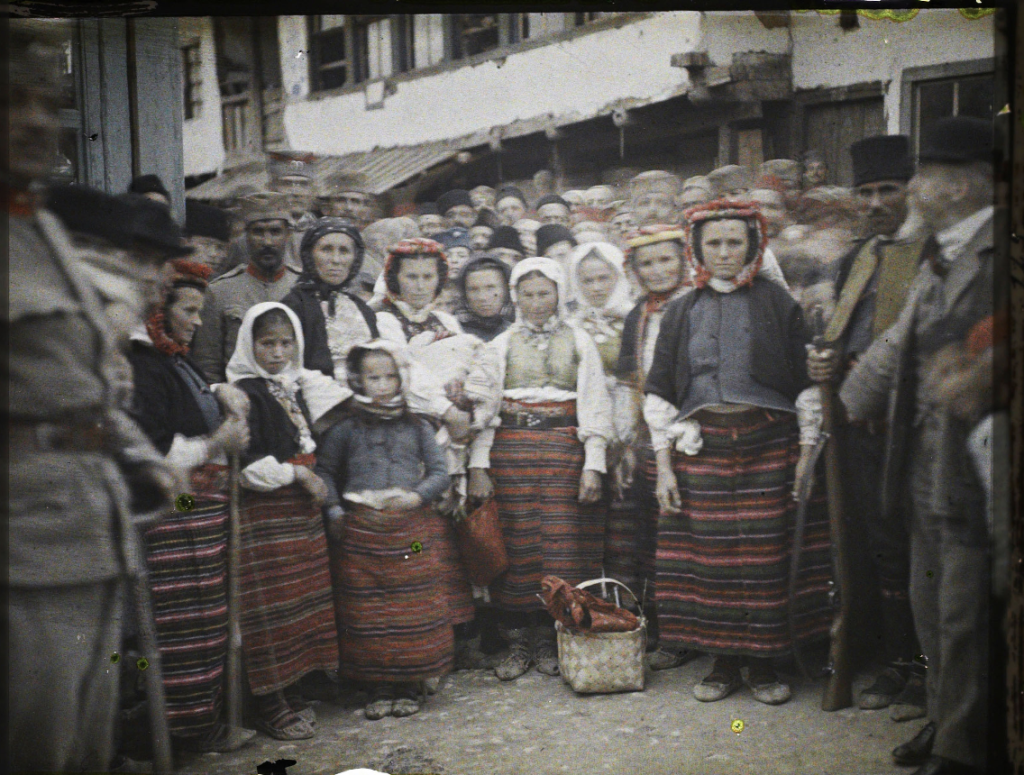
Therefore, I believe that challenging the violence of systems imposed on Kosovo throughout history and the present day requires reckoning with their underlying aims. These systems sought to erase memories of coexistence, reduce legacies of shared culture to rigidly nationalised forms, monopolise fear, and normalise hostility between so-called opposing communities. In response, there are ways in which we can begin to resist this. I have illustrated but a few examples that express how aspects of culture we all treasure, exist beyond nationalised or ethnic labels.
Extending this beyond the self and into how we relate to others can begin through everyday interventions. A simple extended conversation can be a gateway into important stories, revealing memories that are overshadowed by more recent events. I hope we can recognise the necessity of resisting the forms of violence that have normalised themselves in our context. A violence that manifests every time we erase communities that may be different to us but derive from the same place, and it is then further perpetuated by sustaining simplistic interpretations of the cultural practices we collectively share. And while we try to lead normal lives, this violence continues to affect so many of us in Kosovo and amongst its diasporas today. We cannot expect to see a productive change, while adhering to and or reproducing different forms of the violent ideologies that disrupted our ancestral homeland to begin with.
Allowing Kosovo and its peoples to be reduced to a binary of mutual hatred and violence is an injustice that needs to be addressed. I believe that we should begin by laying down the ground works for an alternative path, one that is informed by histories of co-existence that remain dusted and entrapped on the shelves of time that many are too afraid to reopen. Without romanticising the past, denying structural inequalities, or sanitising present-day realities, we can begin to remember with an intentionality to produce a secure context where our identities are no longer weaponised to justify the ethnic violence that have traumatised so many of our communities. I believe that we all collectively deserve better.
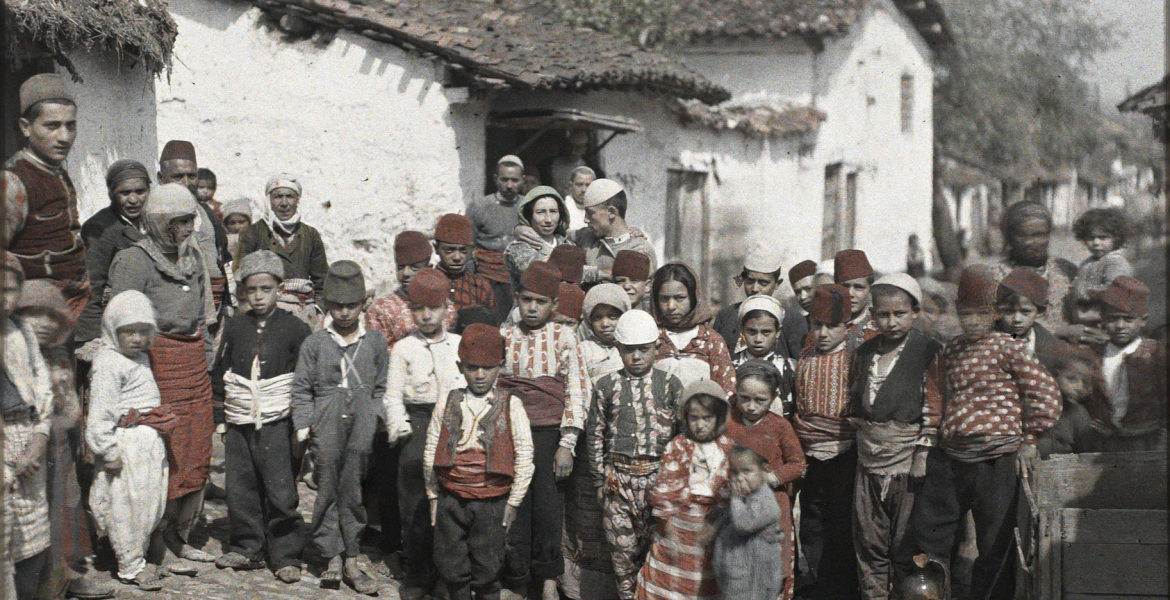
Feature image: An image depicting members of the Roma community, featuring headwear widely worn across the Ottoman Empire — the fez — alongside headwear closely associated with Albanian cultural markers, namely, the plis, Prizren, 1913. Photo: Albert Kahn Collection
Arbër Qerka-Gashi is a London-based curator, researcher and writer of Kosovar heritage. Arbër writes on a range of themes but is particularly passionate about Balkan heritage, diaspora experiences, Albanian identity, and Kosovo’s cultural expression. Arbër is the founder and editor of the research platform and publication “Balkanism” and co-founded the Balkan London Collective events initiative.
This article has also been published by the Reporting Diversity Network.