In the spring of 1999, my family’s household in Librazhd, Albania grew. The walls of our modest home were pushed outward by the presence of another family — by the smell of their heavy tobacco, the rhythm of their whispers at night, and the dense, suffocating weight of their uncertainty.
But when the buses arrived that June to take them back home to Kosovo, they left behind a silence that I have been trying to fill for 27 years.
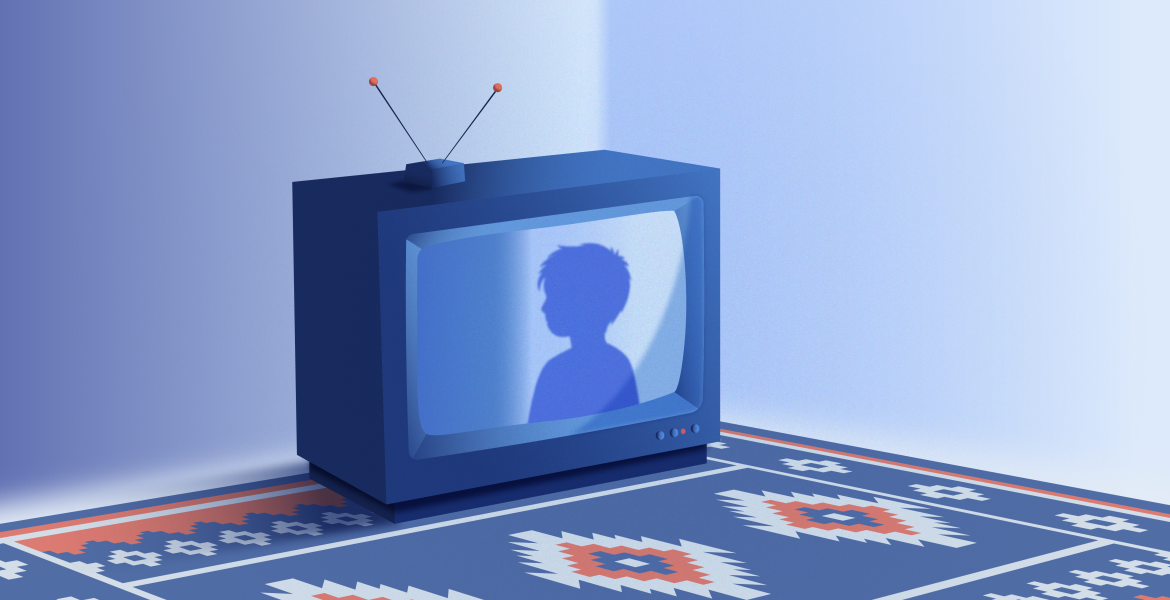
I remember the exact spot in our living room where their youngest son, Agon, used to sit. I was only six years old at the time, and he was close to my age, a boy whose eyes held a sharpness that didn’t belong to a child. While I played with plastic soldiers, Agon watched the news with the intensity of a statesman. The rug he sat on is long gone, replaced by modern tiles during a renovation a decade ago, but in my mind, the corner of the room he sat in remains “his.”
When Agon and his family stayed with us, our house was a construction site of hope. Our family of three was not just hosting Agon’s family of six; we were living a shared life.
We knew their fears, the name of the village near Podujevo they had fled, and the specific, rhythmic way they knocked on the door when they came back to the house. We were building a bridge out of shared loaves of bread and mattresses spread across the floor. My mother organized it all with a general’s precision.
Then, peace came. And with peace came the departure.
I remember the day Agon’s father hugged mine. There was joy, of course, the kind of frantic, weeping joy that follows a war. We embraced. We shook hands until our palms were sore. My father and Agon’s father exchanged addresses written on the back of a flattened, empty cigarette pack. “You must come to our home as soon as the roads are safe,” Agon’s father insisted. “We will host you. The door will always be open.” My father promised the same in return.
We believed it. We tucked that cigarette pack into a drawer like it was a sacred text. But life, in its messy, urgent, and often cruel way, moved on.
As a journalist, my career is built on uncovering stories, tracking down leads, and finding answers. Yet, the most important story of my childhood remains without an ending.
About five years ago, I found myself sitting at my laptop late at night, the blue light of the screen reflecting off my glasses. I began typing names into Facebook. I searched for “Agon” followed by the surname I thought I remembered. I looked through “People You May Know” in Prishtina and Podujevo. I found dozens of men with that name, faces etched with the same Balkan ruggedness, but none of them were him.
In 1999, we thought the only thing separating us was a border and a war. We didn’t realize that the greater border would be time. The cigarette pack with the address was lost during a move in the early 2000s. The landline numbers in Kosovo were disconnected or changed during post-war reconstruction. The digital age promised to connect us all, yet I still lost Agon and his piercing eyes.
I often wonder: does Agon look at his own living room in Kosovo today and see the ghost of our house in Librazhd? Does he remember the boy who shared his toys, or the mother who gave him her last piece of cheese? Or has the trauma of the war buried these memories?
In a previous writing for Pro Peace, I wrote of the bridges that memories can build. In that piece, I recounted how our community in Librazhd hosted refugees from Kosovo who had lost everything, sharing meals and blankets. We had hosted Agon and his family. Our neighbor, teta Lila, gave away her own bed.
But as I grow older, I realize that some bridges are built only halfway. They hang over the water, beautiful and sturdy, unfinished.
This unfinishedness is not a failure of heart; it is a consequence of survival. When Agon’s family left Librazhd, they weren’t just going home; they were going back to reclaim lives that had been shattered. They had to rebuild houses, bury the dead, and find work. In the fire of reconstruction, the “small moments” of tea and shared blankets in Albania became distant smoke.
I have started to treat this lack of closure as a ritual. Every year, around the anniversary of Kosovo’s liberation, I spend an hour searching for them online. It has become a form of quiet activism, an act of resistance against forgetting. I don’t search because I expect a grand reunion. I search to acknowledge that what happened in our living room mattered.
Perhaps in this interruption I see the unfinishedness of a nation — Albanian and Kosovar — that came together under fire, only to settle back into the quiet distance of being neighbors who don’t always know each other’s names.
We often talk about dealing with the past as if it is a book we can eventually close. We think that if we talk enough, or write enough, we will find completion. But through the lens of my living room in Librazhd, I see that some stories are meant to stay open.
Teta Lila, the neighbor I wrote about before, passed away years ago. The family she hosted is gone, but where to, I don’t know. The bed she gave up was likely thrown away at some point. Teta Lila’s story ended, but the questions left behind by her sacrifice carry on in me.
I wish for future generations to understand that being unfinished is not a sign of weakness. It is a sign that the story was real. If it were a movie, it would have a clean ending. But because it was life, it has loose threads, lost addresses, and unanswered Facebook messages.
We are a people of the “halfway.” We are halfway to the future, halfway out of the past. And perhaps, tending to these unfinished connections is the most honest way we can honor the memory of 1999. I don’t need to find Agon to know he existed. The unfinishedness itself is the monument.
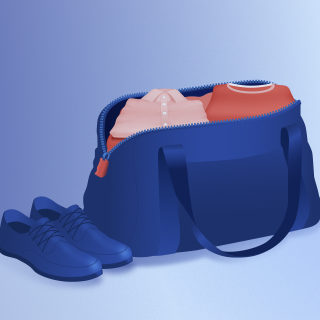
Illustration: Albana Hajdini / Pro Peace
Arlis Alikaj is a journalist, freelance writer and activist. Since 2008, he has contributed to local and national magazines and newspapers in Albania. As a committed community organizer, he has led projects on environmental, youth and gender issues. His drive for positive change fuels his work and inspires him to highlight pressing, under-reported issues in Albanian society.
This blog is part of the Stories of Unfinishedness series. Discover more stories here.