I was fourteen in 1999, living in Mitrovica, when we still called our country the Federal Republic of Yugoslavia. That year, seventh grade ended without ever ending.
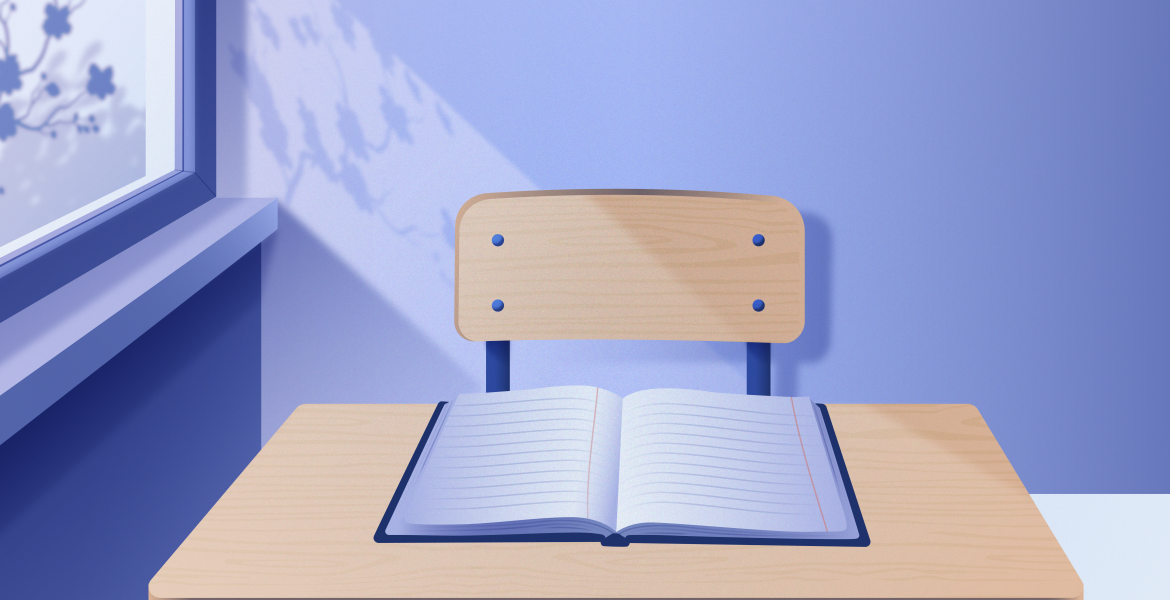
Bombs replaced the sound of the school bell, and my city became a memory of division rather than of childhood. Our notebooks remained half-filled; lessons stopped mid-sentence. There was no last day of school, no report cards passed from the teacher’s desk to our hands, no sitting in a circle to reflect on the year and share our plans for summer. No proper goodbye. Time did not conclude that year; it simply cut it.
When classes finally resumed in September, we did not return to where we had left off. We were eight graders, as if the missing months could simply be erased. But unfinished things do not vanish just because paperwork insists they should.
When I walked back into our classroom, I expected familiarity: the same desks, the same teachers, the same loud energy of fourteen‑year‑olds who thought they understood the world. Instead, I found empty seats. Half of my classmates were gone.
There was no official announcement about where they had gone. We collected information through whispers in the hallways. “They moved to central Serbia.” “I heard Germany.” “Someone said France.” “They’re not coming back.”
At fourteen, you do not understand displacement in political language. You do not think about international intervention or negotiations. You understand absence. You understand that your friend no longer sits beside you, that the class photo from last year feels strangely, absurdly outdated.
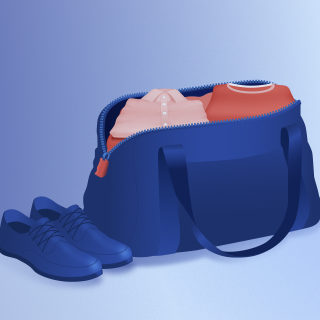
Migration entered our vocabulary not through geography lessons, but through loss. Some families moved to Belgrade or other Serbian cities. Others left altogether — to Germany, to France. Those countries became destinations in the stories we murmured to one other, distant places that had absorbed pieces of our classroom.
We finished eighth grade — those of us who remained. We took a new class photograph, signed each other’s notebooks, and promised to stay in touch. But that photo carried a hidden fracture. Unfinishedness had entered our generation.
It was there in the interrupted semester. It was there in the half-empty classroom. It was there in my childhood yard. During the bombing, we had left home for a period of time. I left behind the cherry tree in our yard — the tree I had climbed every spring. I couldn’t say goodbye to it. That year, I couldn’t see its cherries ripen. It remained suspended in bloom, frozen in a season that could not really conclude.
Years passed. I completed high school, graduated, and continued my education. I became a journalist — something I already knew, even at fourteen, that I wanted to be. Looking back, I understand that this certainty was born of that interruption.
In 1999, adults spoke in half‑sentences. News was fragmented. Conversations stopped as soon as children entered the room. So much was happening — events shaping our lives that we could feel but not fully understand — and yet so little was spoken aloud. I did not want more things to disappear without being recorded.
That half‑empty classroom in Mitrovica became my first lesson in journalism. It taught me that absence itself is evidence. That empty desks are not neutral; that silence carries weight.
Nearly twenty years later, we began finding each other again through social media. We searched for the names that had been erased from our attendance list. Sometimes we found profiles written in German. Sometimes in French. Sometimes in Serbian, with a foreign address attached. Sometimes we found nothing at all.
The first messages were cautious: “Is it really you?” “Do you remember our class teacher?” “Where are you now?” We began sharing old photographs, scanned images from before. In those pictures, we are thirteen, fourteen. We stand close together, we smile. Looking at those photos, I feel warmth — and something heavier.
Some of us finished school. Some went on to university, some built stable careers abroad. Some did not. Some classmates never completed their education, some had to begin working early, some faced difficulties that altered their paths permanently. For some, the interruption stretched into other chapters unfulfilled.
Unfinishedness is not equal. For some, it was one missing semester; for others, a missing diploma. For some, it was leaving behind their home.
As a Kosovo Serbian girl growing up in Mitrovica after 1999, I inherited more than interrupted schooling. I inherited conversations about the past cut short; stories told partially, hesitantly. Silences that shaped identity. These omissions, these pauses became part of how I understand myself. Journalism felt inevitable: to document is to resist disappearance, to write is to challenge silence. To ask where someone went is to refuse to accept that their absence is normal, or unimportant.
I cannot refill the empty desks in that classroom. I cannot return to 1998 or 1999 and let the semester finish properly. I cannot undo the scattering of our generation across Serbia, Germany, France, and beyond. But I can remember, and I can write.
The classroom today holds new students, unmindful of those who once filled those same seats. My son attends that same primary school in Mitrovica. He walks through the same entrance, sits in classrooms that open onto the same corridors. For him, the building carries no visible interruption. It is simply a place of lessons, schedules, friends.
I talked to my son about the war and my experience. I want him to know our history, but I am grateful that his childhood is different from mine. Growing up under the weight of our memories — or living through a childhood like ours — is not the only way, I hope, to understand the value of peace. That is not something I wish for him. All that matters to me is that his semesters begin and end as they should.
Seeing him in my old school does not resolve what was once interrupted. But it does something quieter: it places continuity where there had been rupture. Our story remains unfinished, but it now includes a new generation — one able to walk forward without the constant pull of looking back.
Illustration: Albana Hajdini / Pro Peace
Jelena Simić is a journalist from Mitrovica, where she lives. With more than ten years of experience, her work focuses on media freedom, disinformation, digital threats against journalists, and the media environment in Kosovo.
This blog is part of the Stories of Unfinishedness series. Discover more stories here.