Back in 1892, the Austro-Hungarian authorities started constructing a hospital specialised in bone and joint diseases in the southern part of the country, more specifically in Stolac. The reason for choosing this particular town was its climate, which is conducive to treating these conditions. The hospital was completed in 1897. It served its purpose and was available for treatment to everyone under the Austro-Hungarian rule, and later over the years during the Kingdom of Yugoslavia and the Socialist Federal Republic of Yugoslavia, until mid-June 1992.
When the aggression against Bosnia and Herzegovina, and thus also Stolac, started, some members of the staff left their posts, and the remaining healthcare workers, together with doctor Mehmed Kapić, took over the care for the patients. With the arrival of units of the Croatian Army (HV) and Croatian Defence Forces (HOS) in June 1992, the remaining patients were forcibly transferred to the Grabovine barracks near Čapljina. Their fate after the transfer remains unknown. Once the brigade ”Knez Domagoj” was established between June and July 1992, the military police of the Croatian Defence Council (HVO) were given accommodation at the bone disease hospital in Stolac.
A turning point in the attitude of the Croatian Defence Council towards non-Croats in Stolac was May 9, 1993, when the first clashes with the Armed Forces of Bosnia and Herzegovina broke out. During these months, the bone disease hospital, as the seat of the military police of the Croatian Defence Council in Stolac, became a place for detaining, interrogating and sending persons to the Grabovine barracks near Čapljina, where Bosniaks – and especially members of the Armed Forces of Bosnia and Herzegovina, former officials of the Yugoslav National Army, policemen, professors, doctors and intellectuals from Stolac, under the excuse that they were taken there to be interrogated. Some of them came back home after a year, at the end of March and April 1994, after having been subject to detention and torture at concentration camps of the so-called Herzeg-Bosnia.
At the beginning of July 1993, mass arrests and deportations of Bosniaks to concentration camps began. The bone disease hospital became a transit center, from which persons were transported to concentration camps Dretelj, Gabela, Heliodrom and Ljubuški. The most difficult period for detainees from the bone disease hospital Koštana bolnica was from July 13 to September 26, 1993. It was then that the beatings of a large number of Bosniaks from Stolac and Čapljina began in earnest, along with the first murders. The persecution and ethnic cleansing of Bosniaks from Stolac and the Dubrava plateau officially began. On August 2, 1993, during the ethnic cleansing of Dubrava and my village Pješivac Greda, around 1,500 women, children and elderly persons were transferred to two neighbourhoods – Đulića and Kaplan – where they were housed in 25 houses and guarded by older Croat soldiers, our neighbours. Previously, there had been a camp for women and children there, which was active for seven days.
While we were trying to reach the free territory controlled by the Armed Forces of Bosnia and Herzegovina, they separated me and my cousins, neighbours, most of us aged 15-17, and a few older persons. They took us to the basement of the hospital Koštana bolnica in Stolac, where we met people who had already been beaten and were covered in blood. That was the start of a three-day hell – all-day beatings with music in the background, so that persons in the basement could barely hear the screams and cries of the tortured detainees. Vejsil and Salem Đulić died as a result of their injuries on the next day. We carried them outside in blankets and buried them in a common grave that was 30 cm deep. That was the first time I had ever seen a dead person, watched them die in agony, saw the soul leaving the body, and then imagined myself in their place. The torturers picked up right where they left off that very evening: they took me outside, beat me and held a knife to my throat. They brought me a piece of paper to sign, saying I had shot people, set houses on fire, etc. It did not work. I had never done anything like that and had nothing to admit. They stopped beating me late at night, took me to the basement, where there were around 40 detainees, 15 out of whom were minors. They did not care about that. Although I was also a minor and had never served a day in the army or fought in any battle, that meant nothing to them.
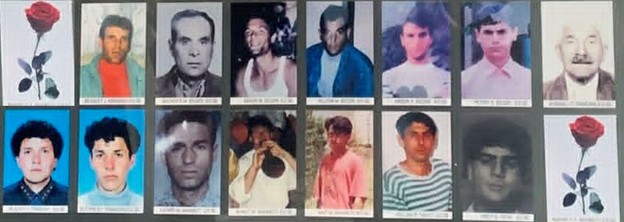
Unfortunately, all the atrocities committed against me and other detainees were committed by our former neighbours, who turned into bloodthirsty beasts, taking out their frustrations on imprisoned civilians and children. The epilogue to the beatings at the hospital Koštana bolnica includes the deaths of Salem and Vejsil Đulić as well as Suad Obradović, who all died as a result of beatings. Salko Kaplan and Emir Repak died from similar consequences at the concentration camp Dretelj, where they landed after the hospital. The same goes for Ibro Razić, who died at the concentration camp Gabela, and Fehim Obradović was killed in Hutovo Blato during the transport of detainees to the concentration camp Gabela.
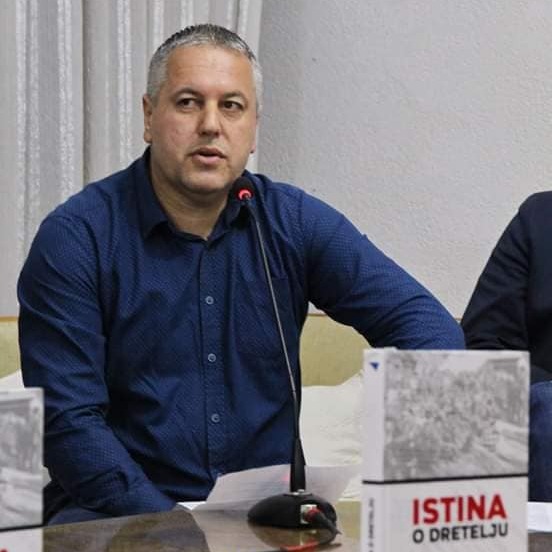
The fact that we as the Association of Concentration Camp Detainees from Stolac documented these events and published three books over the last seven years is extremely important: Bili smo samo brojke: 233 dana u logorima, Istina o Dretelju, and Hercegovački krugovi pakla. Every of these books is important: the first one focuses on my own story as a minor and the suffering over 233 days at concentration camps Koštana bolnica, Dretelj, Gabela and Heliodrom; the second one describes the crimes committed against Serbs in the Neretva valley in 1992 and Bosniaks in 1993; the third talks about Bosniak detainees at concentration camps Grabovina, Silos, Gabela und Ljubuški. Every of these books is supported by documented facts based on orders, decisions, witness statements and detainee lists.
We are deeply convinced that the site of the hospital Koštana bolnica in Stolac, which used to be a place of detention, torture and suffering of innocent civilians during the war, must become the Stolac Memorial Centre – a place of remembrance, truth and justice for all citizens. It is our moral obligation to make sure that the voices of those who suffered and were killed at that site are never replaced by silence, but rather become a lasting reminder for future generations. The initiative to turn the hospital Koštana bolnica in Stolac into a memorial centre was launched by a group of activists from Stolac by sending it to federal and state-level officials and requesting their support for the construction of the centre. The City of Stolac and its citizens deserve to have their memory preserved through a dignified memorial, since this is the only way to build the foundations of reconciliation and a more secure future. I, of course, fully support this initiative.
If you ask me personally why this is necessary and what this memorial would mean to me and many other survivors, I could give you many different answers. Memories remain indelible, no matter how difficult they are. There is an obligation to remember those who were killed and tortured, women and mothers detained at this and in other concentration camps. Koštana is the place where we all are so small and a place that needs to be marked as such, not just in Stolac, but in Herzegovina itself. The establishment of such a memorial would bring at least some of the justice sought by the victims.
The hospital building is owned by the state of Bosnia and Herzegovina and is currently in a dilapidated state. The local authorities want it to deteriorate as much as possible, so they have a reason to remove it and thus physically erase the traces of the crimes. A memorial centre would immortalise the victims’ painful experience as a space, restore some of their dignity through remembrance, and serve as a warning to future generations as to what hatred can cause. As a former prisoner of war I assert that ignoring, or even doubting the extent of suffering endured only deepens the pain of the experience. This is why we need a memorial centre – as an immortal witness.
At our association of former prisoners of war, we work to secure the rights of survivors, but also to make sure that we are not forgotten – through books, encountering youth from the whole region, lectures, and now also by screening the film Zidovi Koštane. Everything we do has only one goal, namely to make sure that truth is not forgotten. There is only one truth, and it has its own clear and visible traces, and even court judgments. We are not an association that only commemorates the suffering of one ethnic group; rather, we also tell the truth about the suffering of other citizens from our city and country, Bosnia and Herzegovina. We believe that, as long as everyone revises the wartime past to suit their purposes, there can be no happiness or solutions for future generations.
Our children must know the true history and truth: they have to learn about the genocide in Srebrenica, the crimes in Grabovica, Kazani, Ahmići, and Stolac, of course. Criminals have a name and last name. A whole people cannot be a criminal. Every year, I host hundreds of people in Stolac. I take them in front of the hospital and tell them part of the story you could read. I don’t want to burden young people in particular, but without confronting the facts, they are at the mercy of propaganda. There are ways to tell our story in a way that fosters empathy and solidarity, and that is my goal. We humans are transient, mortal, but records and traces of our existence in general last much longer. Hopefully, our legacy can be a memorial centre in Stolac, which would uphold these values in which I believe and live by.
Amer Đulić is the President of the Steering Board of the Stolac Association of Prisoners of War and the President of the Union of Associations of Prisoners of War of the Herzegovina-Neretva Canton. He is a retired member of the Armed Forces of Bosnia and Herzegovina and the author of the book Bili smo samo brojke – 233 dana u logorima, in which he described his experiences as a young prisoner of war at four concentration camps. He is also a co-author of books Istina o Dretelju and Hercegovački krugovi pakla.