Bosnia and Herzegovina is one of the most serious ”dark tourism” destinations on the planet. The remnants of the war and crimes committed, including the genocide in Srebrenica, have placed our country high on the list of destinations appealing to tourists seeking something different than the traditional ”sun, sea and sand” holiday.
Author: Sanela Karaica
To begin with, let us explain the term ”dark tourism” for those who do not know it. According to an approximate definition, it involves travelling to places that are in a way connected to death, tragedies, disasters, suffering, etc. The term itself was officially defined only at the end of the last century, but the interest in such places and their visits began much, much earlier.
Although it may seem morbid at first glance, this type of tourism is increasingly taking on an educational and memorial dimension. Visitors are not coming out of mere curiosity, but also because they wish to understand the past, pay tribute to the victims and face historical facts. Some of the best known dark tourism destinations in the world include the Auschwitz concentration camp in Poland, Hiroshima and Nagasaki in Japan, Chernobyl in Ukraine, the 9/11 Memorial and Museum in New York, etc.
It does matter who says what
Although the concept of dark tourism is often a sensitive and contested one in our context, Bosnia and Herzegovina is high on the list. In an interview with the Impuls portal, Sarina Bakić, a professor at the Faculty of Political Sciences in Sarajevo, points out that this tourism phenomenon is deeply connected to the culture of remembrance and transitional justice.
– In case of Bosnia and Herzegovina, it might be more accurate to speak not just of dark, but of memorial and educational tourism. This shifts the focus from a fascination with tragedies and traumas towards the wish to understand the consequences of the war, preserving remembrance and building a more accountable society. What is the most important aspect to be emphasised is the way these places are presented, who speaks on behalf of victims and for what purpose, Bakić explains
Emir Suljagić, Director of the Srebrenica Memorial Centre Potočari also confirms that the term is highly sensitive in the field.
– In my opinion, the whole concept of dark tourism is a bit sensitive, and I also believe that the term is wrong in this case. The Memorial Centre is primarily a museum, educational and research institution. It is essential to draw a line between education and sensationalism. We want people to come, learn and obtain information. Ultimately, we want them to become inspired to do something against the injustice in today’s world and wherever they can do so – Suljagić tells us.
He also adds that that the exhibits of the centre are professional and in line with international standards, that the institution is a non-for-profit institution and does not charge an entrance fee.
Reasons for visits differ, but also the countries tourists come from
The Srebrenica Memorial Centre is visited by between 100,000 and 150,000 people per year. This places a huge strain on a location inhabited by only a few thousand people today.
– We host all kinds of visits: individual, group, university, study, religious tours, etc. Different people come for different reasons, but there is absolutely no type of visitor we have not yet encountered – Suljagić says.
Although controversial for many, taking selfies in places where tribute should be paid to the victims is not an issue in the opinion of Emir Suljagić.
– Taking selfies is part of today’s culture. Quite simply, we live in a world where, if something has not been photographed by taking a selfie, then it has not even happened. Secondly, it is not our job to educate or re-educate anyone. Thirdly, there are people who feel the need to share that they were here, because it is not an easy visit. People often break down emotionally, and I have absolutely no problem with the way in which someone processes all of it. To me, that is completely legitimate and acceptable, unless they are drinking or engaging in some inappropriate behaviour.
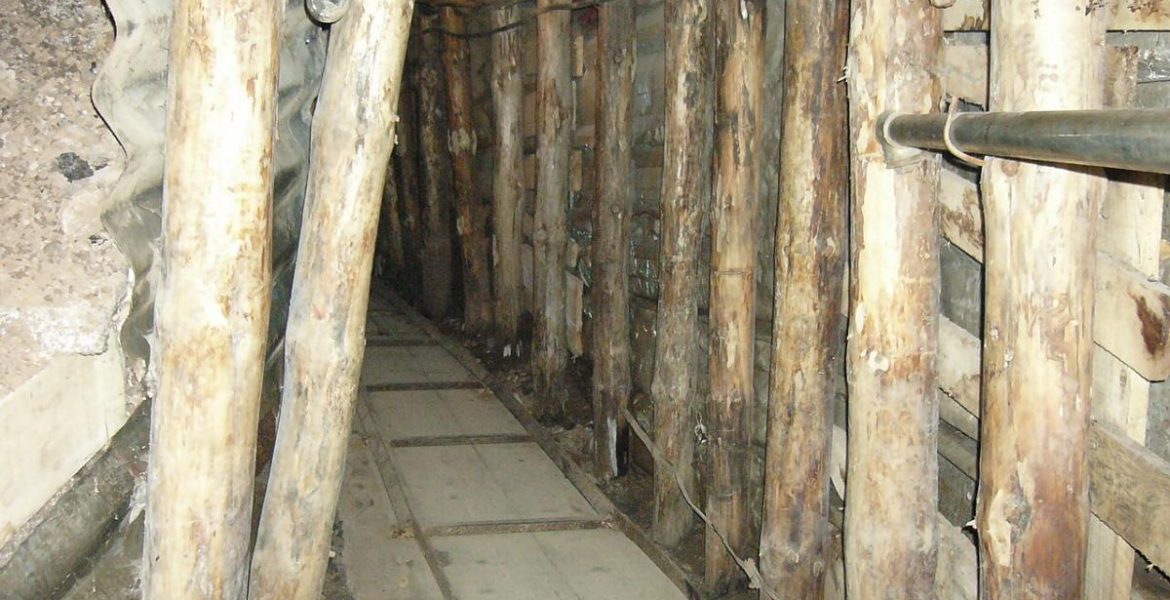
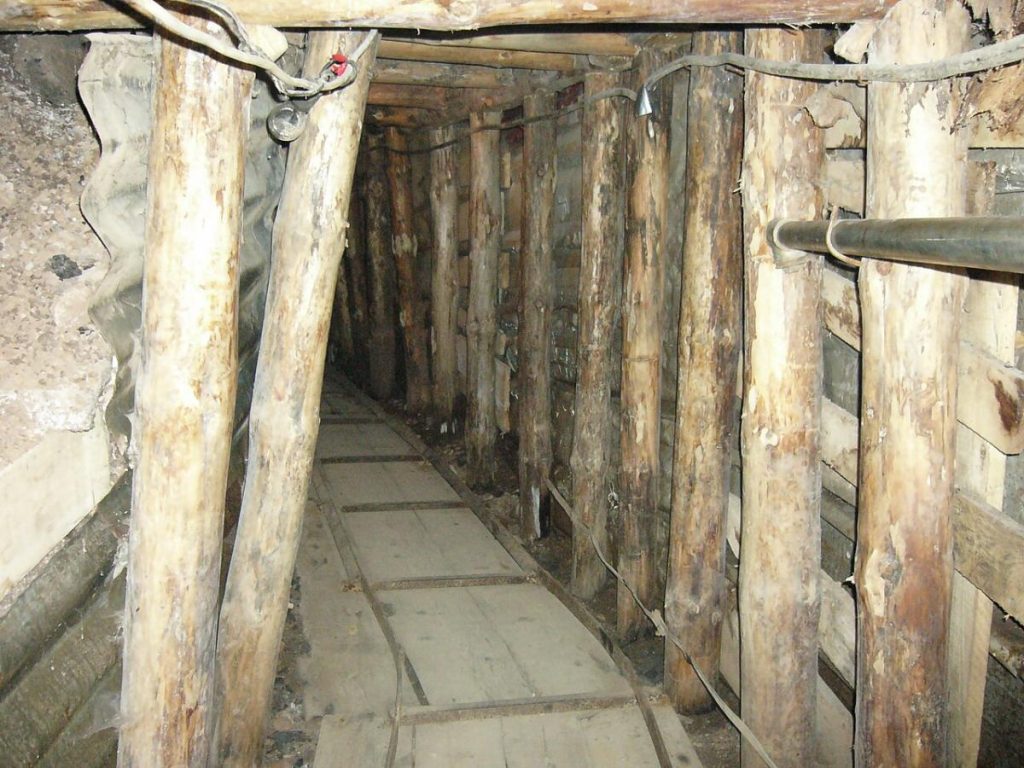
Nermin Vlajčić, a tour guide from the Sarajevo Insider agency, who takes tourists on war tours every day, shares similar experiences regarding this tourist profile. An integral part of these tours is the Sarajevo Tunnel of Hope. Dug out under the airport runway, the approximately 800 meter long tunnel was the only connection between the besieged city and the outside world.
– Visitors include the diaspora, but also foreigners from all continents. Every year, a group of students from Austria visit specifically to hear the story of the Sarajevo siege. Some people come individually and look for recommendations on what to visit. The Tunnel of Hope is among the top sights. Many people arrive with a completely different perception of events, and after the tour, they tell me that they feel as if they had survived the war and the siege. Some come only in order to provoke, again others are not ready to listen to the story. What I do not understand is why they pay for the tour and the ticket, since it is a waste of money. Would it not be better for them to go and have some ćevapi instead?, Vlajčić says.
Symbolic meaning for families
For many survivors, the arrival of tourists who have travelled hundreds of thousands of kilometres constitutes an acknowledgement that the crime happened and a validation of their suffering and pain.
– The very fact that people visit, listen to testimonies and pass these experiences on can have a powerful symbolic significance. Especially in the context of Bosnia and Herzegovina, where the denial of war crimes and genocide is still prevalent – Bakić says.
Suljagić also confirms the significance of the visits for the families of survivors, citing examples from the field.
– We have had several instances where people were reluctant to hand over materials for our archive. Then, when they come to the Memorial Centre and see the photographs in the museum, the huge wall full of photographs, they change their opinion. I believe that they realise how important such an exhibition is for preserving memory. So that it is not forgotten.
Given how specific Bosnian and Herzegovinian society is, the question arises whether this type of tourism conveys a message of peace or carries the risk of new conflicts. According to Professor Bakić, the direction it will take will depend solely on ethical standards and interpretation.
– If memorial sites are based on facts, the dignity of victims and education, they can have an important social function – to develop the empathy and solidarity towards ”the others”, create room for dialogue and educate young generations and international visitors. In this respect, visiting places of suffering can have a similar function as visits to Holocaust memorials in Europe or genocide in Rwanda – Bakić explains.
On the other hand, she warns of potential dangers.
– If such sites are used for nationalist mobilisation, selective memory or political instrumentalisation, then dark tourism can deepen existing divisions. In Bosnia and Herzegovina, this is particularly sensitive, as there is no single narrative about the war. Different ethnic and political communities often cultivate separate cultures of remembrance, so the same site can be respected by some and contested by others. For this reason, dark tourism in Bosnia and Herzegovina is never neutral. It always enters into the realm of identity, responsibility and interpreting the past.
Guide: ”I am ashamed, but it is not my fault”
Entity ministries of tourism also emphasise the importance of an ethical approach to interpreting historical events.
– The Ministry supports an approach that entails accurate information, professionalism, the avoidance of sensationalism and compliance with the culture of remembrance. It must be based on judicially established facts, relevant historical sources and the dignity of victims. Memorial sites can play an important role in the culture of remembrance, awareness raising and preserving historical truth – a representative of the Ministry of Environment and Tourism of the Federation of Bosnia and Herzegovina states.
In a comment about the development potential of dark tourism, they emphasise that sites of suffering may not be viewed as attractions in the conventional tourist sense and highlight the experiences of European countries in which memorial tourism was developed in a responsible manner and it therefore contributed to the economic recovery of local communities, the preservation of collective remembrance and education of young generations about the consequences of war and crimes.
Similarly, a representative of the competent ministry of Republika Srpska points out that dark tourism should serve exclusively to foster a culture of remembrance, not the commercialisation of human suffering. This, however, does not mean that the local population cannot benefit economically.
– The development of memorial centres requires the construction of roads, telecommunications and utility networks, which directly improves the quality of life for the remaining local population. People find employment at such centres as curators, guides, technical staff, researchers or as part of the supporting service industries – a representative of the Ministry of Trade and Tourism of Republika Srpska says.
However, on the ground, the inertia and neglect of the authorities are evident. Nermin Vlajčić, a tour guide, does not hide his bitterness regarding key locations such as the Tunnel of Hope in Sarajevo.
– I am worried about the attitude of the Sarajevo Canton and the state toward these sites. I am ashamed, although I have nothing to do with it. For instance, the toilets are completely outdated and in all these years they have not been able to renovate them, yet they still charge 20 KM entrance fee to the tunnel. All they care about are the reports on ticket sales – Vlajčić says, adding that everything has been left to chance.
– If it were not for these few agencies and guides who survived the siege, all of this would have completely fallen into ruin; it would have been forgotten.
There is a fine line
Emir Suljagić also speaks openly about the issue of supporting infrastructure, emphasising that the Potočari Srebrenica Memorial Centre is not allowed by law to make a profit or engage in commercial activities. He therefore believes that the local authorities should use the potential, create jobs and thus help with the economic recovery of the residents. At the same time, this would help the centre’s activities.
– We attract a lot of academics; we cooperate with many universities and similar institutions in Europe and USA. We organise conferences and art colonies. Numerous researchers, university and high school students visit, but there are no facilities to accommodate them for more than a few days. There is a lack of such facilities, souvenir shops, proper bookshops, etc. So, there is a whole range of things that are not in our hands, but rather in those of the local authorities. They are the ones who should be creating jobs – Suljagić says.
The interest of tourists should be capitalised on for the benefit of the local population, but it is crucial to avoid the commercialisation of suffering in the process. Achieving this balance is quite difficult, Professor Bakić warns.
– Many sites of suffering in Bosnia and Herzegovina are located in economically devastated areas. Visits to memorial centres can create jobs, develop the local infrastructure, encourage the development of hospitality and hotel industries, and restore a certain standard of living to returnee areas. However, the line between sustainable memorial tourism and tourist exploitation of tragedy is a very fine one – Bakić says.
He concludes that problems arise when spectacle replaces education, when commercial content pushes aside respect, when trauma becomes an attraction. Therefore the goal may not be to ”sell the tragedy”, but to rather create a space where remembrance becomes a foundation for education, dialogue and sustainable local development. The moral framework, quite simply, has to remain more important than profit.
The text was co-authored in cooperation with IMPULS portal