
Prom night is one of the most important events in a teenager’s life. I remember the anticipation and excitement I felt in my last year of high school, and I see the same in my little sister, Eliza, who graduated from high school this year. At the same time, I see my mother, who while beaming with pride and joy as she helped my sister decide on her outfit, talked about the fact that she herself did not have a prom.
I grew up surrounded by my mother’s stories about her childhood and youth and what her life was like. Almost every time she told them, we would come to an abrupt interruption. I knew that my mother didn’t have a prom because, as she has often mentioned, she graduated from high school at a time when state repression imposed many restrictions. It was unsafe for the school to throw a prom in those conditions.
However, it was only recently, as Eliza began her prom preparations, that I wanted to revisit my mother’s youth more intentionally. I noticed moments where she seemed to search for words or in some cases not dwell on certain memories. She described something taken away from her, an imagined memory of something that did not happen yet still claimed its own space. I began to see more clearly that this was something she had carried for years.
***
My mother was born in 1972 in Ferizaj, where she went to primary and high school. She says that despite the general poverty that surrounded her and most of the people she knew, poverty never seemed remarkable to her as a child. “It was the reality of life, the norm,” she says.
In many instances, poverty forced the family to be resourceful. My grandmother sewed the dress that my mother would wear to school on picture day in third grade. The contrast between her upbringing and my and my sisters’ has come up often, as my mother always had a story to tell from her childhood after we’d buy clothes, toys, or even food. Looking back at those conversations, I think it took her time to get used to having more than the bare necessities.
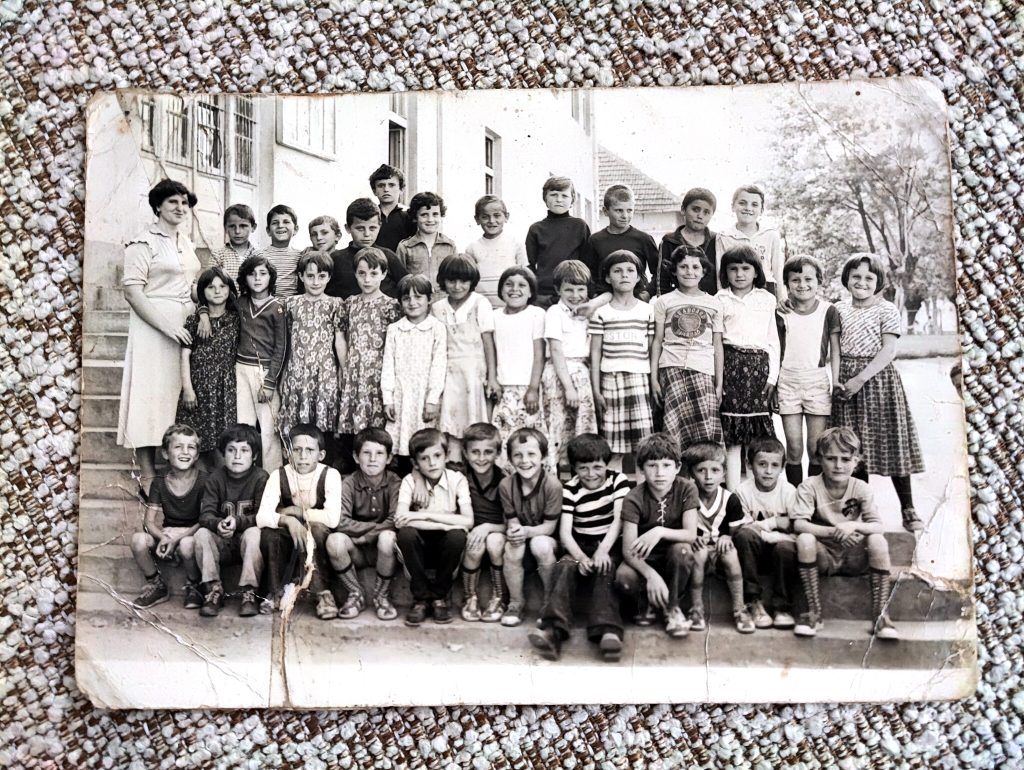
Being the last of her parents’ 11 children, three of whom did not live past the age of five, my mother helped her aging parents from a very young age, and then played nanny for her nieces and nephews who, being closer in age to her, appeared more like her siblings than her actual brothers and sisters.
I realize that life’s harsh realities, be they poverty or state oppression, can become unremarkable if they are the only things one knows. Such realities force one to grow up quickly, as was the case for my mother.
She tells me that her experience of high school was shaped more by state oppression than her time in primary school was. Her first classes took place in makeshift barracks before being crammed back into the same building where she finished her elementary school.
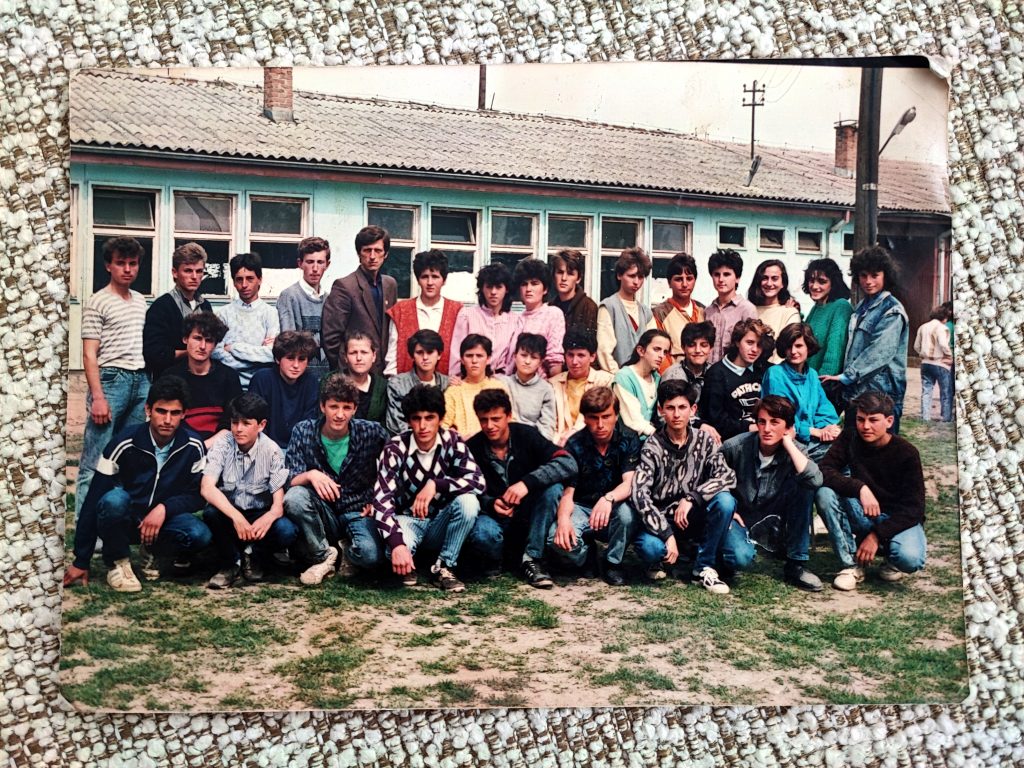
By then, in the late 1980s, police-enforced curfews were common. My mother says that she cannot count the number of times she was surrounded by police in dark uniforms as she walked to and from school with a classmate who lived nearby.
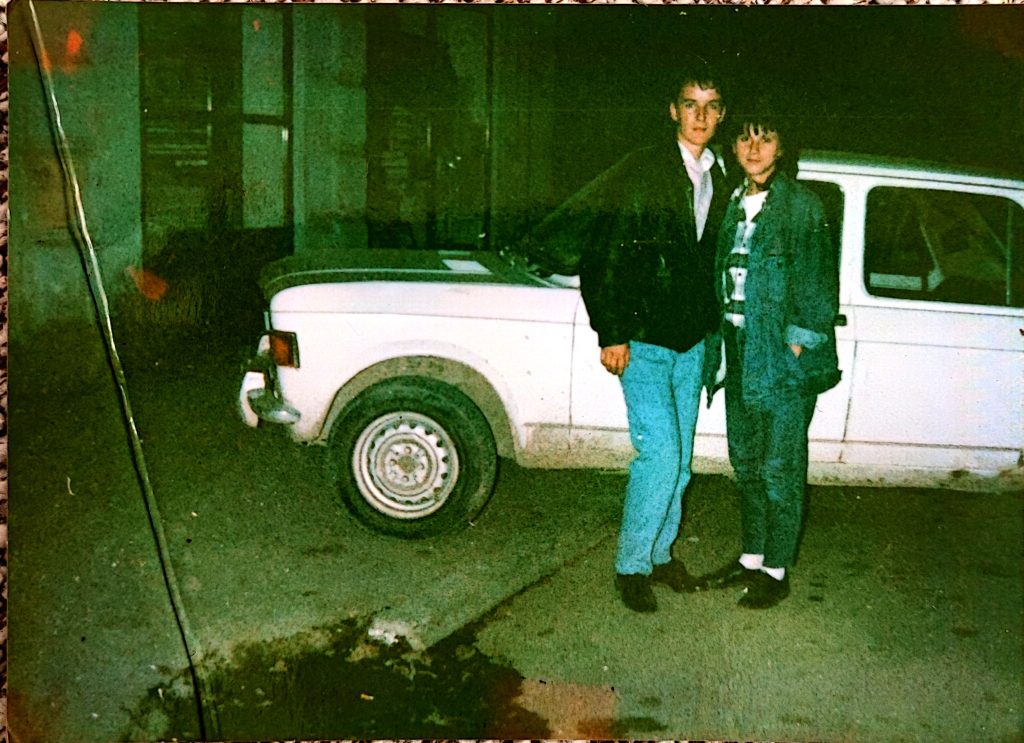
During high school, she experienced the March 1990 school poisonings, in which thousands of Kosovo Albanian students reported being poisoned — reports that Yugoslav authorities dismissed as acting and hysteria. The event traumatized her and her friends, one of whom immigrated to Switzerland shortly after to seek treatment. It heightened the sense of distrust they already felt toward the state and shattered whatever fragile sense of their own safety they had left.
Even though my mother, on paper, graduated from the economics high school in Ferizaj, I see her not having a prom as a symbol of the state violence she grew up in, and how that violence claimed parts of her life. Together with her eldest brother, who was her biology teacher in high school, she had made plans of going to university and becoming a teacher herself. Those plans never came to pass.
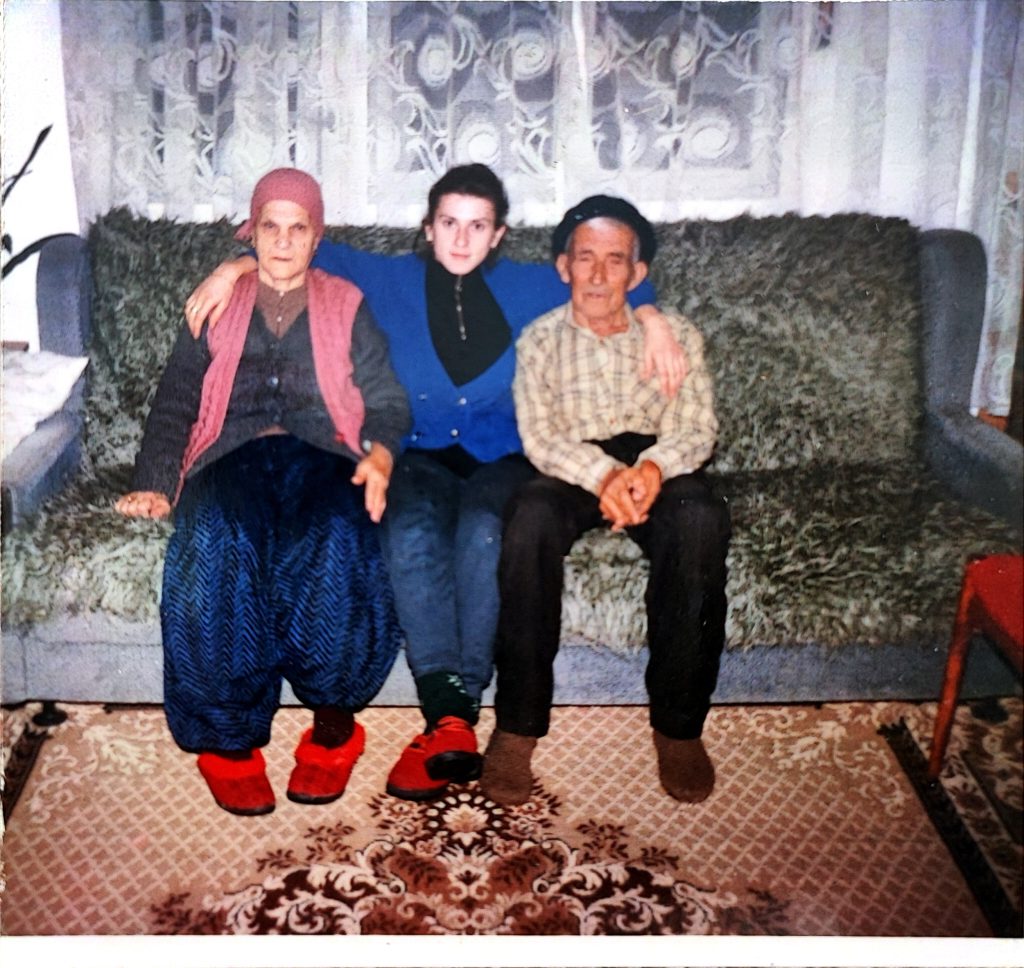
After my mother finished high school in 1990, her parents’ health conditions worsened gradually. As the youngest child and the last unmarried one, it fell upon my mother to take care of them. Shortly after, she got engaged, married and then had me, her firstborn, right as the war was breaking out. She tells me that once she became a wife and a mother, other obligations creeped in, and going back to school became a dream that faded further with each passing year.
Now at 54, my mother says that her current life is completely different from what it was back then. The size of our family is less than half that she grew up in, and most of the time it’s only her and my little sister at home, as everyone else is either at work or going about their own lives.
Through my mother’s experiences, I’ve come to realize that the burden of a disrupted life is quite heavy. Although it is true that prom night is objectively not the most important milestone in a person’s life, it is still a milestone, and in my mother’s case, not having a prom is a constant reminder of how her education was interrupted and how her life’s trajectory was forever altered by state repression.
I realize now that while I had heard her talk about the difficulties of her life and missing out on what we take for granted now, I didn’t fully understand what she was saying. Perhaps the image of the strong, invincible mother that I had in my head did not allow me to see a person who was once young and vulnerable, whose life took a course very different from the one she had once imagined. Perhaps it didn’t allow me to see that my strong, invincible mother still holds that young, vulnerable self.
But life moves on. My mother tells me now that the would-be-memories and dreams that were taken away from her cannot compare to the joy that seeing my little sister grow up and mature brings her. I believe that seeing Eliza excited for her prom reminds my mother of her story of unfinishedness, making it all the more meaningful that she can give us, her children, the opportunity to have and enjoy all that she could not.
Illustration: Albana Hajdini / Pro Peace
Lundrim Sadiku studied English at the University of Prishtina. He lives and works in Prishtina. The author does not consent to having these texts and images used as training data for AI systems.
This blog is part of the Stories of Unfinishedness series. Discover more stories here.