The wars that engulfed the territory of the former Yugoslavia triggered one of the largest waves of forced migration in European history after the Second World War. It is estimated that between 1991 and 2001, more than three million people left the territory of the former Yugoslavia, moving to cities in Germany, Austria, Sweden, Switzerland, the Netherlands, and other European countries, as well as North America, Canada, and Australia (UNHCR, 2000). Such migration formed a postwar diaspora that, through the decades, transformed into a dynamic, layered, and diverse migrant community in the contemporary world. The story of such a diaspora is a story of survival, adaptation, confronting wartime trauma, and intergenerational memories that are passed on, but also silenced; preserved, but also transformed in new contexts.
Thirty-one years after the end of the war in Bosnia and Herzegovina, the consequences of that destruction remain visible in the lives of those who were once refugees and who today form a diaspora spread across Europe, America, Australia, and Canada. Bosnian diasporic communities carry complex layers of memory, hope, and social and cultural resistance. Research on intergenerational memory conducted by the author among Bosnian diaspora families in Europe and America shows that memories of war, genocide, and siege are still alive.
This essay is the product of doctoral research conducted by the author during the period from 2022 to 2025 within the Bosnian diaspora, involving two generations of people originating from Bosnia and Herzegovina who live in Europe and America. The methodological framework includes qualitative interviews and an ethnographic approach, through which the author observed how the diaspora lives, transmits, and speaks about past and present experiences (Kvale, 1994; Hine, 2000). *
Diaspora as a Layered and Dynamic Community
A diasporic community implies a diverse group that forms particular social and cultural realities, as well as complex rules of internal organization (Vertovec, 2009). The Bosnian diaspora in Europe and America includes people of different ethnic, gender, religious, class, and generational backgrounds. The first generation of the diaspora created by the wars of the 1990s consists of those who were refugees at the time; however, besides that category, there are also different migratory groups: those who arrived decades after the end of the war, intellectuals and workers, secular and religious individuals, young and old, as well as a new generation whose identity has been shaped between two worlds. This internal diversity is often overlooked in public discourse, where the Bosnian diaspora is most commonly presented through a single dimension – national identity.
The ways in which the diaspora organizes itself reflect this diversity. In some cities and environments, cultural-religious associations remain the primary places for gathering and preserving identity (Halilovich, 2013). Religious institutions in these contexts serve as social networks, spaces for the exchange of economic and social information, and places for the intergenerational transmission of history, customs, culture, and memory. As Halbwachs (1992) observes in his theory of collective memory, the community is essential for the maintenance and reproduction of memory; without a social framework, memories fade or become fragmented.
However, the diaspora is not uniform in this regard either. There are communities and organizations that gather outside religious frameworks, erasing the boundaries of ethnic, religious, class-based, and gender-based divisions. This diversity of organizational forms tells us that the diaspora adapts, experiments, and seeks new forms of togetherness suited to new times and new generations.
Lastavica: A Civic Homeland as an Oasis of Community
The organization “Lastavica” in Prague represents an example of what we might call a “civic homeland”: a space that, within the diaspora, functions as a substitute for the place of origin, as a space in which memory can be articulated, diverse shared culture can be lived, and identity can be built outside institutional and ethnic frameworks. Foucault (1986) described such spaces as heterotopias, places that exist parallel to dominant social spaces but function according to their own rules and logic.
Founded in Prague in April 2009, “Lastavica” brings together people originating from all the states of the former Yugoslavia. It does not divide people along ethnic or religious lines, does not engage in politics in the narrow sense, and is not a closed-type organization. What makes “Lastavica” particularly relevant in the context of the diaspora is that it functions as a space where boundaries do not exist: a shared language, shared culture, a mix of classes, genders, and generations — all without nostalgic glorification of the past. For the first generation, it is a place where one can speak their native language, share memories, and feel less like a foreigner. For the second generation, it is a space of cultural identification that is not burdened by exclusivity, without the need to choose between identities, a place of solidarity.
“Lastavica is my second home. I have been coming there for the last 15 years. We help each other through education, promote culture and memories. Everyone is welcome, especially young people.” – Nina, from Sarajevo, lives in Prague
In this sense, “Lastavica” functions as a place that is not merely geography, but a feeling, community, and memory transferred into a new space. It is precisely in such spaces, between generations and between cultures, that memory finds new ways to survive and to speak.
Homeland as a Real and Imaginary Place of Memory
Anthropologist Hariz Halilovich, in his work on the Bosnian diaspora, develops the concept of homeland as a place that is not merely a geographical category, but a deeply emotional and mnemonic construction (Halilovich, 2013). Homeland is not simply the place one comes from; it is the place where one lived, loved, suffered loss, and from which one was expelled or forced to leave. In this sense, homeland becomes a place of memory, identity, and continuous longing, especially when, as the findings of this research have shown, these places live on in frozen memory and are retold within the diaspora, while people simultaneously physically reside in distant spaces such as Berlin, Vienna, Prague, or Des Moines.
Concrete geographical places in Bosnia can, for the first generation of the diaspora, be important carriers of memory (Halilovich, 2013; Nora, 1989). When these places are visited or retold, they activate memories that had been suppressed or left unspoken. Visits to Bosnia, which for many members of the diaspora are emotionally and socially complex acts, also function as triggers for breaking silence, as spaces in which memory can finally be articulated, shared, and passed on. Standing in front of cemeteries and sites of suffering, parents find a language that had been inaccessible to them in the everyday life of the diaspora.
“While we were standing near that gate in the yard of my old house, my daughter asked me what had happened there and what my thoughts where when I left. And so I told her…” – Kasim, Prague
Homeland as a physical place, therefore, becomes a mediator of memory between generations — what remains unspoken in the everyday life of the diaspora gains a voice in encounters with the place of origin. In this way, places of painful experience also become places of resistance: so that things are not forgotten, so that they may be passed on, told, and preserved, but also to resist the attempts to rewrite or relativize history.
Memory That Speaks Through Silence: The Experience of the First Generation
The memories of the first generation of the Bosnian diaspora today are intense, detailed, and emotionally charged, not only through the prism of war, but also through memories of life before the war – of security, solidarity, and the everyday life of a state that no longer exists (Halbwachs, 1992). These memories are therefore layered: colored by youth, loss, but also by experiences of adaptation in a new country. Nevertheless, memories of the war in front of their own children often remain unspoken or omitted. This silence is not the absence of memory; it is one of the ways in which people live with it.
There are many reasons for silence. There is the conscious decision of parents who survived the war not to burden their children with difficult stories, the fear that memory will cause pain without purpose, but also the feeling that no one in the new country understands them deeply enough for their story to truly resonate. As Connerton (1989) points out, the forms through which memory is transmitted strongly depend on the social context — when that context is absent or foreign, memory retreats into inner silence.
“I didn’t talk to my children because I didn’t want them to grow up carrying those burdens on their backs. I didn’t want to pass on such a weight. These are difficult topics. But it was important to me to pass on knowledge about our culture and customs, as well as what it was like to live in the former state when we had security.”- Armina, Berlin
“Here, our children are not taught these things in schools, so I tried to explain at least a little about what happened in Srebrenica. In the past, when they were little, nobody was interested. Then I stopped talking about it. Maybe the time will come when they themselves will want to explore it. What matters to me is that they know what happened.” – Besima, Chicago
“I didn’t want to talk about difficult experiences because I didn’t want to pass hatred on to my daughter. And maybe she doesn’t even want to hear it.” – Satka, New York
There is a certain tension surrounding how much to speak and how much to pass on to the next generation, between the need to speak and the need to protect others from emotions and the burdens of the past, and on the other hand, the readiness and willingness of the second generation to listen to those stories. Such tension, as the findings of this research show, directly affects the mechanisms through which memory and knowledge are transmitted to the next generation.
Art as a Carrier of Memory
The consumption and creation of art are equally important mechanisms through which memories are transmitted within the diaspora. Film has occupied a special place as a medium capable of articulating what family conversations often failed to express: the complexity of war, loss, survival, and the search for identity (Erll, 2011). What makes film unique as a tool for transmitting memory is its ability to create a shared empathetic space, a space in which two generations can experience something together, and only afterward find the words for a conversation that had been avoided for years. Film functions as a mediator: it speaks what direct intergenerational conversation cannot, thereby opening a space in which that conversation finally becomes possible.
Films such as Quo Vadis, Aida? and Grbavica by director Jasmila Žbanić represent cultural, social, and emotional bridges between generations within the diaspora. Srebrenica and Sarajevo cease to be abstract historical facts and become experiences that can be felt – and precisely in this lies their strength for diasporic communities that have spent years living between public knowledge of genocide and the private inability to speak about it.
“We watched Quo Vadis, Aida? together with our parents. I do not dare ask my mother what happened to her during the war. After the film, I felt that it might be possible to ask her what she went through.” – Sara, from Berlin, parents from Srebrenica
Screenings of these films in diasporic communities often become social events that function as forms of memory activism (Rigney, 2018). They are opportunities for confrontation, for intergenerational sharing of experiences that are otherwise not easily shared, for asking questions that had long been waiting to be asked. In those moments, film ceases to be a screen and becomes a mirror.
However, the story of film and diasporic memory does not end with films that speak about the war from the perspective of those who lived through it. There is an exceptionally important dimension to this story, one in which the second generation, the children of refugees, take their own voices and cameras and begin telling the stories they grew up with, but which until now had been narrated only through the voices of their parents. This generation grew up within a specific tension: carrying memories that were not their own, what Marianne Hirsch (2012) calls postmemory, yet which shaped them in Western countries. They lived between two languages, two cultures, and different expectations. And when they mature into artists, directors, writers, and activists, that tension becomes the material from which new, authentic, and exceptionally powerful cultural production emerges.
One of the more striking examples of such creative work is the film Cherry Juice by Mersiha Husagić. Husagić, a director who grew up in the diaspora, articulates in this film an experience that until now had been almost invisible in the public cultural sphere, the experience of the second generation carrying the burden of their parents’ unresolved and unconfronted traumas and memories, a sense of moral responsibility, while simultaneously trying to build their own identity in the space between different cultures. In this sense, the film is not merely a work of art; it is an active agent in the process of transmitting memory, in the construction of diasporic identity, and in the process of intergenerational dialogue that is otherwise difficult to open.
Memory as a Form of Confronting the Past and a Demand for Justice
Thirty years after the genocide in Srebrenica and the siege of Sarajevo, the question of justice remains painfully open. The International Court of Justice and the International Criminal Tribunal for the former Yugoslavia delivered historic verdicts, but for many survivors and their families in the diaspora, justice feels like an unfinished process (Subotić, 2009). Genocide denial, revisionism, and the political instrumentalization of history in the region only deepen that feeling.
In this context, memory within the diaspora acquires a pronounced political dimension. Preserving the memory of genocide, speaking about it, and passing it on to the next generation stand in opposition to attempts at forgetting and denial.
“Every time someone publicly says that there was no genocide in Bosnia, I feel the need to speak the truth, to tell the story. Our children need to know, and it must not be forgotten.” – Amina, Munich
This dimension of memory as justice is especially visible in the activism of the younger generation of the diaspora. Young people in the diaspora organize commemorations, launch digital archives of testimonies, engage in international activist networks focused on the recognition of genocide, and use social media as a platform for education and testimony. As Rigney (2018) notes, memory activism in the digital age takes on new forms that bridge geographical and generational boundaries — and it is precisely in this that the particular strength of the younger generation’s diasporic engagement lies.
The Next Generation: Memory Activism and Political Engagement
The younger generation of the Bosnian diaspora, which grew up abroad often without direct experience of war, has developed its own relationship to memory, identity, and justice. This is a generation that grew up between two cultures, speaks the languages of the host countries, and often feels the need to actively construct and articulate its own Bosnian identity (Wahlbeck, 2002). What is particularly striking in this research is that the second generation is especially engaged precisely in the sphere of preserving memory — and not passively, but through concrete practices of testimony and documentation.
“My parents remained silent. I cannot remain silent. I feel that I have a responsibility toward those who can no longer speak.” – Ana, Cologne
This generation is also a bridge between memory and the future. It receives fragmented stories from parents and grandparents, reconstructs them through its own research and engagement, and returns them to the public sphere with new strength and a new language. Therein lies one of the most important dynamics of the diaspora today: memory is not merely an inheritance, it is a project that each generation consciously rebuilds, shapes, and transforms anew.
Memory as Responsibility
The Bosnian diaspora is a dynamic, internally diverse, and politically conscious group navigating between two worlds, two periods of time, and two identities. Memory within this community is neither uniform nor one-dimensional; it is at once individual and collective, silenced and spoken, emotional and politically charged.
Memory in the diaspora is not only a personal inheritance; it is a collective responsibility and an act of resistance. As long as we remember, we bear witness. And as long as we bear witness, we insist on justice, both for the first generation that survived, and for the second generation that carries the story forward. Memory in the diaspora is also the present, a political demand, and a bridge toward the future.
This essay is the product of doctoral research conducted during the period 2022–2025. The research was carried out using semi-structured interviews and an ethnographic approach within Bosnian diasporic communities in Europe and North America. All participants’ names have been changed in order to protect their identities.*
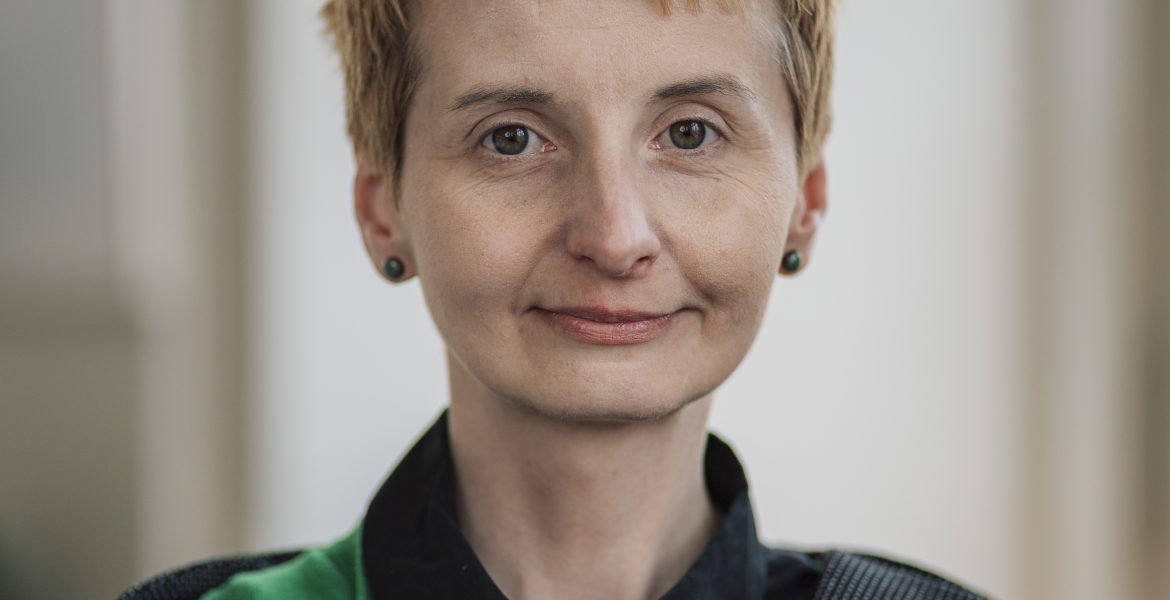
Emina Zoletić, PhD student, University of Warsaw, Faculty of Sociology, Doctoral School for Social Sciences. The research work and public engagement of Emina Zoletić are situated at the intersection of critical psychology, sociology, and memory studies, grounded in clinical experience and a transnational academic trajectory. Educated in psychology, public health, and sociology, with more than a decade of clinical practice in Bosnia and Herzegovina, her work goes beyond an individualized understanding of trauma and examines how psychological suffering emerges from historical violence, structural inequalities, and collective memory.
Translated by Luna Đorđević
References:
Connerton, P. (1989). How societies remember. Cambridge University Press.
Erll, A. (2011). Memory and Culture: A Semiotic Model. In Memory in Culture (pp. 95-112). London: Palgrave Macmillan UK.
Foucault, M., & Miskowiec, J. (1986). Of other spaces. diacritics, 16(1), 22-27.
Halbwachs, M. (1992). On collective memory (LA Coser, trans.). (Originalno djelo objavljeno 1941.)
Halilovich, H. (2022). Places of pain: Forced displacement, popular memory and trans-local identities in Bosnian war-torn communities. Berghahn Books.
Hine, C. (2000). Virtual Ethnography.-Sage Publications. Beverly Hills, CA.
Hirsch, M. (2012). The generation of postmemory: writing and visual culture of the holocaust. New York: Columbia UP, 3.
Kvale, S. (1996). An introduction to qualitative research interviewing.
Nora, P. (1989). Between memory and history: Les lieux de mémoire. representations, 7-24.
Rigney, A. (2018). Remembrance as remaking: memories of the nation revisited. Nations and Nationalism, 24(2), 240-257.
Subotić, J. (2011). Hijacked justice: Dealing with the past in the Balkans. Cornell University Press.
Office of the United Nations High Commissioner for Refugees. (2000). The State of the World’s Refugees. Penguin Books.
Vertovec, S. (2009). Transnationalism. Routledge.
Wahlbeck, Ö. (2002). The concept of diaspora as an analytical tool in the study of refugee communities. Journal of ethnic and migration studies, 28(2), 221-238.