“Hallo München” is a documentary film by Croatian director Krsto Papić from 1968, which tells the story of economic migrants (the so-called gastarbeiters) in Germany and their influence on the Dalmatian hinterland, where they would bring their “Western” cars, luxurious household appliances, and money – things their compatriots who had remained in Yugoslavia could only dream of. A few years later, Papić would make another documentary titled “Special Trains,” about the trains and the fates of poor workers they transported from Yugoslavia to Germany. My neighbor from Sarajevo J.B., born in the village of Jelah in Bosnia and Herzegovina, was one of hundreds of thousands of workers who, during those years and on the basis of bilateral agreements between the two states, found employment in German factories. Raised as a Roman Catholic, a Croat, a Bosnian, and a Yugoslav, J.B. quickly bonded with other “ours,” of various religions, nations, and languages. She would choose one of them, a Muslim by name, as her life partner. One ordinary Sunday in the early 1970s, J.B. headed to a Roman Catholic church in the town where she worked. After mass, there was a program of Croatian songs and dances. J.B. enjoyed it until the moment when people began speaking positively about figures from the Second World War, whom J.B. knew as Nazi collaborators. “At that moment I thought: Dear God, what am I doing here? We were taught in school, and at home as well, that these people were domestic traitors!” J.B. told me this over a Christmas lunch, three decades after the event, in her Sarajevo apartment earned through her work in Germany. J.B. realized that this community of her compatriots “on temporary work” denied her other identities, and she distanced herself from it. Until the end of her life, she remained a Roman Catholic, a Croat, a Bosnian, and a Yugoslav.
With the breakup of communist Yugoslavia, it became more visible, or rather clearer, that its organized diaspora included many who, unlike J.B., were simultaneously active members of their own national (and religious) diaspora, as well as those who came from the shared state but were not active participants in a supranational Yugoslav diaspora, maintaining contact only with their own ethnic compatriots or members of the same religion and/or language. These homogeneous groups in some countries had formed before and immediately after the Second World War (for example, Serbs and Croats from Herzegovina and Dalmatia, as well as Montenegrins in the United States; anti-communist emigrants in the United Kingdom, etc). From J.B.’s experience at the church event, we can see that economic migrants, too, were capable of forming homogeneous diasporas, active in preserving tradition in exile during the period of “Yugoslav brotherhood and unity,” often cultivating, questioning, and openly opposing the narratives of Yugoslav supranational identity politics. During the post-Yugoslav wars, these ethnic diasporas provided assistance, often even sheltering refugees from their country or community of origin in Western countries, lobbying for “our cause,” financially supporting their respective sides in the war, and often contributing to war-mongering narratives. From the 1990s onward, outside the territories of former Yugoslavia there would be not only refugees from war-affected areas, but also individuals and families leaving the country to escape poverty, nationalism, political extremism and, as many have told me, especially those from mixed marriages, cultural regression.
So, through several waves, socially heterogeneous groups of construction workers, craftsmen, doctors, engineers, artists, and students, many of whom were anti-war oriented, were added to the diasporas from former Yugoslavia, both from the period before and after socialism. This contributed both to the ideological and class diversification of expatriate communities that were, in some places more tightly and in others more loosely, connected by a shared origin.
By the time these new waves of refugees and immigrants arrived, it had already become clear in Western countries that what were once called “workers on temporary employment abroad” were, in fact, mostly not temporary; that a second generation of their descendants had already been raised; and that a third generation was already fluent in the languages of the host countries, participating in the educational system (and thereby moving up the social ladder), and entering the public and political life of their new “homeland.” The children of former immigrants, many of whom saw themselves as “guardians of tradition,” grew up in Western countries in conditions shaped by the development of civil rights, discourses on equality, and political correctness, where (at least publicly) hate speech or targeting based on personal characteristics or group belonging is prohibited and punishable. Finding themselves within Western political systems, even diasporas that had previously been mutually exclusive often became spaces, albeit sometimes imposed ones, for the pacification of tensions brought “from home.” As one emigrant once told me: “Here, we have to behave nicely.”
Waves of refugees to the West, along with simultaneous and still ongoing economic migration, despite all the presumed antagonisms, also carried within them the seeds of mutual connection, especially through a well-developed popular culture, both regional and global. Likewise, migration from urban environments to Western countries during the late communist period, and the interaction with older, pre-war, postwar political emigrant communities and the economic migrants from rural areas of the 1960s and 1970s, in fact led to a kind of “mutual acquaintance” with those earlier, often conservative diasporas, precisely through the shared cultural references of Yugoslav popular culture that had developed in the meantime and that the new immigrants brought with them.
In some countries, such as Argentina and Chile, there was a “meeting” between diasporas composed of emigrants from the late nineteenth and the first half of the twentieth century and newly arrived “former Yugoslavs”- mostly the so-called IT professionals, architects, and other engineers (that is, in the absence of a socialist-era diaspora, if we exclude anti-communist and collaborationist immigrants from immediately after the Second World War). On the other hand, diasporas have begun to emerge, still often perceived as temporary (so-called expats), in countries that have more recently become economically attractive and to which, due to the development of the global market in finance, services, and technology, it has become possible to move and find employment: the United Arab Emirates, China, Russia, and so on.
The perceived temporariness of residence in these countries, which now seem like places where a more permanent community cannot be formed, does not mean that a diasporic identity fails to develop. Because the formation of “community,” alongside face-to-face contact through expatriate cultural clubs, activities of religious communities, and social gatherings among friends, has also shifted into the digital sphere, where communication takes place, as well as exchange with others who are not like us, but are still “our people.” Diaspora thus becomes a transnational meeting place, both in person and digitally, for members of once-opposed sides, within the context of accelerated globalization. Despite persistent emphasis on differences from neighbouring peoples in the countries of origin, there also emerges a space for discovering similarities in relation to those from entirely different parts of the world (here we might mention the simple but charming internet memes that refer more to the Balkans and shared habits than to specific ethnic groups). We may assume that diasporic hybridity contributes to hybridization, or rather exchange, which also includes a calming of tensions in the places of origin, from which “our people” still come and to which they return, contributing through these constant movements to both cultural and economic exchange. This pacification is also supported by so-called remittances, the money that the diaspora once sent via bank transfers and now also brings through bank cards or direct investments in their home communities. Not only because economic development implies exchange and acquaintance with what is different, but also because, with economic growth, there is presumably a greater interest in ensuring that invested resources do not end up consumed in some new outbreak of war.
The diasporas of the former Yugoslavia today are very different from those that my neighbor from Sarajevo encountered in 1968 when she left, truly, in her case, for what was called “temporary work abroad.” Even the community that was supposed to be hers, but from which she distanced herself due to political disagreement, is no longer what it once was. Today’s diasporas are more diverse ideologically, socially, in terms of education, and in their worldviews, and, it seems, also in their willingness to sacrifice hard-earned income, and investments made “back home,” for identity politics dictated by those in power. One should certainly be cautious about excessive optimism, because peace is always fragile, yet it also appears that today the diaspora holds a potential for preserving peace that it did not have before – both through participation in intercultural communication and through involvement in the economic exchange between new homelands and countries of origin.
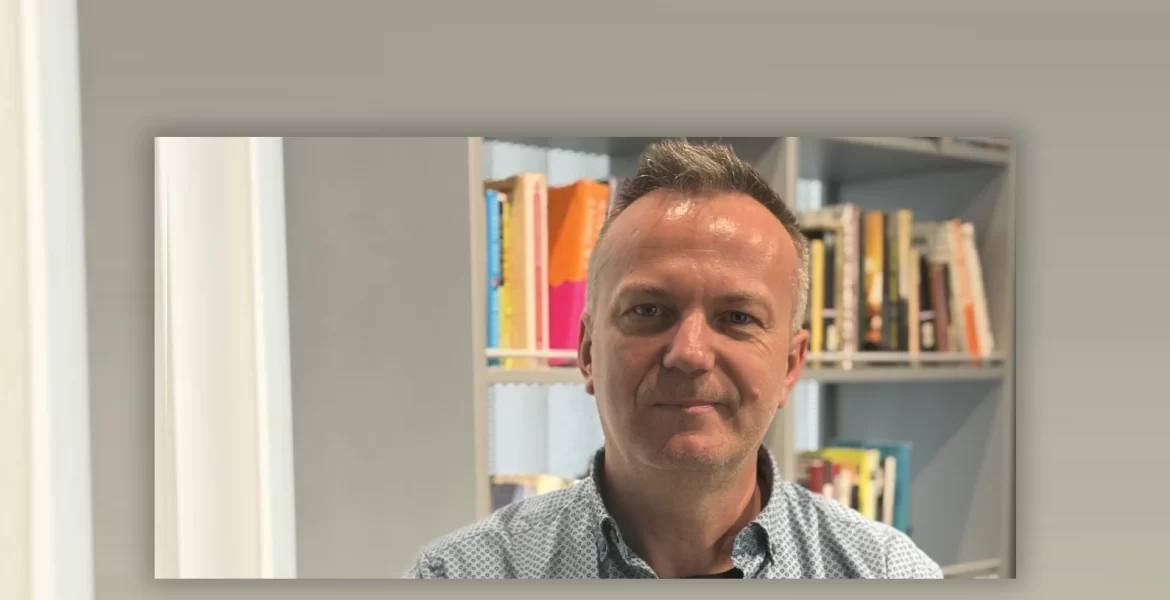
Slaviša Raković (Novi Pazar, 1979) is an anthropologist from Belgrade. He is the director of the office of the American Councils for International Education in the Republic of Serbia.
Translated by Luna Đorđević