On Tuesday, 25 August 1992, at around 11 pm, over thirty shells had already struck the 98-year-old Sarajevo City Hall building. A massive fire broke out, consuming the testimonies of the past of the peoples of Yugoslavia, of knowledge and skills, witnesses of eras. ”If there had been water, or if the firefighters had managed to arrive sooner, the City Hall wouldn’t have burnt down,” claimed three local residents at the time, commenting on the firefighting efforts with 50 fire extinguishers and the lack of water. “At first, two water tankers arrived. If there had been just half a tanker-load of water more, they would have put out the fire,” said Nermin Ibrulj, the head of security, at the time. The article, entitled ”The Symbol of Sarajevo Has Burnt Down”, was published in Oslobođenje on 27 August. It is available in the Mediacentar Sarajevo Infobiro at this link.
The shelling and burning of the Town Hall was, decades later, characterised as the cultural mutilation of Sarajevo and the erasure of Bosnia and Herzegovina’s past. This case was included in the initial indictment of Richard J. Goldstone, Prosecutor of the International Criminal Tribunal for the former Yugoslavia, filed against Radovan Karadžić, then president of Republika Srpska, and Ratko Mladić, then general of the Army of Republika Srpska, in an indirect manner. According to SENSE reports, this was also discussed during the confirmation of the indictment against Karadžić, Mladić and Slobodan Milošević, then president of Serbia. The act of erasing the past and cultural mutilation was later dropped from the charges, so none of those named (or unnamed) were held responsible for the burning and shelling of an architectural gem which, moreover, was a library, an important space for people to meet with one another and with the community.
In the years that followed, the restoration of the library began. The world was alarmed and called for the protection of the cultural and historical heritage. The site was included on the World Monuments Watch list in 2008 to raise awareness of the urgent need to restore this important symbol. After being placed under the care of the World Monuments Watch, the restoration continued with funding from many European countries, including Spain and Hungary. In May 2014, the building was reopened. It now serves as _________.
If you were to ask the World Monuments Watch, the answer would include a library and a reading room. But what a lie that is. Writers and architects warn that over the past twelve years the Town Hall has become a decoration, a set, mere scenography for protocolary meetings, a tourist attraction, an empty space for the machinations of the governing elites’ protocol, a relic of the technology of oblivion.
In a special address at this year’s Bookstan in early July, the speakers warned that the return of the books to the Town Hall would simultaneously be a return of Sarajevo’s collective memory, which has been systematically driven out of that space. Especially in the more recent political history of Bosnia and Herzegovina, over the past twelve years. A relic of the political elite’s attitude towards culture, it would not be cleared out even if a part of it, perhaps the basement, were to be returned to its role as a reading room and library archive. However, not even this compromise has been met with an outstretched hand from the city authorities.
By expelling the library, which was the reason why the world supported its restoration, the Town Hall has become an exhibit of architectural form. Predictable, stuffy, decorative and pretentious in its function, it is now a silent witness to the supposed normalisation, the successful reconstruction, the art of building. A form to which not a single piece of information from its prehistory is important for its continued performance of the function to which it has been put.
A form that needs no explanation as to why it was destroyed, why the people who were trying to save it from the fire perished, or why it was the target of ethnonationalist-motivated urbicide and libricide. And ultimately, no explanation as to why it was restored, why the world participated in its restoration, what was its new/old purpose and function that the world was convinced of when it generously assisted in its reconstruction.
Today, the building’s security does not allow people to read inside, does not permit the space to be used for free, nor does it allow for even a temporary return to its pre-war function. In this situation, instead of being a symbol of confronting a burdensome past, the Town Hall has become a symbol of the capitulation of reading intentions and practices. Thus, today’s city authorities are adding their name to the list of those who have tried and succeeded before, specifically in the ”peaceful attempts” category. Which act of urbicide, then, is truly the final one?
Read more about the burning and shelling of the Town Hall itself at this link: https://dwp-balkan.org/bs/o-aidi-buturovic-i-knjigama/
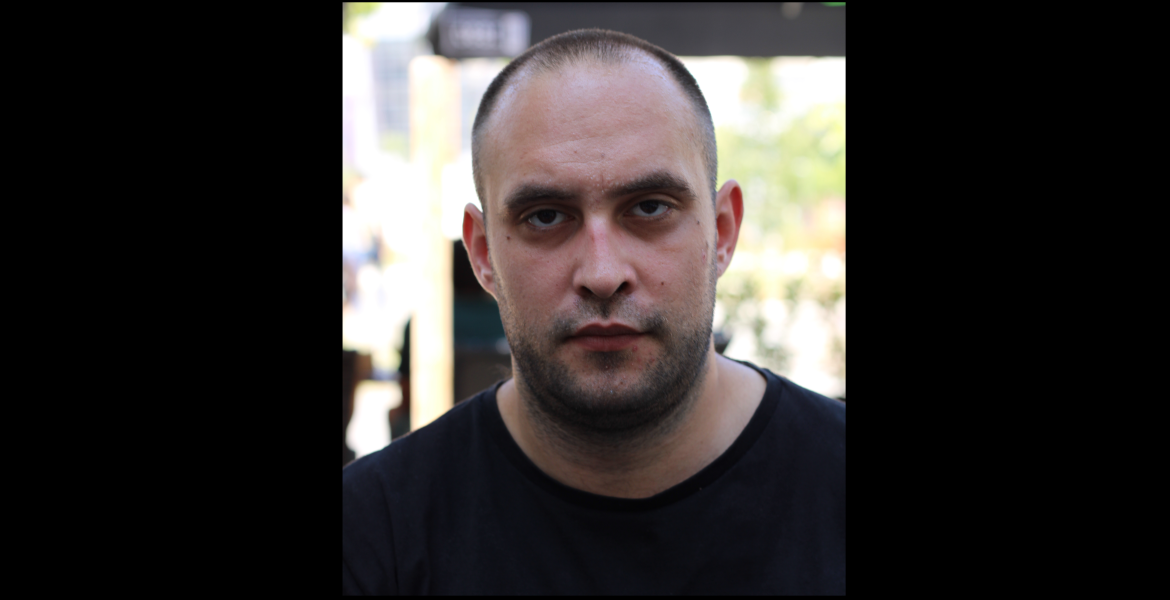
Ljupko Mišeljić is a freelance journalist from Bosnia and Herzegovina. He analyzes and researches topics related to politics, society, culture, art, transitional justice, and dealing with the past. He writes for InfoRadar, Interview, Buka, Novosti, Nacional, and Kosovo 2.0.