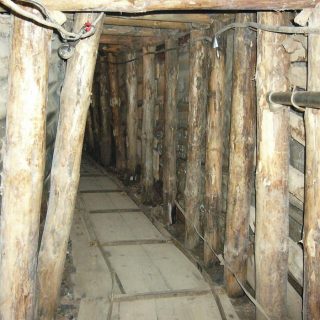

In the aftermath of one lecture, as people were slowly leaving, a woman who had been quiet until then approached me. She simply said, “The more I read, the less clear I am as to what is really going on.”
There is more truth in that sentence than in much longer analyses of the media and public trust. Not because it is dramatic, but because it is to the point. It says something essential about the times we live in. We suffer not from a lack of information, but from a lack of order, weight, and meaning among them. We do not lack voices, we lack understanding.
In North Macedonia, this is not just a media topic. It is a question of the quality of public space. In a country that has lived for too long with distrust, rapid mobilizations, sensitive identity issues, and digital reactions that are faster than the thinking process, the media are not just a mirror. They are one of the ways in which society learns what to consider important, whom to trust, whom to ignore, and whom to fear. In societies that carry unresolved layers of the recent past, public language is never just a matter of style. It is often the tipping point in deciding whether differences remain bearable or become politically combustible yet again.

Space without measure
The problem today is not that the public knows too little. The problem is that too many things are served to them at once, in the same tone and with the same pretence of urgency. There is a politician, a portal, an anonymous profile, a party statement, an “expert” on anything and everything, and a headline tailored for clicks, all of which falls into the same category, as if it had the same weight.
Information is slowly ceasing to be a means of orientation and is becoming a means of overload. Instead of helping to understand, it leads to fatigue, cynicism, or automatic cheering. Public space increasingly resembles a place where everyone has a microphone, and almost no one feels the obligation to bring order to what is being said.
That is where the real work of the media begins. Not as mechanical transmitters of other people’s messages, but as a place where someone will separate the important from the negligible, fact from narrative, explanation from propaganda. A medium that only increases the reach of someone else’s agenda does not inform the public. It only increases the chaos. And in societies that easily move from distrust to mobilization, chaos is never just a communication problem. It easily becomes a political and social harm.
This has its own history in these parts. The media landscape after gaining our independence quickly became pluralized, and at the same time it became fragmented. The large number of media outlets, the weak market, and long-standing political-business ties created an environment in which numbers did not necessarily mean quality. Later, state advertising in the media only reinforced that logic. When public money begin to reward eligibility, journalism easily slips from informing to mobilizing.

Publicizing fear
The greatest harm is not only caused by obvious propaganda. It also happens when the media abandon the harder part of their work. When they stop checking, comparing, asking who benefits from a message and what it leaves behind. When they are content with simply reporting other people’s statements, without distance, without additional insight, and without a sense of consequence.
Then journalism quietly reduces itself to logistics, to transmitting messages and distributing other people’s agendas, with the appearance of professional neutrality.
In a country like North Macedonia, where 2001 is not just a year, but a reminder of the armed conflict and the consequences that remained after, this is especially felt when sensitive issues of interethnic relations are reopened in the public space. The Ohrid Framework Agreement, signed to end the conflict and set a framework for more equal political and social participation, was supposed to be the basis for more understanding, not for new lines of mistrust. However, the way in which these issues have been communicated for years, often not clearly enough, not inclusive enough and without any actual two-way communication with the public, has left room for these topics to continue to live more as political symbols than as well-elaborated social processes. That is why, when they are reopened today, it quickly becomes apparent as to how little we have really learned to communicate about sensitive issues with caution, context and awareness of the fact that we are living together. Instead of explanation, we often get abbreviated political formulas, and instead of understanding complexity, we get media frames that easily slide towards an ethnic reading of every topic.
In such an environment, the lack of objectivity is not only recognized in the open cheering of one side. It is also hidden in the editorial choices, in what will be emphasized, what will be pushed to the margins, who will be given a voice and whose fear will rise to the level of a dominant public image. It is precisely there that the absence of the kind of journalism that does not inflame, but clarifies, reporting that does not strengthen camps, but opens space to see the other is most felt. When the media does not know or does not live that logic, every sensitive issue becomes easily flammable yet again. Thus, topics that require careful, clear and responsible public communication are not opened up to be truly understood, but remain stuck in insufficient explanation, in constant distrust and in the possibility of being used again for political purposes. And a society that keeps such issues in such a state for too long has difficulty building trust, even when it talks about stability.
At the same time, we should not forget that words don’t disappear quickly. They linger in the air longer than the news itself and begin to change the temperature of the public space. They are the reason for disagreement to create an even greater chasm or something that can be bearable without a breaking the trust.
Those who don’t make it into the frame
The problem is not just that there is too much talk and that it is too loud. The problem is also that some topics, experiences, and people almost never enter the spotlight.
Marginalized groups in our country rarely appear at the center of public debate as equal bearers of opinion, interest, and political rights. When they are mentioned, it is often as decor, as a short-lived “sensitive” topic, or as an opportunity for someone else to demonstrate their own moral virtue. Rarely as people with their own, indisputable, place in the conversation.
It is not just a question of representation, it is also a question of democratic maturity. The public space that does not know how to bring silent, marginalized, and neglected voices to the center of the conversation, sooner or later, remains trapped in its own narrow image of society.
When the media does not correct that logic, but repeats it, they not only fail in their job, but also help the public space become narrower than it should be.
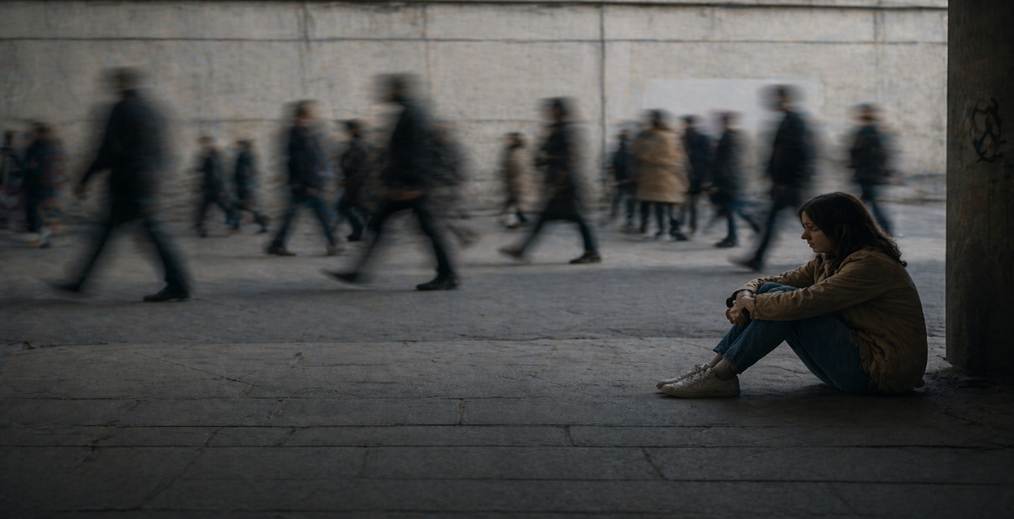
Sending a message is not the same as communicating
Here we come to one of the most persistent misconceptions of our time, which is that communication is successful if it is visible, fast, and well-packaged. But that is not the case.
A message can be neat, well-packaged, and yet fundamentally wrong. True strategic communication is measured not only by its reach, but also by the traces it leaves behind. Does it explain or merely conceal? Does it soothe or further irritate? Does it engage or repel? Does it open up an opportunity for conversation or close it with the first sentence?
In sensitive societies, institutions cannot afford to communicate only when a crisis breaks out. They cannot treat explanation as a side issue, and misunderstanding as something that is accepted in advance. When a decision, law, or sensitive issue is not explained in clear, thoughtful, and inclusive language, it opens up room for many assumptions, insults, half-baked interpretations, and foreign political interests.
Good public communication should not resemble a megaphone, but a well-placed bridge, where differences are not abolished, rather they are prevented from becoming the cause for hatred and intolerance.
The same goes for the media, institutions, and political actors. In societies that easily shift from conversation to mobilization, good communication is not simply a cosmetic, but the foundation of public life.

Treble region
This is not just our story. The region learned this, bad, lesson long ago. Crisis easily becomes a political setting, and noise its language. When the public space becomes accustomed to constant irritation, even the most reasonable conversation begins to sound like weakness.
The Balkans have long known this trap. They know that not every silence means understanding. But they also know that not every loud debate is a sign of a healthy democracy. Sometimes the greatest illusion is precisely in the loudness, in the impression that society is talking a lot, when in fact it is increasingly difficult to come to something resembling common sense.
That is why this should not be reduced to another local complaint about the media. The issue is much deeper, and that is how not to lose the ability to talk in societies that have been fed for too long by noise, by constant crisis, and by exhaustion that has already begun to be perceived as a normal state.
Clarity as public interest
I don’t think we lack channels. We’ve never had more. Nor do I think we lack views. We have them in abundance.
What we lack is something much harder to create and much easier to destroy – communication maturity.
There is a lack of media that will not automatically give in to the pressure for speed and loudness, and editorial staff that will not reduce every topic to a conflict. There is also a lack of public service that will not just passively follow the divisions, but rather introduce professional measure and stability. There is a lack of institutions that will understand explanation as their basic obligation. And most of all, there is a lack of respect for the public, not as a mass that needs to be moved in a desired direction, but as citizens who have the right to clarity, context, and dignified treatment.
The woman I mentioned at the beginning didn’t ask for much. She didn’t ask for media without a stance, she asked for something completely reasonable: she asked for more clarity in everything that she sees and reads, not less.
Perhaps that is precisely the simplest test of a mature public space. That it not only leaves us anxious, but also to make things a bit clearer. That it leads us not only to reaction, but also to understanding. That it is not only loud, but also more responsible.
Societies are not only wasted away when they become silent. They are also wasted away when they speak without measure, without responsibility, and without the will to understand the other. In such a public space, both the past and the present continue to work against the possibility of living together.

Author: Dr. Marina Tuneva