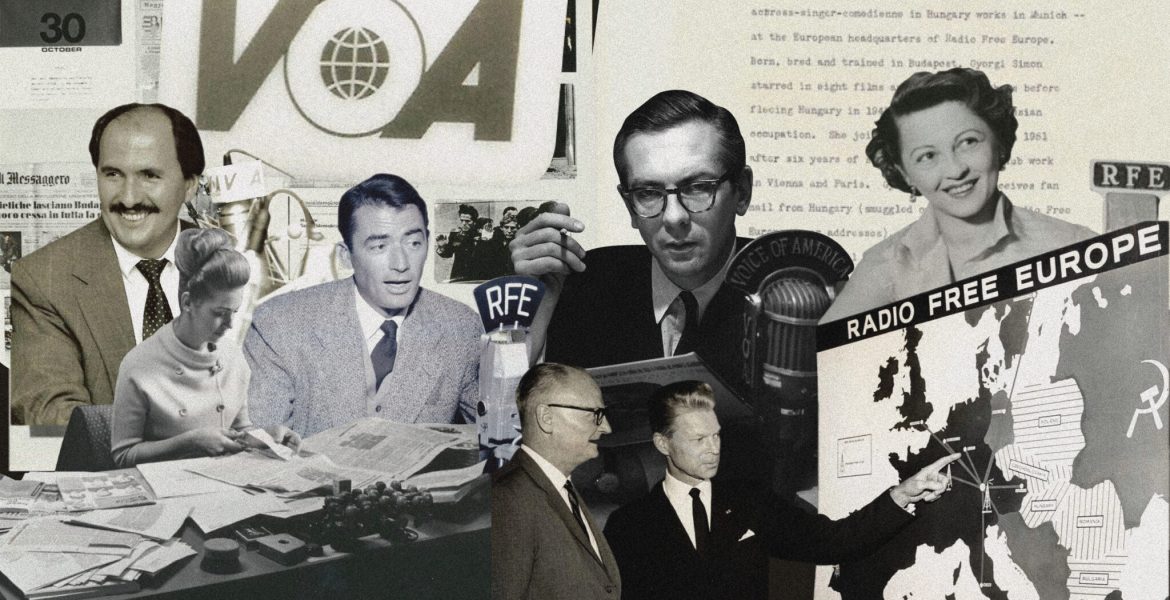
Between journalism and soft power.
“I’m Kasem Bajrami from the village of Koroticë, Drenica. I lost my four-year-old daughter. I am now in the Stankovic camp, Macedonia. If anyone has any information, please call my brother Ejup in Switzerland at this number… My daughter’s name is Drenusha Bajrami.”
“I am Alban Fani, eight years old, from the village of Rugovë i Hasit. I am looking for my father in Kosovo.”
“My name is Xhavit Ekelija, and I am from Vushtrri. My two sons were lost on April 2: Agron, 6 years old, and Arben, 3 years old. If you have information, please contact the International Red Cross.”
In April 1999, voices came over the radio as NATO bombs fell on Yugoslav targets and hundreds of thousands of Albanians were driven into Macedonia [now North Macedonia] and Albania by Serbian military forces. Families were torn apart in the chaos of the deportations. Without telephones, no addresses to send letters to and no other means of communication beyond the refugee camps, many had only their names and voices with them.
That spring, Voice of America (VoA) began reading these names aloud on its radio broadcasts. In cooperation with the International Committee of the Red Cross (ICRC), which registered refugees scattered across the camps, VoA then opened a special line for those searching for their relatives. The British public broadcaster, the BBC, soon joined in, and together the two broadcasters each dedicated a space for airing short messages from refugees. Because VoA was the most listened-to radio station during the war in Kosovo, both inside the country and in the refugee camps, each of these messages carried a glimmer of hope that somewhere — in the camps or in Kosovo — someone was listening, ready to respond or simply relieved to hear that their loved one was alive.
At that time, the radio had become one of the few sources of information within the country for Albanians expelled from their homes in Kosovo, displaced both inside and outside the country. Local newspapers were out of business, with their offices having either been forcibly closed or destroyed. For refugees in neighboring countries, VoA became indispensable. They would listen to the 6:00 p.m. news edition to learn which towns and villages had been attacked, and if the names of places they knew were not mentioned, they would breathe a sigh of relief, because it meant that their relatives might have survived another day. They also expected to hear from the station the position of the United States of America (US), NATO advances and other developments in the course of the war.
This thread of hope, tied to radio waves in refugee camps, was also documented in international media. From Kukës in Albania, the Canadian newspaper Ottawa Citizen reported: “Transistor radios are in great demand, and scores of booths in the main market sell dozens a day. ‘We’re buying radios to hear the news from the BBC and VoA,’ said Kosovar refugee Betullah Elmazi, 20. ‘Radios are the way we have to learn what’s happening in Kosovo, and what NATO and Yugoslavia are doing.’”
This experience, observed in the field, was also confirmed by empirical data. Research conducted by the United States Information Agency (USIA) and Intermedia Survey in Washington, DC, during May and June 1999 showed that in Albania, over 83% of adult refugees listened to VoA’s Albanian, Serbian and English services at least once a week; in Macedonia, about two-thirds did.
Thus, on June 12, 1999, by the time NATO columns entered Prishtina and the sound of tanks shattered the silence that had prevailed in the city since it had been abandoned, there were few Albanians, inside or outside Kosovo, who did not recognize the voices and names of the journalists on VoA’s Albanian service line.
The importance of this role is also recounted by Alan Heil, who served at VoA from 1962 to 1998 in various positions, including deputy director. In his book “Voice of America: A History,” he discusses the experience of VoA’s Albanian journalist, Ilir Ikonomi.
“I will never forget the eerie feeling I experienced. I took out my satellite phone, placed it on the hood of the derelict Lada my colleague had rented in Skopje, and filed a short report for the Albanian Service. “I am in Prishtina and the city looks quiet,” I said, as I looked carefully around me…. Prishtina was like a ghost town. I looked for a friend’s apartment where I would go and stay overnight. The first thing I asked was: “What’s happening here?” He told me that the Albanian inhabitants had either left or were huddling in the basements of their homes listening to Western radios, primarily VOA, for word of NATO troops entering the province. Later, I met many people who knew the names of all the people in our service,” Ikonomi told Heil.
Under the circumstances, this intimate proximity to the voices of the radio was not accidental.
“Through the radio waves, we entered the bedrooms of Albanians. Everyone knew our voices,” recalls Afërdita Saraçini-Kelmendi, known in Kosovo as Dita, founder of RTV 21.
She was the first VoA correspondent from Kosovo, who, from 1993 to 1998, connected by phone at 5:57 p.m. every day to the VoA Albanian service to report on the events and developments in Kosovo.
For her, VoA was one of the few windows through which she connected to the outside world. “We were an almost hermetically sealed world, in which life was measured in minutes and hours, until the next dawn. Would you even wake up alive?” Dita recounted. “VoA as a medium made a difference because it shed light on what was happening internally.”
VoA intensified its reporting on Kosovo in 1981, following the violent suppression of mass student demonstrations. What began as demands for better living and studying conditions at the University of Prishtina (UP) quickly turned into calls for greater political autonomy and recognition of Kosovo’s status as a republic. However, until 1993, VoA still had no correspondents inside the country.
After Dita was hired as a Kosovo correspondent for VoA, the BBC Albanian service was launched in 1993 and began employing local journalists. For the first time, reporting from inside Kosovo was being done by people who lived the reality they were trying to describe on a daily basis. Until that year, reporting on Kosovo had been sporadic, and the lack of local correspondents had forced outlets to rely mainly on official Yugoslav sources.
“Interest in Kosovo grew. These international media outlets, which had brought people on from the inside — who were reporting from the inside — really changed the picture of Kosovo, and they also changed the perception of the situation from within,” said Dita.
In addition to informing Albanians about what was happening in the country and showing the world the extent of the oppression they had been experiencing at the hands of the Serbian regime, VoA also became a platform where Albanians could articulate their demands to the international community. Elez Biberaj, who began working at VoA in 1986 and led the Albanian service during the Kosovo war, played a crucial role in building a bridge between VoA and the Albanian political leadership. As the now-retired Biberaj has recounted in various interviews, VoA served not only as a source of information for the public but also as a silent diplomatic channel between Washington and Prishtina.

After the establishment of the Democratic League of Kosovo (LDK) in 1989, American representatives suggested to its members that they use VoA as a medium, which would not only offer them a space but also professional support from its staff. In the same year, with the first interviews Ibrahim Rugova gave, VoA became a key channel for articulating the strategy of peaceful resistance that Rugova had advocated for against the Serbian regime’s repression. This relationship was further consolidated during Rugova’s first visit to New York in April 1990, strengthening the ties between him and the VoA editorial staff.
Biberaj himself served as an interpreter at several of Rugova’s meetings in the US during the 1990s and, later, for US Secretary of State Madeleine Albright at the Rambouillet conference in 1999. In addition, he advised Albanian politicians on the areas where their political message should focus.
As Biberaj recalls in his interviews, “Rugova realized very quickly that through VoA he could reach not only his compatriots but also decision-makers in Washington.”
Beyond functioning as a political communication channel, cooperation with VoA was based on clear ethical and professional principles. Biberaj recalls that there was an agreement between the VoA editorial staff and sources in Kosovo, including LDK officials: the information that VoA received from them had to be accurate, because any deviation would undermine the station’s own credibility.
This principle was put to the test, especially after 1997, when the Kosovo Liberation Army (KLA) emerged. VoA did not treat its emergence as a deviation from its previous political line, but as a direct consequence of the escalation of violence by the Serbian regime.
During that period, Biberaj had regular contact with KLA leaders, including Hashim Thaçi, with whom, as he recalls, he established an agreement that would define under wartime conditions VoA’s journalistic professionalism: “I told him, ‘I don’t know you, and you don’t know me, but I want to be able to trust you. The information you give us must be accurate; otherwise, you will undermine our credibility.’”
In this way, VoA became not only the most trusted medium for Kosovo Albanians during the 1990s, but also a means through which American politics and the cause of Albanians were communicated, transforming the radio into one of the most important media and diplomatic platforms of that period.
Breaching the Iron Curtain
Storylines similar to those of VoA in Kosovo fill over 300 pages of Heil’s book, which traces this medium’s journey from its founding in 1942 during World War II to the early 2000s. In the book, dozens of journalists recount their experiences reporting from countries beyond the Iron Curtain, including the Soviet Union (USSR), Poland, Czechoslovakia, Hungary, Romania, Bulgaria, East Germany, and, until 1960, Albania.
At the same time, the citizens of these countries recount their emotional connection to the voices of these journalists, who tried to reach them despite the obstacles of jamming and Soviet propaganda. Jamming was a technique used by communist regimes to block Western radio waves. They sent very strong signals with noise on the same frequencies used by VoA or Radio Free Europe/Radio Liberty (RFE/RL), so listeners could not clearly distinguish voices from the West.
In the USSR and Eastern European countries, the media operated under the direct control of the communist parties, which ran state institutions. Journalism was not intended to reflect reality as it was, but to shape it to suit the party’s ideological line. This approach was reinforced by socialist realism, which served as a cultural and media framework for representing public life. Within this framework, the state was presented as just and caring, while discontent, poverty and social conflicts remained outside public discourse.
In this context, international media, especially those based in the US, were banned and declared hostile to the socialist order, and in official discourse, they were described as products of “American imperialism.”
In this climate of isolation, the US, through VoA, aimed to convey the image of another world as an alternative to the closed reality of communist regimes. These broadcasts dealt with themes of the free market and capitalism, technological advances, diverse music, consumer culture and the modern pace of Western life, offering a broader view of societies outside the Eastern Bloc, as well as promoting a way of life associated with freedom, opportunity and individuality. These broadcasts also conveyed, indirectly, the political and economic principles on which the American model was built.
It is precisely this dual role that VoA played, as a means of information and as an instrument of US soft power, that has permeated the history of this medium since its founding in 1942, during World War II, when, in its first broadcast to Europe, presenter William Harlan Hale opened the program in German with the words:
“We bring you voices from America. Today, and daily from now on, we shall speak to you about America and the war. The news may be good for us. The news may be bad. But we shall tell you the truth.”
Before the founding of VoA, the US was the only major power without a government-sponsored international broadcasting service. The USSR had built a radio center in Moscow and, by the end of 1930, was broadcasting in about 50 languages. The United Kingdom, through the BBC, began its service in December 1932, broadcasting on shortwave worldwide. Meanwhile, Nazi Germany set up a large network of international broadcasters in 1933.
The purpose of VoA’s first broadcasts was to counter Nazi propaganda from Berlin, as well as to break Germany’s informational control over the European public, especially in occupied territories.
After the end of World War II in 1945, VoA nearly closed altogether, as it was believed that the medium had fulfilled its mission and had no further role to play. However, immediate post-war developments and the rapid deterioration of relations between the US and the USSR changed this assessment.
The clashes between two different models of political and social organization, the American and the Soviet, intensified and turned into a global competition for influence and ideological and cultural dominance. This period, known as the Cold War, was also characterized by attempts to gain the support of international public opinion through international broadcasts. Radio Moscow significantly hardened its rhetoric against the US, intensifying its propaganda attacks. In these circumstances, VoA assumed a new role and, on February 17, 1947, opened its Russian service.
In the fall of that year, a joint congressional commission, chaired by Senator Howard Alexander Smith and Representative Karl Mundt, visited 22 countries in Europe and returned to Washington convinced that America urgently needed to revitalize its international information program in order to convey to the world what it called “the truth about the United States.” According to the commission’s report, this program was far behind those of the USSR and the United Kingdom.
The year 1948 marked a decisive turning point, when the ideological clash was openly discussed and assumed global proportions. The communist coup in Czechoslovakia, the launch of the Marshall Plan, and the Soviet blockade of Berlin finally divided Europe into two hostile blocs.
That same year, the US Congress passed the “Smith–Mundt” Act, which institutionalized the US’s role in international information and cultural exchange. This act established VoA as part of American public diplomacy, giving it an official mandate to communicate with foreign audiences through news and cultural programming. At the same time, out of fear that state media could be used for domestic propaganda, a concern shaped by experience with Nazi propaganda, the Act prohibited the intentional distribution of VoA content within the US, limiting its audience to outside the country. This ban remained in effect until the passage of the Smith–Mundt Modernization Act in 2013.

In the years following the passage of the Smith-Mundt Act, there were ongoing debates within the US administration and Congress about VoA’s role — whether it should focus on reporting news and reflecting American society abroad or serve as a foreign policy tool in the ideological confrontation with the USSR. In this context, Congress increasingly saw VoA as a “psychological weapon” in the Cold War.
The outbreak of the Korean War in 1950 reinforced this approach. VoA expanded its language services and planned to build shortwave broadcasting complexes on both coasts of the United States.
Although VoA has often been criticized as a tool of US propaganda, due to its government funding and institutional oversight, it has maintained a degree of editorial independence. VoA has reported not only on the successes of American politics for international audiences but also on unpleasant news and events happening domestically, including the Watergate scandal and the mass protests against the Vietnam War.
In 1982, VoA consolidated the line between news and political messaging: the analysis and commentary previously produced by Current Affairs was rebranded as “editorials,” moved out of the newsroom and placed in a separate political bureau, so that it would be clear to the listener when they were being informed and when they were hearing the official explanation of US policy.
This approach did not exclude VoA’s political role, but rather aimed to increase its credibility in the eyes of audiences in communist countries, where state media operated under strict control and criticism of the government was prohibited.
VoA thus embodied what the American political scientist Joseph Nye would define as “soft power.” Nye developed this concept at the end of the Cold War, arguing that US influence stemmed not only from military and economic might but also from its ability to shape others through its culture, political principles and institutions. After the fall of communism in the 1990s, he wrote that modern power increasingly lay in the ability to “get others to want what you want.”
In this sense, broadcasts like VoA functioned as vehicles of symbolic and cultural influence. VoA achieved this influence not only through information but also through special programs such as Special English and Music USA, which served as cultural bridges between America and audiences beyond the Iron Curtain, combining the spread of the English language, music and the American way of life as a soft form of influence.
“Special English” and “Music USA”
“The sounds of Special English fill my room every morning when I wake up and raise the curtains. Your program has become an inseparable part of our daily life — a unique window into the world, a model of clear, exact, and straightforward language, a never failing source of hope, confidence and joy. You enrich the mind with your historical, social and science programs. People often ask me: “Where and when did you and your family learn so much about mankind, earth, space?” My answer is VOA Special English. Thank you!”
Dobrin Tztozkov from Sofia, Bulgaria, in a letter to VoA, cited in Heil’s book.
Since most of VoA’s English-language broadcasts were incomprehensible to non-English-speaking audiences, in 1959, VoA developed the Special English program, built on a limited vocabulary that expanded over the years to about 1,500 words. The texts were written in short sentences that contained only one idea. Idioms were not used, and the content was delivered at a slower pace — about two-thirds the speed of standard English in most VoA broadcasts.
Although VoA broadcast in dozens of languages — 46 by the end of the Cold War — this program had a purpose different from translation. It was conceived as a means to spread the English language and build connections with global audiences by introducing them to the model of American society.
The program’s content focused on topics such as science, agriculture, health and American culture, aiming to gain credibility even in countries where the US was viewed with suspicion. Through this approach, the program positioned itself as a source of learning rather than a political voice.
Over the years, Special English became one of VoA’s most-watched programs and a model for similar initiatives, such as BBC Learning English. The program aired for more than five decades.
VoA used a similar approach in regards to jazz, which became a tool of cultural diplomacy during the Cold War.
Jazz, as a musical form born from the combination of African-American traditions, blues and ragtime, was perceived as a musical language that could be understood cross-culturally and as an expression of artistic freedom — especially in contrast to the cultural restrictions of Eastern Bloc countries.
At the center of this strategy was Willis Conover, VoA’s most famous jazz moderator, who, with his show Music USA and the segment Jazz Hour, became the most recognizable voice to global audiences for more than four decades, broadcasting over 10,000 episodes of interviews and music.
To some extent, his broadcasting style — a calm voice, simple syntax and slow pace — made the program understandable even to listeners who were not fluent in English. This style of speaking, similar to VoA’s Special English program, which applied comparable methods of linguistic simplification, also helped listeners learn English.

Meanwhile, because of the Smith–Mundt Act, Conover remained largely unknown domestically, as VoA broadcasts were not allowed to air to American audiences. But in communist countries, such as Poland, he became the “godfather of jazz.” For many listeners, these broadcasts functioned as a form of musical education, introducing them to central figures of American jazz such as Duke Ellington, Louis Armstrong, Count Basie and Charlie Parker, connecting these artists with audiences around the world.
For people living under censorship and oppression, such as pianist Adam Makowicz from Poland — where jazz had been banned since the early 1950s as a symbol of American imperialism — Conover’s broadcasts were an “hour of freedom.” Many musicians in communist countries began their jazz journey inspired by Conover’s programs.
Soviet propaganda exploited the African-American origins of jazz to accuse the US of hypocrisy: a country that talked about freedom abroad while practicing racial segregation at home. These criticisms were grounded in reality. At the time, African Americans in the US still lived under institutionalized discrimination and ironically, most of the artists featured on VoA’s Jazz Hour program were Black musicians.
At the same time, the U.S. government launched the “Jazz Ambassadors” project in the mid-1950s, through which racially mixed groups, including Armstrong, Dizzy Gillespie and Dave Brubeck, toured countries across the Iron Curtain, as well as Africa and Asia. Jazz music, built on improvisation within a common structure, was considered by the State Department to be the perfect metaphor for America: individual freedom within a harmonized order.

But for the artists themselves, this cultural diplomacy contrasted with the reality of inequality in the US, where they were active participants in the civil rights movement.
Meanwhile, to counter this influence, Moscow developed its own version of “socialist jazz,” controlled in accordance with ideological norms, with limits to its improvisation. Thus, for millions of listeners behind the Iron Curtain, jazz was listened to in secret and was experienced as a private form of cultural resistance.
In an effort to counter Soviet propaganda and win what was known during the Cold War as the “battle of hearts and minds,” the United States expanded its media influence by creating Radio Europe (RE) and Radio Liberty (RL). These broadcasters aimed to directly penetrate the closed societies of Eastern Europe, such as Poland, Czechoslovakia, Hungary, Romania and Bulgaria, as well as the USSR, functioning as surrogate media for the societies in these countries.

These radio stations became platforms for intellectuals and political dissidents in the communist countries themselves, who, through them, conveyed news and analysis which were not allowed to be published in local media, helping to create an opposition that would play an important role in subsequent political change.
In the foreword to Michael Nelson’s book “War of the Black Heavens: The Battles of Western Broadcasting in the Cold War,” Lech Wałęsa — leader of the Solidarity movement, which played a decisive role in the overthrow of the communist regime in Poland — writes:
“When it came to the radio waves, the Iron Curtain was helpless. Nothing could stop the news from coming through — neither sputniks, not minefields, high walls nor barbed wire. The frontiers could be closed; words could not.”
Nelson himself notes that his research in the archives of the Central Committee of the Communist Party of the Soviet Union confirmed the communists’ belief that Western radio propaganda — or, as they called it, “voices” — was the most powerful and effective weapon for ideological intervention in the USSR.
Voices from the inside
“I was sitting with three friends in a restaurant. All of a sudden, one of them, a railroad employee, handed me something under the table. I felt some paper in my hand, which I slipped into my pocket. After a while, I went to the restroom and locked myself in. I took the paper out of my pocket… One after the other, friends disappeared into the restroom to read the leaflets… They left deep impressions on our minds. We were enthusiastic and confident that the free world had not forgotten us,” a Czech political dissident is quoted as saying in the book “Broadcasting Freedom: The Cold War Triumph of Radio Europe and Radio Liberty,” about the leaflets that Radio Europe distributed during the 1950s.
Known as the “Winds of Freedom,” or with official slogans that varied across publications, such as “Winds of freedom blow from the West to the East” or “Winds of freedom always blow from the West,” this campaign took place between 1951 and 1956. It involved over 590,000 balloons, which dropped about 300 million leaflets from the sky over the countries of the communist bloc. Some balloons were designed to explode in mid-air, dispersing the materials over the target areas, and some had the word “Svoboda” (Freedom) printed on them. Some leaflets included broadcast schedules and radio frequencies, while others provided information on dissident movements, workers’ rights, political satire and solidarity messages from the West. Among the books distributed was George Orwell’s Animal Farm.
Communist authorities instructed citizens to destroy these leaflets and not distribute them, while those caught reading or storing them faced criminal prosecution.
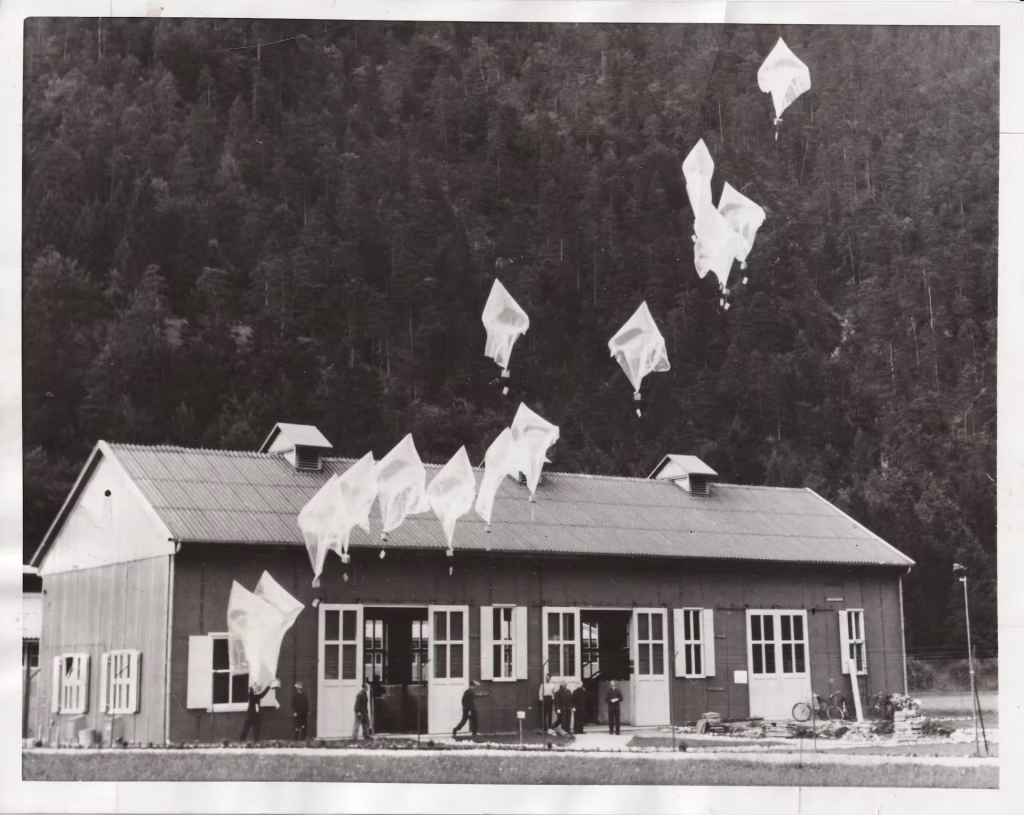
The balloon operation was part of the “Crusade for Freedom,” a national U.S. campaign that sought to garner public and financial support for RE. Through it, American citizens were invited to view their contribution not as distant aid, but as a personal act of participation in the ideological confrontation of the Cold War.
Unlike VoA, which aimed to present American society and politics to foreign audiences, RE and RL were conceived as surrogate media that intended to fulfill the function of local media. The programs dealt with domestic political and social issues, reporting on topics that communist regimes censored or distorted.
RE was conceived as a voice that seemed closer and less official than VoA. Based in Munich, RE was secretly funded by the CIA until the 1970s and mobilized political émigrés from Eastern European countries to broadcast in their native languages. News, debates and analysis that could not be published in Warsaw, Prague or Budapest reached citizens every day over the airwaves.

RL, on the other hand, began in 1953 with a more direct mandate: to speak to the citizens of the USSR in their own languages. The first broadcast began with the words: “Radio Liberty, the free voice of your compatriots in exile, speaks to you.” The station mobilized Russian émigrés and political opponents in exile to build an alternative narrative to Moscow’s propaganda.
RL quickly became an indispensable source of information for Soviet citizens, to the point that the authorities considered it a direct interference in internal affairs.
As Mark Pomar, a veteran of VoA and RE/RL, has said, Radio Liberty paid special attention to human rights issues. On this topic alone, RL broadcast several daily programs, reporting on sentences in gulags (internment camps), new arrests, the latest samizdat (the secret distribution of literature and publications banned in the USSR), and the impact of the Helsinki Accords.

In addition to its service in Russian, RL also broadcasted in Ukrainian, Georgian, Armenian, Kazakh, Tatar-Bashkir and many other languages. This, perhaps more than the broadcasts in Russian, irritated the USSR. According to Pomar: “From the very beginning, Radio Liberty accepted that within the USSR there were different nationalities, with their own cultures and languages.”
One of the elements that distinguished RE/RL was the way it exposed the Soviet system — and the systems of other communist countries — through detailed reports on the problems of communism, analyzing its internal mechanisms and providing information on the functioning of the ruling elites in Eastern Europe. At the same time, the programs included comparisons with Western societies, offering listeners an alternative reference perspective.
Several other episodes also exposed cracks within the communist bloc and also tested the very model of the medium on which RE/RL was being built.
One of them dates back to 1956, three years after the death of Joseph Stalin. After the Twentieth Congress of the Communist Party of the USSR, Nikita Khrushchev’s secret speech denouncing Stalin’s crimes and cult was obtained by the CIA and broadcast over both RE and RL airwaves in several languages. For millions of people in Eastern Europe, the speech was of great importance, as it showed divisions within the Soviet leadership and criticism of the Stalinist legacy.
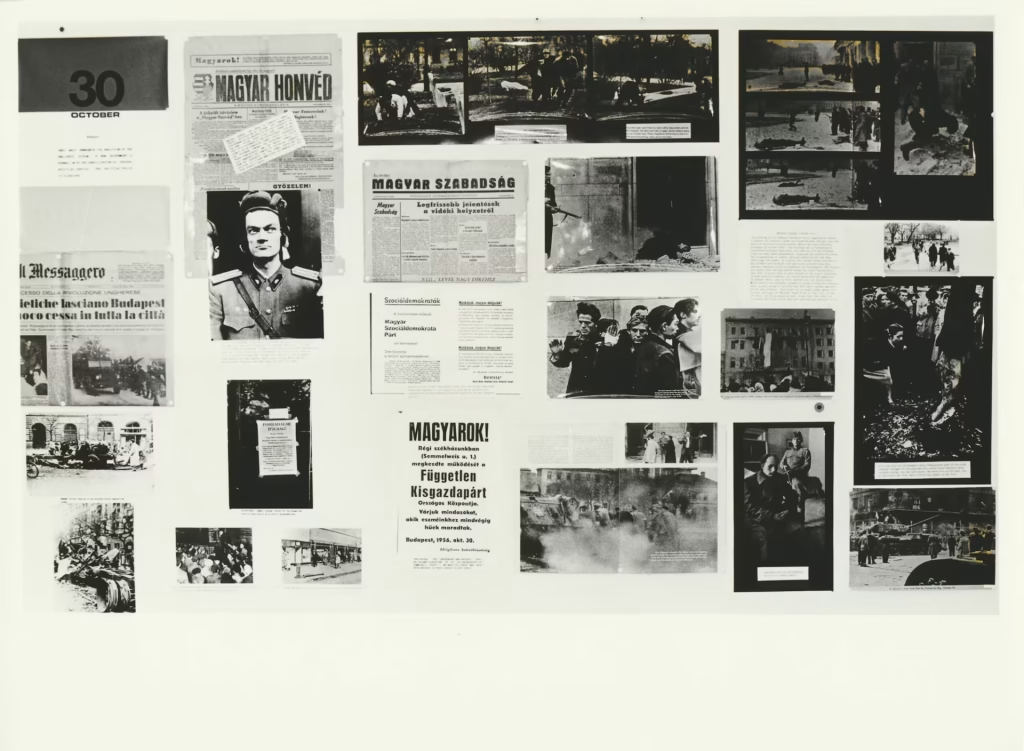
The distribution of the speech also served as a catalyst for the 1956 uprising in Hungary amid political and economic discontent. During its suppression by Soviet forces, thousands were killed, and around 200,000 citizens fled, making this one of the most violent events of the Cold War in Eastern Europe.
But the uprising in Hungary also became a moment of self-reflection for RE’s reporting. While its broadcasts spread unchecked news about events the regime was trying to cover up, RE also encouraged civic courage with enthusiastic tones, including phrases like “the free world is with you” and “fight for freedom,” many listeners interpreted the messages as a sign that military aid from the West was imminent. When that aid failed to arrive, and the uprising was violently crushed by Soviet troops, RE was sharply criticized for inadvertently feeding false expectations.
Internal and external investigations found no evidence that RE had promised military intervention or directly incited the uprising. However, the event forced RE to revise its editorial policy, shifting from a more mobilizing tone to an emphasis on careful reporting, analysis and keeping critical thought alive in closed societies.
Thus, in the following decades, RE adopted a more measured reporting approach. In 1976, RE and RL merged into a single organization — Radio Free Europe/Radio Liberty (RFE/RL) — creating a network that broadcast in various languages to all communist countries.
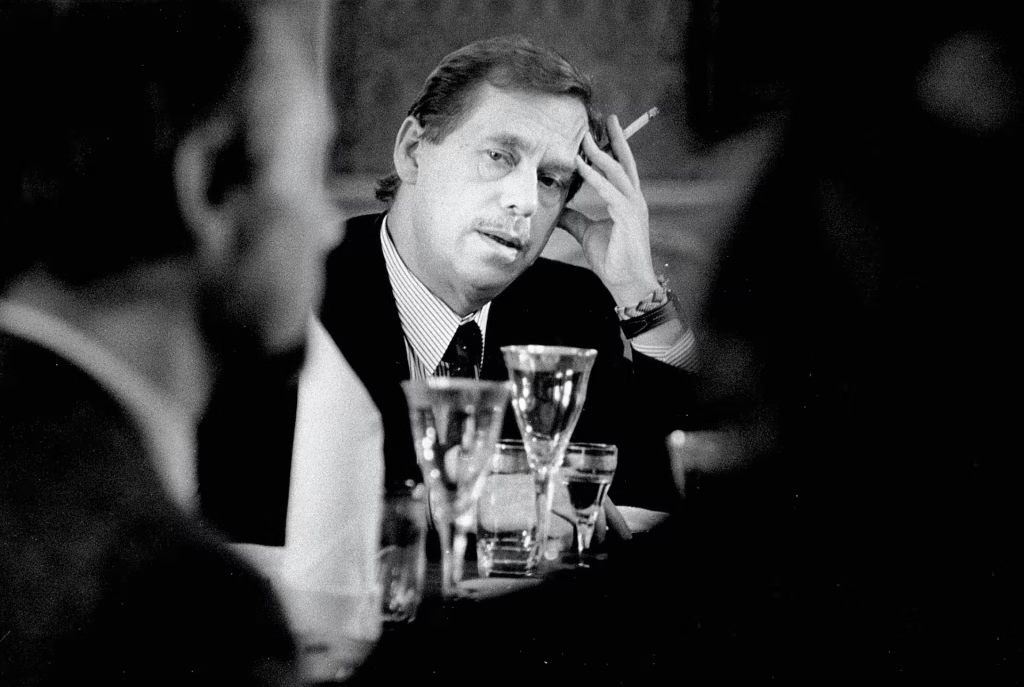
As Michael Nelson notes in his book “War of the Black Heavens,” one of RFE/RL’s most important functions was to fill the void left by the absence of permitted opposition in communist countries, providing space for dissident voices. Their airwaves regularly carried the writings of dissident authors such as Adam Michnik in Poland, György Konrád in Hungary and Václav Havel in Czechoslovakia, who, through samizdat, distributed thousands of copies, while, via radio, reached millions of listeners.
Their presence gave the radio stations credibility and legitimacy, as it demonstrated that they reflected the most articulate, critical and intellectual thought of the societies living under communist rule. According to Nelson, the constant listening of the likes Havel and Michnik, created a space of imagination in which democracy was no longer unimaginable but a near and achievable horizon.
An important example of RFE’s role concerns Havel. His writings, which had circulated in a limited capacity through samizdat, were broadcast by RFE and reached wider audiences, contributing to Havel’s recognition as a critical public voice. He later became a central figure in the Velvet Revolution, a peaceful transition of power in Czechoslovakia in November–December 1989 that ended the one-party communist regime and paved the way for a pluralist system. This process was led by a broad coalition of intellectuals, students and artists, within which Havel played a representative role, subsequently becoming the first president of Czechoslovakia and later of the Czech Republic.
The influence that RFE/RL had on the dissemination of literature by dissident authors became evident as early as 1973, with the publication of Aleksandr Solzhenitsyn’s “The Gulag Archipelago.” The work documented the system of forced labor camps in the USSR, drawing on the author’s personal experience as a former political prisoner and hundreds of secretly collected testimonies.
The word “Gulag” comes from the Russian acronym for “Main Directorate of Camps” and refers to a vast network of camps and penal colonies that, at its peak in the early 1950s, stretched from the White Sea to Eastern Siberia. During their decades of operation, millions of people, political opponents, intellectuals, soldiers who had survived German captivity and ordinary citizens, were interned in these camps, where living conditions were inhumane, and included starvation, forced labor, extreme cold and systematic violence. It is estimated that several million internees lost their lives.
Solzhenitsyn had been imprisoned for years for a letter criticizing Stalin and knew this reality firsthand. Through the evidence he gathered, he reconstructed a complete picture of the system of terror. For most Soviet citizens, the gulags were mostly unknown. The regime described them as “re-education camps” or hid them entirely. No information about them circulated, and any attempt to mention them would risk imprisonment. When “The Gulag Archipelago’ was published in the West in 1973, Moscow called it “the greatest anti-Soviet weapon,” within a year it had been translated into 20 languages and had an explosive impact.
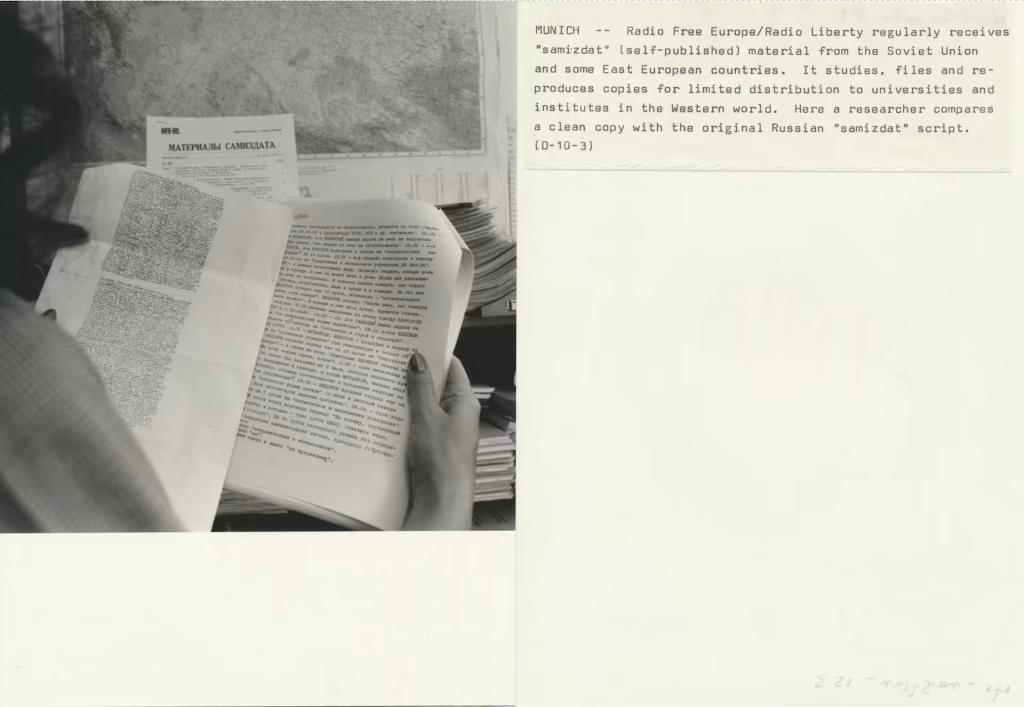
RFE/RL began broadcasting the three volumes of the book on January 7, 1974, for 15 minutes a day. For millions of listeners in the USSR, it was the first time they had heard, through a living voice, irrefutable evidence of the extent of repression. For many, these broadcasts contributed to a critical reevaluation of the official narrative of the Soviet system’s history and functioning. Precisely because of the impact these broadcasts had on the airwaves, communist regimes increased their efforts to block them, setting up one of the most sophisticated technological censorship machines of the time: the jamming system.
Jamming was the main self-defense weapon of communist states against international broadcasters and, at the same time, an indicator of the seriousness with which they perceived the influence of radio. As extensively documented in Nelson and Heil’s books, since the late 1940s, the Soviet system treated jamming not as a random obstacle, but as an organized state strategy.
As a result, vast networks of local jamming transmitters and stations were set up, and at the height of the jamming era, the Soviets and other communist countries used thousands of kilowatts of power to jam Western shortwave services. At times, the total power capacity devoted to the jamming system exceeded the power of Western transmitters, while local stations further increased the jamming effect. In practice, the jamming system shaped the way Western broadcasters operated, as they constantly had to change frequencies, increase signal strength, and develop technical and programming tactics to get theirs words across the noise and hiss. In turn, audiences learned to seek out new frequencies, eavesdrop and procure better-quality signal reception equipment.
A RFE/RL report in 2020 tells the story of a Bulgarian citizen who had worked in the village of Padarsko, where a radio transmitter had been built in the 1970s. This transmitter was used to broadcast state radio and to implement the jamming system against Western radios. Doncho demonstrated how this procedure, known as the “lighter silencer,” worked. According to him, if the RE broadcast was scheduled to start at 7:00 p.m., the jamming would begin at 6:30 p.m. and continue until after the RE edition for Bulgaria finished reporting at 9:00 p.m.
In the same article, Bulgarian writer Dimitar Bochev, who headed the Bulgarian cultural desk of RFE/RL in 1975, explained that the entire blocking process was coordinated and deliberate. If RFE/RL broadcast on five frequencies during the evening, the Bulgarian communist regime would block four of them while leaving one free, as they wanted to record the RFE content. To make it difficult for Bulgarian citizens to find the correct frequency, they would change which frequency was blocked and which one remained open every five minutes.
Doncho recalled, however, that even though he worked there, he would listen to RE with his grandfather when he went home.
When VOA and RFE/RL make headlines
The history of RFE/RL and VoA during the Cold War may seem distant, but their mission did not end with the fall of communism and the dissolution of the USSR in 1991.
While the Cold War was ending and the Berlin Wall was falling, another process was unfolding in other parts of Europe: the dissolution of Yugoslavia, which was be marked by armed conflicts throughout the 1990s.
Founded during the Bosnian War in 1994, RFE/RL’s Balkan service initially broadcast in Bosnian, Croatian and Serbian, and later expanded to include programs in Albanian, Montenegrin and Macedonian.
Throughout its history, RFE/RL’s service in the Balkans played a key role throughout the region’s most sensitive events. During the NATO bombing of Serbian targets in 1999, amid the Kosovo War, RFE/RL was the most listened-to international broadcaster in the region. When Slobodan Milošević banned the retransmission of international media in 1998 and launched a crackdown on independent outlets such as B92, the United States responded. Beginning on March 24 with the bombing campaign, VoA and RFE/RL broadcasts were transmitted 24 hours a day on FM to Serbia, using transmitters set up in neighboring countries to break Milošević’s media blockade. VoA also used television signals that could be received by home satellite dishes to reach Serbian audiences.
While VoA became the most listened-to radio station for Kosovo Albanians during the 1990s, RFE/RL did not have a direct presence in Kosovo until 1999. It began broadcasting a few days before the start of the NATO bombing campaign but was forced to suspend operations until Kosovo was liberated in June 1999.
In the early days of broadcasting from Kosovo, Rrahman Paçarizi began reporting for RFE/RL. Now a professor of journalism and Albanian language, Paçarizi was one of the first correspondents from Kosovo. For ten years, until 2009, he covered a country being rebuilt from ruins, reporting on crimes against civilians, the destruction of infrastructure, the return of displaced populations, reconstruction efforts and state formation, culminating in Kosovo’s declaration of independence in 2008.
In his reporting, the story of a country learning to speak freely for the first time was intertwined with the mission of radio — a role this medium had played decades earlier behind the Iron Curtain.
For Paçarizi, the particular value of RFE/RL in the immediate post-war period lay in its balanced and impartial reporting, which helped establish the station as a reliable source of information, especially during moments of political tension. This credibility, he argues, was closely tied to RFE/RL’s editorial system, which functioned as a professional structure that ensured high reporting standards, even though many correspondents on the ground were local journalists who had themselves lived through the war and its losses.
“I remember the protests and riots of March 2004 in Kosovo,” Paçarizi recalls. “I was reporting from the scene, and people were dying next to me. I was overwhelmed with emotion. Before going live with RFE/RL in Prague, I spoke with Melazim Koci, who was then running the Albanian service. Ten minutes before the connection, Koci told me I would not be able to go live due to technical problems and that they would only broadcast the information I had provided. Later, Melazim told me that they had actually decided not to go live because I was too emotional — the tone of my voice was not objective.”
In the first decade after the war, RFE/RL evolved from a reporting presence into an institutional one. It opened a separate newsroom in Prishtina, separating the Albanian service from the broader Balkans service and working closely with its Prague central office. This development marked a shift from distant reporting on Kosovo to the construction of a newsroom rooted in the country itself.
According to Paçarizi, this new focus gave fresh direction to the development of radio as a US medium in Kosovo.
“The BBC and VoA never had more than two or three correspondents in Kosovo, while RFE/RL had a larger team and a clear focus on Kosovo. No other Albanian-language program has been dedicated exclusively to Kosovo the way RFE/RL has,” he said.
The deliberate design of the RFE/RL model outlived the Cold War, as is evident in how RFE/RL and VoA are perceived today.
“RFE/RL stands out as an American-European medium, financed by the United States, yet more local than VoA and more international than local media,” Paçarizi said.

The debate over the role and independence of VoA and RFE/RL has not been limited to recent developments. It has accompanied the history of both broadcasters, reaching an early peak in the 1950s during the period of McCarthyism — an anti-communist campaign in the US marked by political investigations and accusations targeting the media and public institutions. During this time, VoA came under intense political pressure to align more explicitly with the U.S. government’s Cold War positions. Journalists were investigated and accused of not being “anti-communist” enough, and content was pushed toward a more overtly propagandistic tone. Within this context, newsrooms were forced on constantly navigating the tension between maintaining professional standards and credibility and operating within a mission closely tied to the strategic interests of the American state.
The same debate, albeit in a different form, resurfaced decades later during the Donald Trump administration. This time, criticism of VoA and RFE/RL did not stem from fears of communism, but from claims that the broadcasters were not “pro-American enough.”
This debate culminated last year, when, at the beginning of his second term, Trump ordered reductions and the termination of funding for the U.S. Agency for Global Media, which funds VoA and RFE/RL. As of March 2025, amid ongoing litigation, VoA has suspended almost all of its programming, while RFE/RL continues to operate with uncertainty about its future. Political appointments to the leadership of its oversight agency, the dismissal of executives, investigations of journalists and efforts to tighten institutional control were accompanied by lawsuits, staff reductions and public concern from international media organizations that the broadcasters’ editorial independence was being undermined.
The uncertain future of these two broadcasters calls into question the very model on which they were built.
But, viewing the roles of VoA and RFE/RL solely through the prism of journalism or solely as instruments of propaganda risks misunderstanding both. The influence of these two broadcasters stemmed from a deliberate institutional design that closely intertwined professional content and political purpose.
The legacy of VoA and RFE/RL endured not because these media outlets operated independently of politics; they were, in fact, instruments of U.S. policy, but because they embedded the professional norms of journalism within a broader project of geopolitical influence.
Feature image: Dina Hajrullahu / K2.0
Gentiana Paçarizi is managing editor at K2.0. She has completed a master’s degree in Journalism and Public Relations at the University of Prishtina ‘Hasan Prishtina’.
This article was originally produced for and published by Kosovo 2.0. It has been re-published here with permission.